

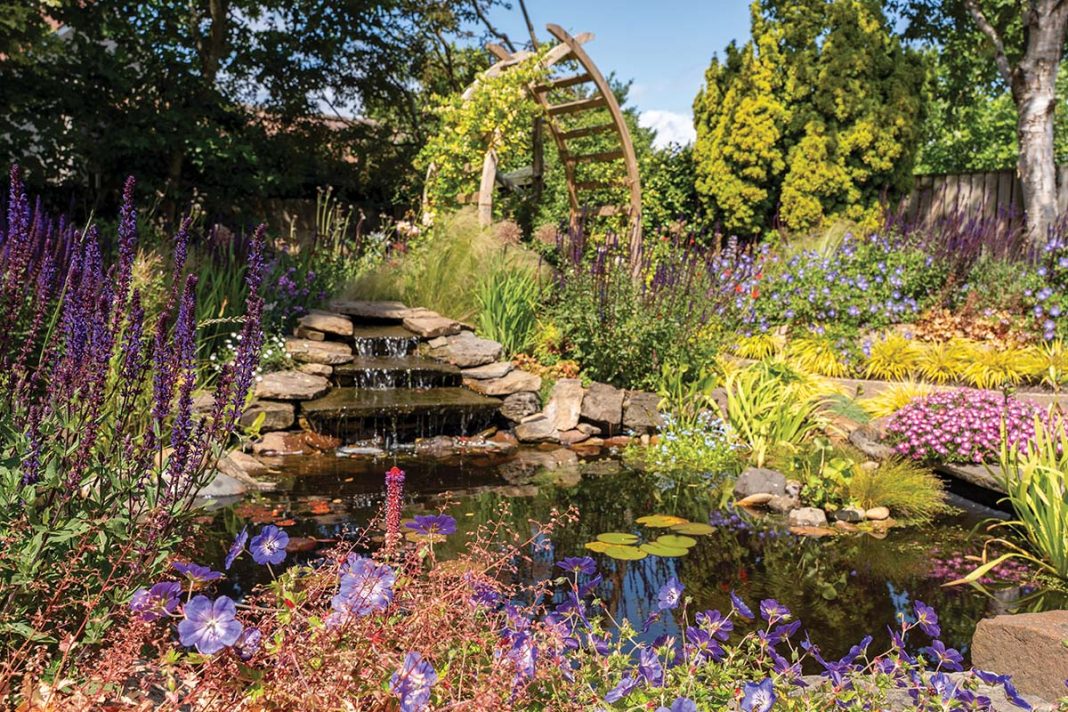
The brief was to merge the contemporary extension with the woodland garden and create some privacy from newly built nearby houses
Extending their house gave the owners of this property in the East Neuk a stylish new glass-fronted kitchen. The only problem was the smart new addition now looked out over the garden – and it wasn’t a pretty sight. “The previous owner had clearly been very interested in plants,” recalls Lisa Lempsink, the Edinburgh-based garden designer who was brought in to transform the place.
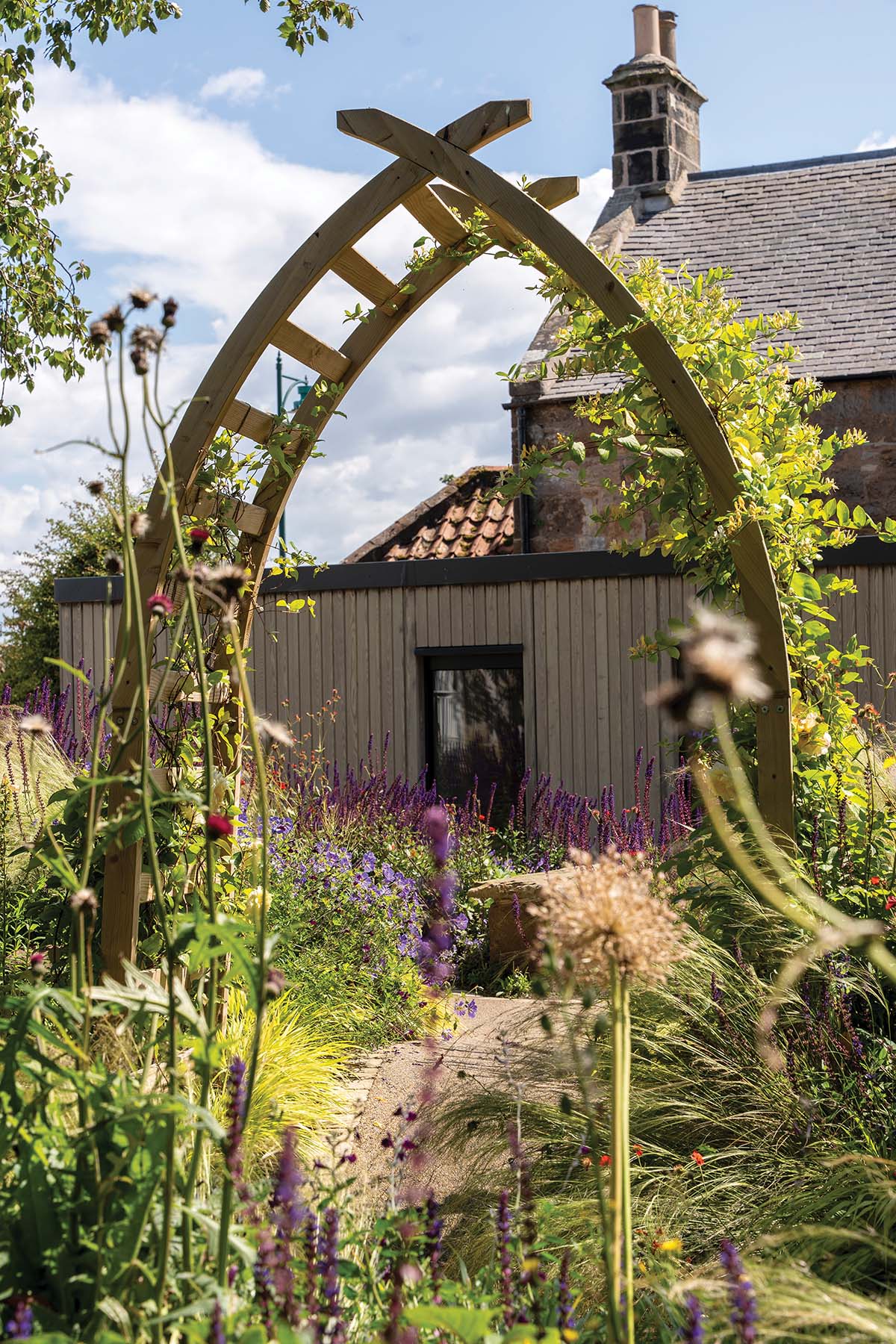
“Unfortunately, though, as they’d become more elderly, the garden slowly went to rack and ruin. It was a bit of a building site by the time I saw it – but a green, mossy building site with lots of lovely bulbs popping up all over the place.”
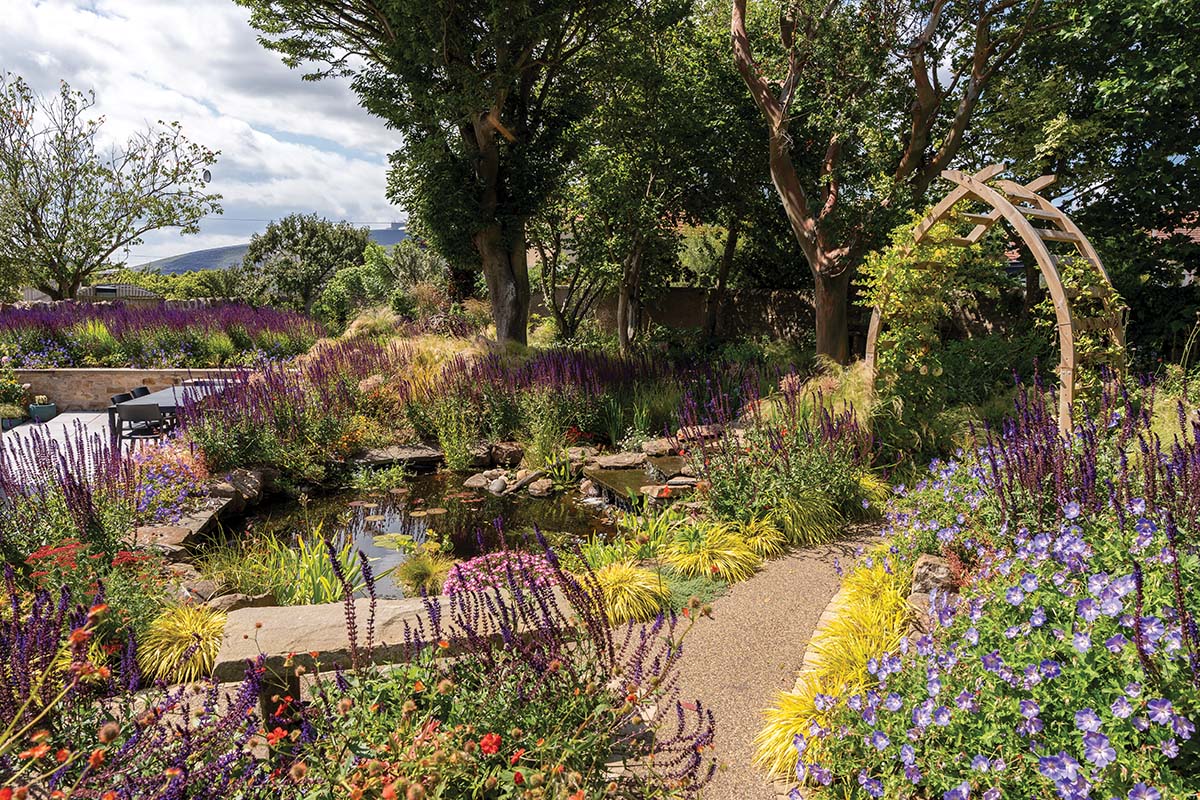
Lisa’s first job was to clear away the excess growth and create a safe path network. There was also a pond hiding in the undergrowth that the clients wanted to revive. And right at the top of the garden was a shady woodland area just crying out for some seating. “We reused a lot of the stuff that was there and kept many of the trees and bulbs,” says the garden designer.
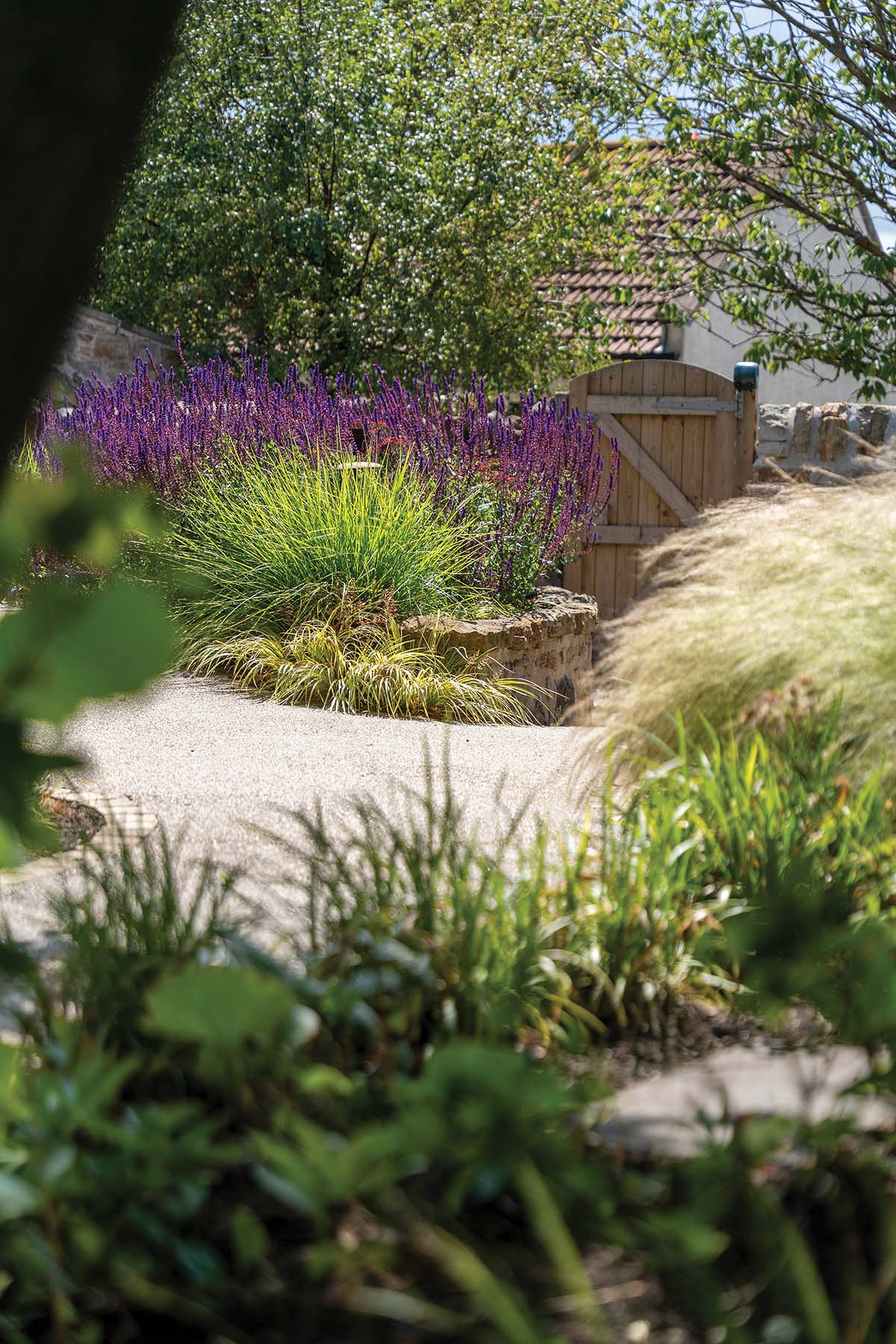
“The soil was great, which was very helpful. I created a lovely oval border in front of the woodland area and then included some high planting where you come along the path – it means you can’t really see the seating area behind, you have to follow the path round to find it. I like that kind of thing in a garden.”
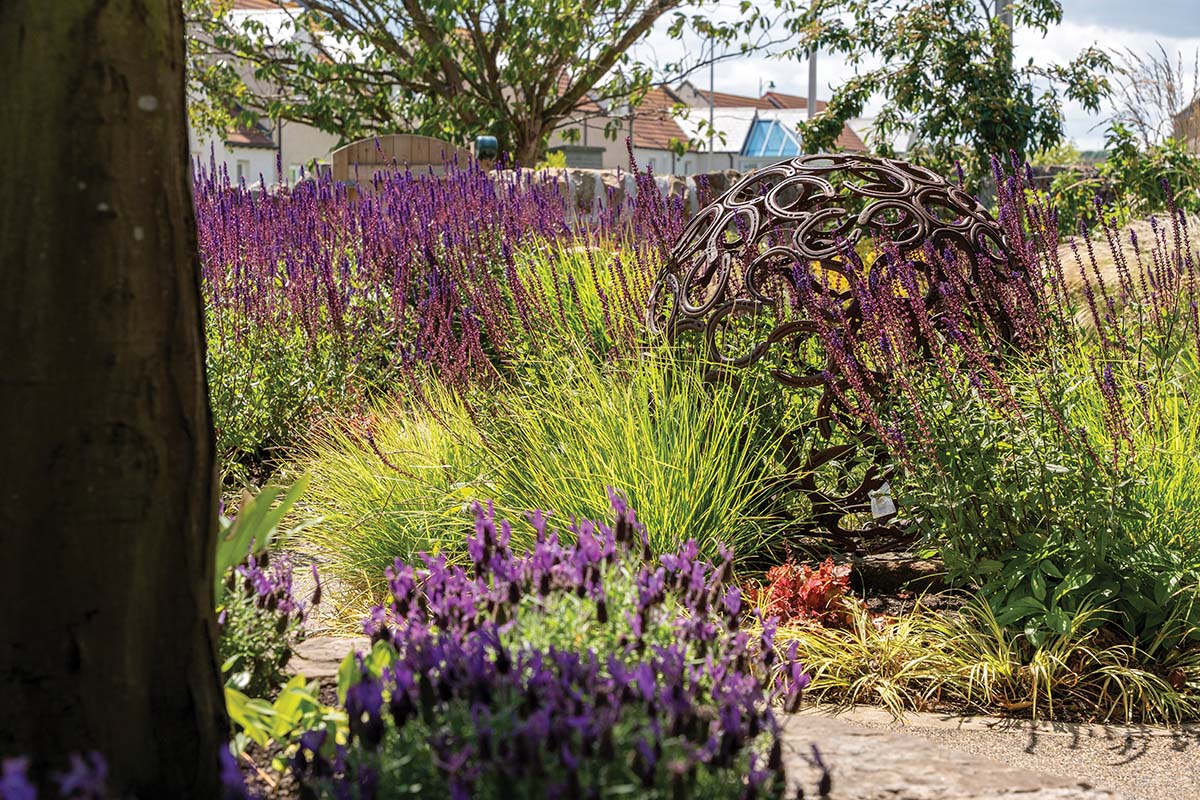
Nearer the house, she planted Salvia nemorosa ‘Caradonna’: leggy violet flowers which tie in to the woodland feel further into the garden but simultaneously work well with the contemporary lines of the extension. “We used things like hellebores near the house too, for winter colour. I also planted Doronicum caucasicum ‘Little Leo’, which is like a little yellow daisy; it’s so cute. It pops up between March and May and is a joyful thing to see emerging in spring.
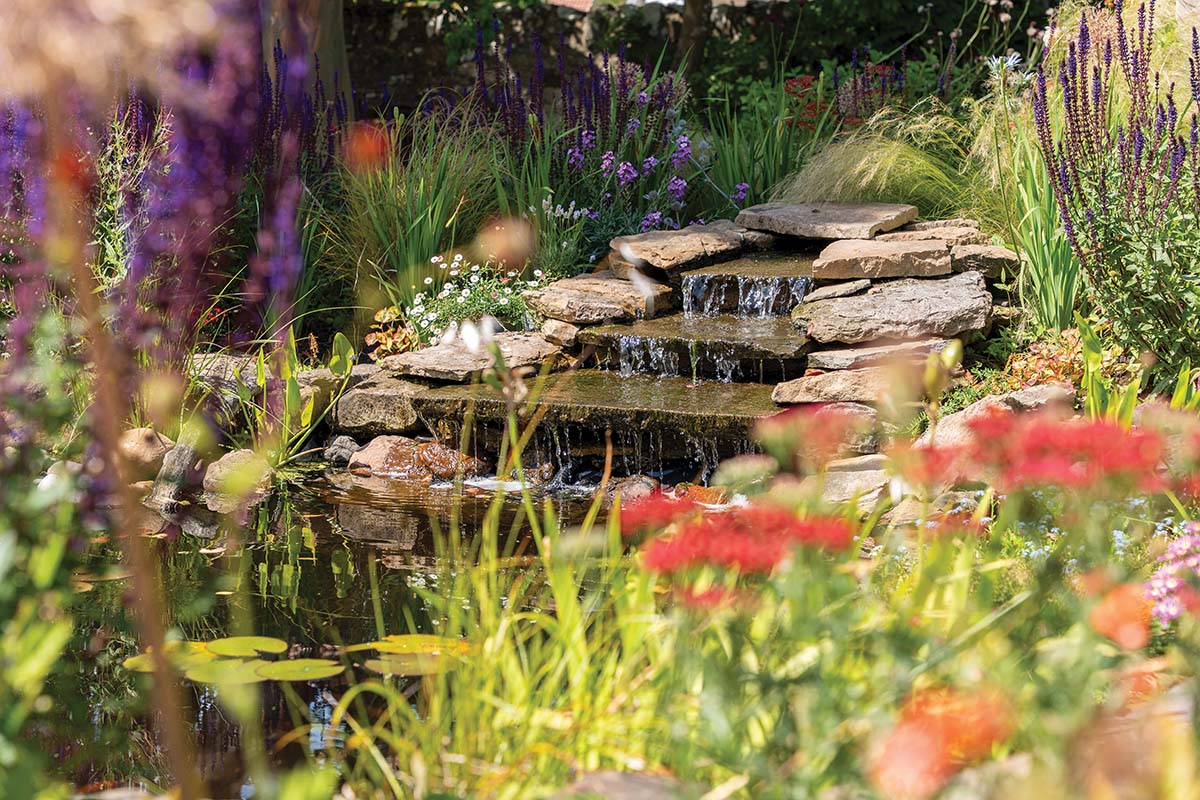
“Grasses such as Sesleria autumnalis and Stipa tenuissima were planted, adding another dimension to the scheme. The former is evergreen and the latter you cut down in February and it races up again. The combination gives you that swishy effect (especially in windy spots like this) and they’re both so lovely when they flower. I think you’re missing a trick if you ignore grasses, as they provide such structure throughout the year.”
To the left of an archway covered in roses and honeysuckle is the revitalised pond. “We don’t know exactly what it looked like before,” Lisa admits, “but I think we made it bigger than it was. We found a lot of stone lying around the garden and used that to build it. There’s a small waterfall for the clients and the local wildlife to enjoy – no koi carp here. I brought in [journalist, author and gardening expert] Isabel Hardman to do the pond planting because it’s quite a specialist area. She included plenty of wildlife-encouraging greenery.” This is a garden that rewards exploration. Through the fragrant arch and further down the garden path you’ll stumble across an arched mirror. “It looks like a church window,” Lisa points out.
“It sits against a fence and we’re growing planting up each side of it. You wouldn’t know it was there unless you journeyed along the garden path for yourself.” Also hidden in the stone wall that runs along the back of the garden are traditional bee boles. These are niches that were originally designed to protect skeps – wicker beehives. The bee boles lie empty now, but the garden hums with life nevertheless, thanks to Lisa’s fastidious planting.
“All the plants are bird-, bee-, butterfly- and wildlife-friendly,” the designer confirms. “Plus, I always encourage my clients not to be too tidy in the garden during the winter. It’s better just to leave things to decay down because lots of little insects and bugs will make their homes there and it really helps the whole ecosystem.”
Once her work is done, Lisa likes to connect her clients to a gardener who’ll keep the space looking its best. “I try to match them to the right person to help maintain the garden. In this case, I paired the clients with [horticulture student] Jet Haddow. “It didn’t really occur to me when I first started, but over time I’ve realised how important it is,” she says.
“As people get older, they like the company and the reassurance of having somebody there. And most people are very scared of their garden once it’s done – they worry they’ll kill all the plants. They over- or underlove things. I try to include as many bomb-proof plants as possible and connect my clients with fantastic gardeners so they can properly relax and enjoy the refuge we’ve created.”