

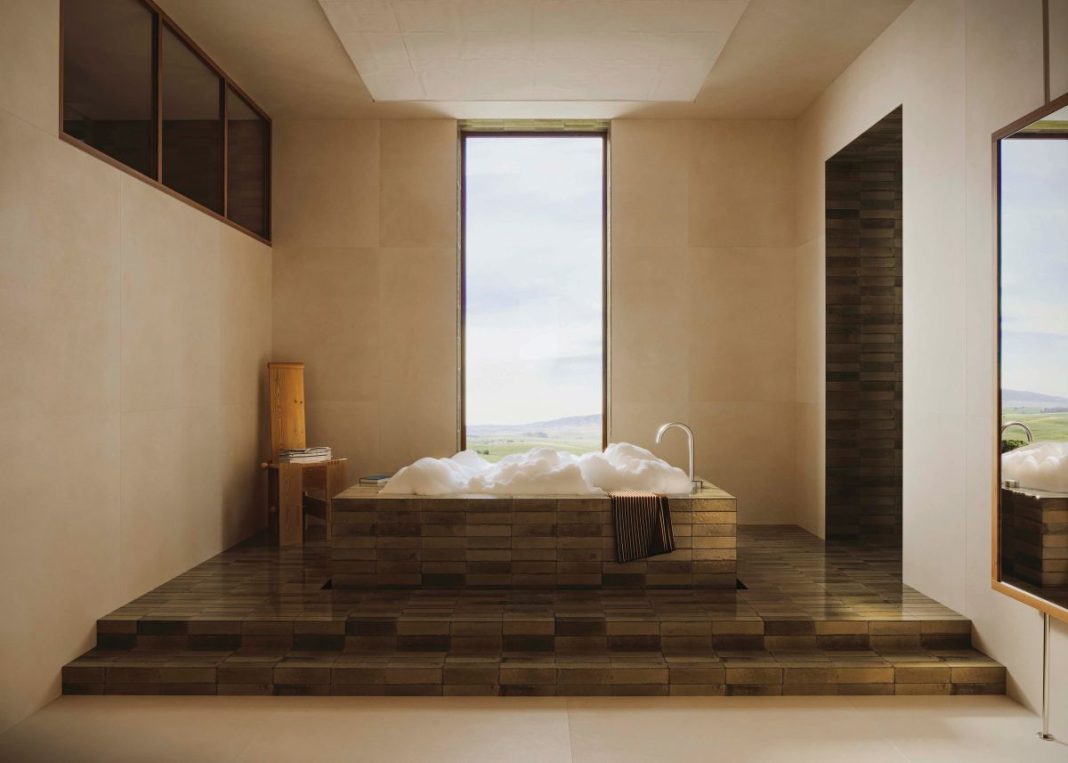
Yes, your bathroom should be a sanctuary. But does that mean disconnecting from the world?
Think about the bathrooms in all the places you’ve lived. We’ll hazard a guess that some, or most, have been windowless (or as good as), clad in high-gloss tiles and lit by harsh spotlights that beam down on your belly in the bath. Often we inherit bathrooms like this from previous homeowners and can’t afford to change them. But what might you do if you could start from scratch?
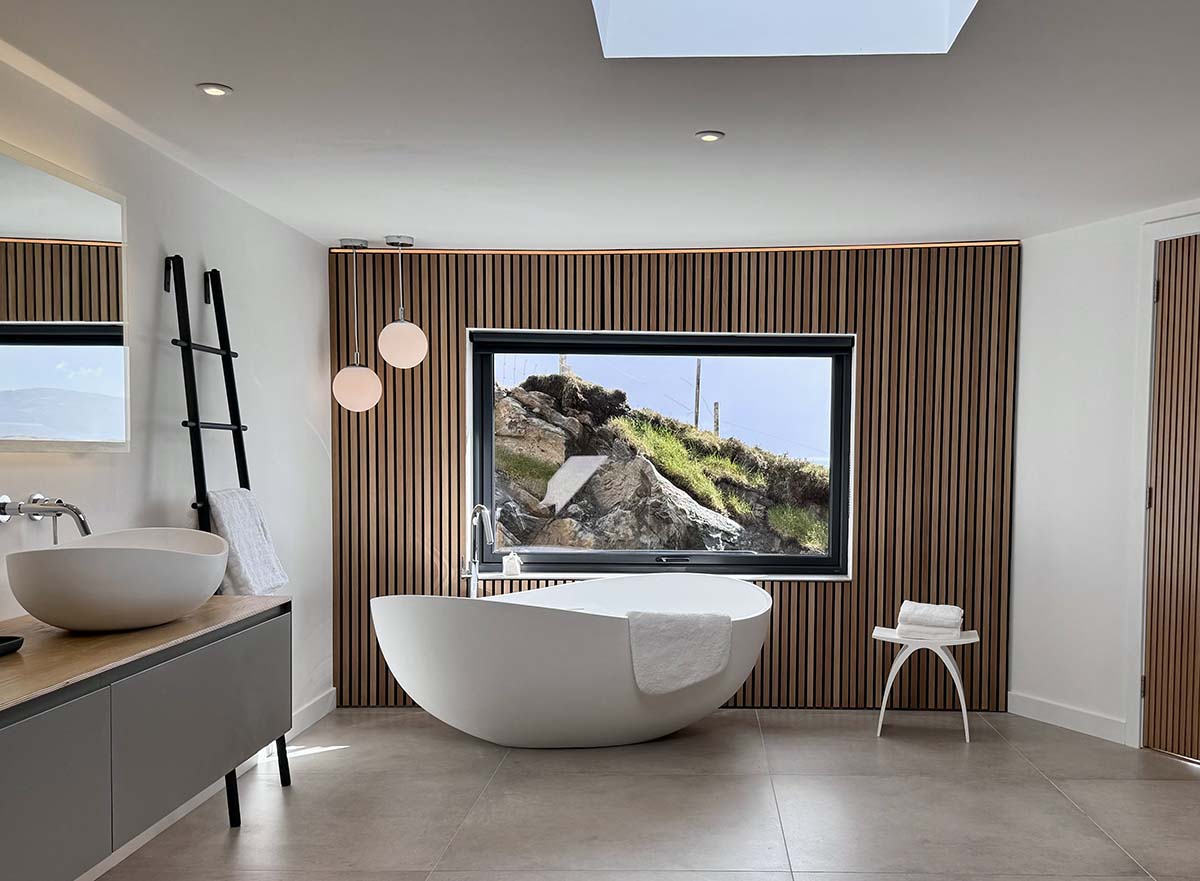
“Bathrooms deserve as much access to natural light as any other room,” says Andrew Brown, founder of Brown & Brown Architects. The bathrooms he designs give their owners something to look at beyond the four walls. In one, a bath in a glass-to-glass corner was positioned to overlook, and be shielded by, a canopy of trees; others have had slim window slots installed at eye level in the shower to cast a lens on the surrounding countryside. “As well as a rooflight over the shower, that bathroom [pictured on the right] had a relatively small window for the size of the room,” says Andrew. “We lined it up with the bath so that when you’re lying there, you’re looking out over your own courtyard garden, giving you that connection with the outside without any loss of privacy.”
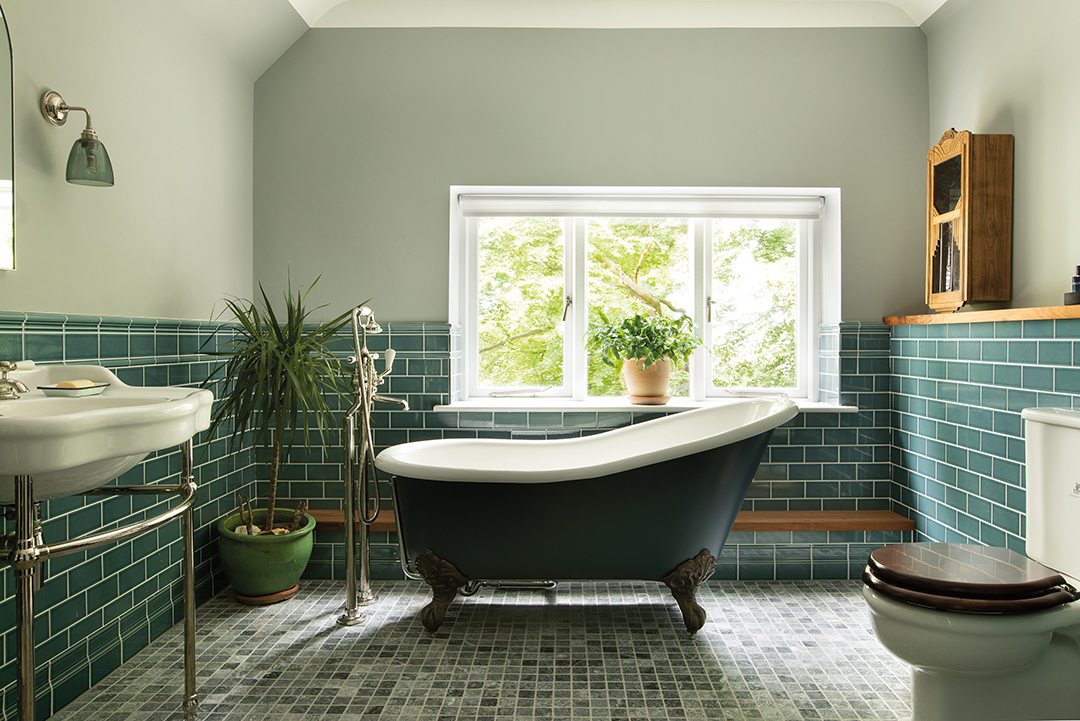
Your granny might have shuddered at the thought of the bathroom being anything other than a hermetically sealed space, but attitudes have changed. Just look at the vanity unit in Mosley Thorold Architects’ House of Porphyry (top right). “Placing it in the centre of the room was partly driven by the theatre of it – of having this central unit visible from the adjacent rooms,” explains Henry Thorold, co-founder of the practice. “It also felt nicely social in a way – having it there means you have sight lines to other rooms, so you can talk to your partner. Or close the door if you want some me time.”
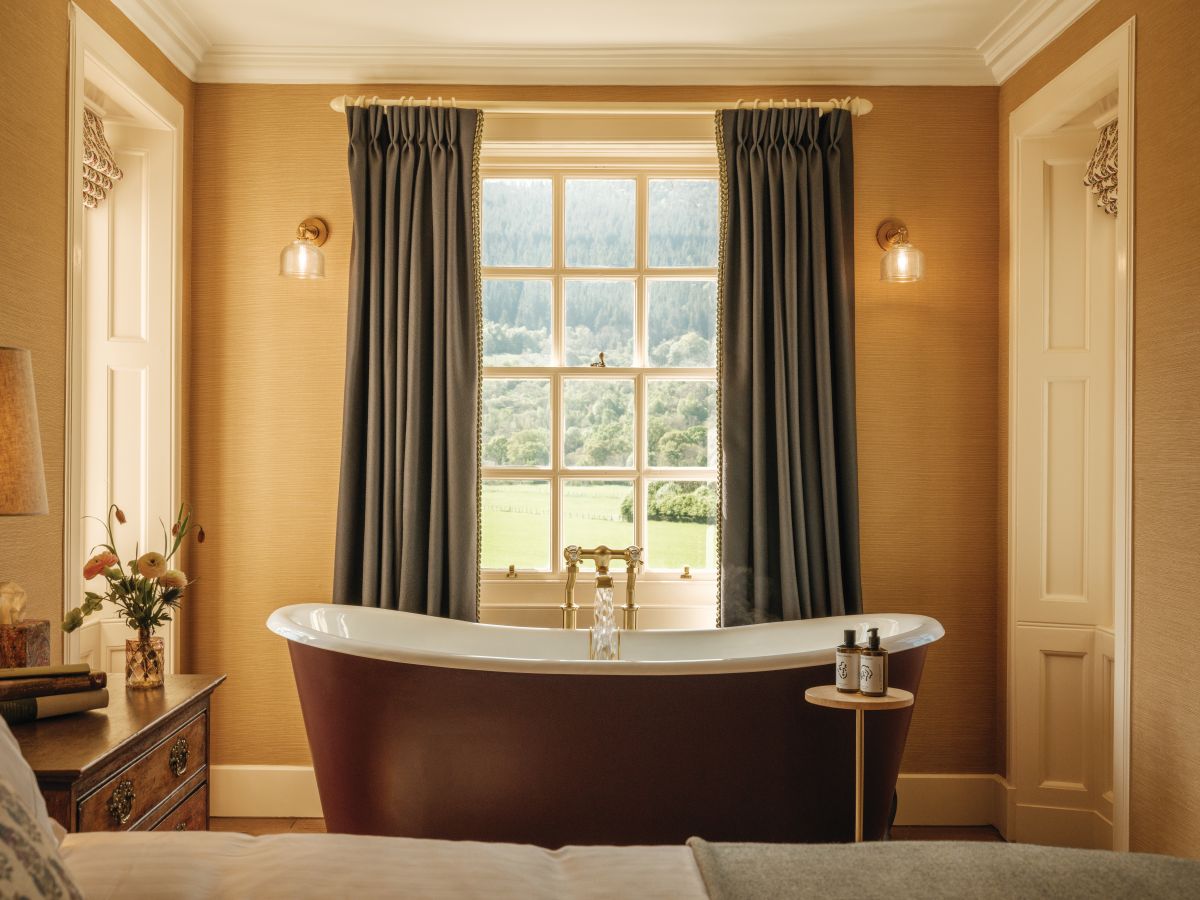
The layout is clever: there’s a bath on the other side of that central flank of porphyry stone (“We liked this idea of the unit being a stage for all the daily rituals of washing,” says Henry). The shower is out of view on the back wall, and the toilet is hidden in its own space behind a door. “That’s not something we always do but it just so happened that space was already there, so it made sense to use it in that way.” Sanitaryware needn’t always snake around the periphery of a room.
Both architects advocate for a limited material palette in the bathroom. “And it’s nice to have surfaces with a bit of tactility to them,” says Andrew, who is a fan of concrete and timber. “I also think from a restfulness point of view, having materials that don’t reflect light all the time is important.” That doesn’t consign you to boring walls; microcement (seen below) absorbs light but still has a sense of depth and gentle movement.
Visit the Brown & Brown Architects website | Follow Brown & Brown Architects on Instagram
Case Study: A Hebridean bathroom with dazzling views of the sea