

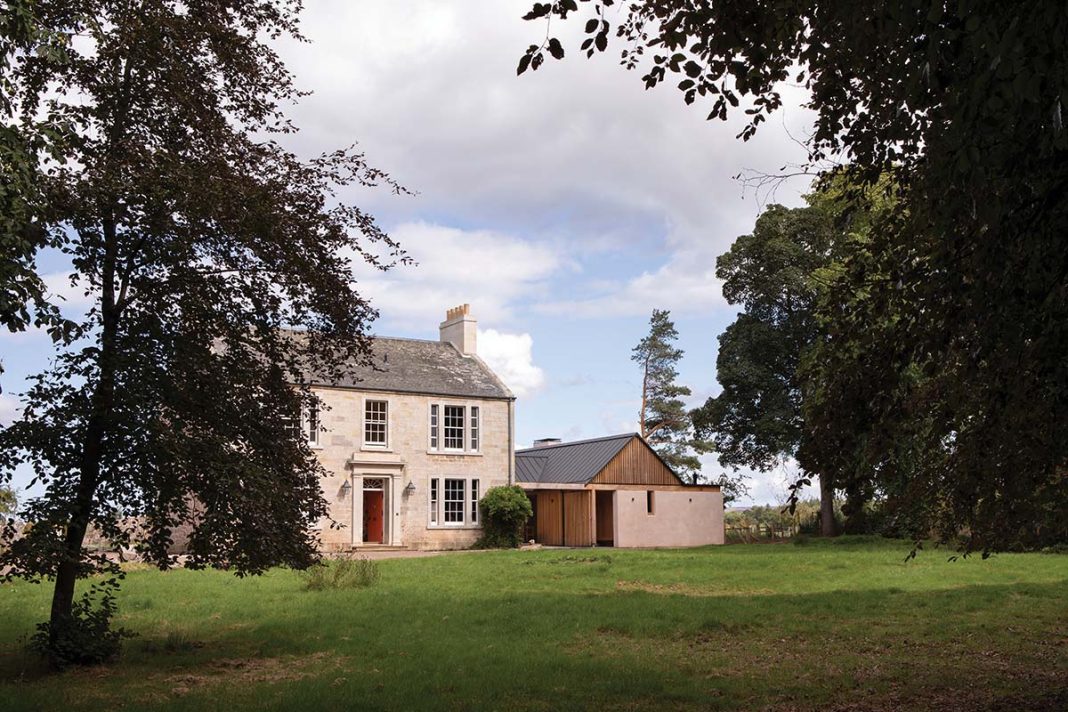
This Georgian home of an award-winning preserve-maker was made timeless by the addition of a stylish, highly functional extension
A sensitively restored and extended 200-year-old Scottish manor house in the East Lothian countryside isn’t just a magnificent home to Tibi and David Weir, but also the base of her award-winning artisan jam-making business, Dodger. “What was going to be the garage is now my kitchen,” she says, of B-listed Georgian house Renton Hall, with its wonderful- and now once again highly productive- walled garden. “So, it all happens here,” Tibi continues. “And we do a certain amount of the growing here too.” Tibi’s passion for preserving goes beyond fruit to old buildings. She is a veteran of several previous restoration and reconstruction projects – including two in collaboration with South Queensferry-based WT Architecture, the architects behind Renton Hall’s award-winning resurrection.
Her first sight of the house was back in June 2020. It was in a perilously crumbling condition but Tibi recognised bountiful opportunities in rescuing the dilapidated building. “It was pretty instant,” she says of her decision to buy it, with the purchase completed that same summer. It had lain unoccupied for almost a decade at that point. “The gutters were hanging off. Water had been pouring into the back of this Scottish manor house. It was completely overgrown at the front. It was just perfect.”
Lucky timing is how she describes it now, and architect Thomas Fitzgerald from WT agrees: “It very much felt as if Tibi had found the property at just the right moment, before its decline and dilapidation really began to escalate,” he says. “Another winter or two, and the internal fabric of the building would have been significantly damaged and the whole rehabilitation process would have been much more expensive.”
The Scottish manor house was built around 1800 before being aggrandised, circa 1820, by the wealthy owner of the associated Rentonhall Tile Works. It occupies an isolated, elevated position in the landscape, facing woodland to the south-west and with open fields to the rear. A façade of finely polished stone to the front and rougher rubble walls to the back and sides encapsulates its character: genteel but modest.
“The brief was to help save and restore the manor to extend its life as a permanent home,” says Thomas, “adapting it to suit contemporary living and creating a generous set of social spaces within and beyond the footprint of the existing building.” The Scottish manor house project was done in two phases. First was delicately bringing the house back to life: knocking down unsympathetic extensions, stripping the interior to its shell, replacing services and insulating where possible, led by main contractor William McNae & Son.
The architects endeavoured to take as light a touch as possible, and much of the original fabric was conserved – from mosaic tile flooring in the hallway to the heavy stone staircase, and even some elements of previous decoration. Tibi was heavily involved with choosing the colour scheme and finishes for this reimagined Scottish manor house, and in some places was able to preserve historic paintwork. “When I started pulling off the wallpaper, the original paint colours were underneath,” she says. “The kitchen was this amazing bottle green, and one of the bedrooms upstairs was an extraordinary Jaipur blue. We’ve kept that, because I wanted to have a bit of the original colour.”
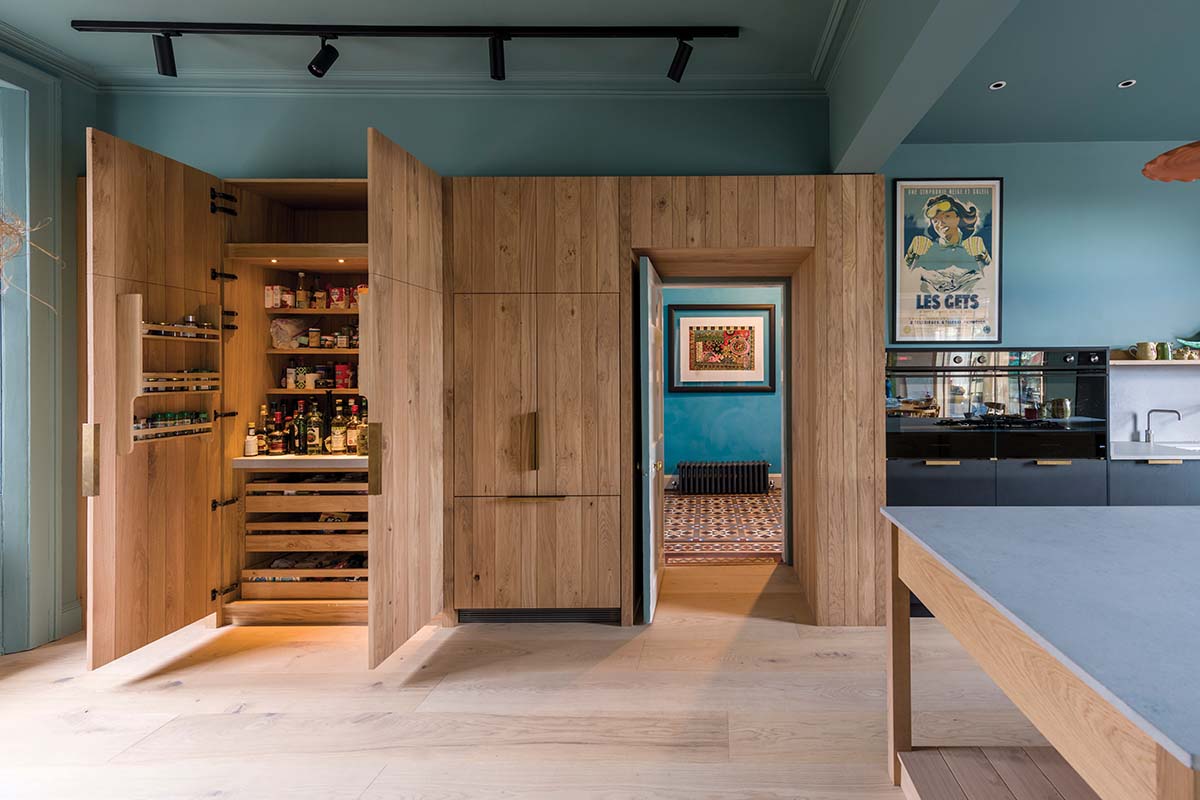
Designed, built and fitted by Inglis Hall of Lewes, East Sussex, the kitchen blends Georgian heritage and modern living, anchored by a tactile wall of sawn oak, a generous oak island with burnished brass, and freestanding furniture elements. Balancing rough and refined surfaces, openness and storage, it’s warm, social and highly functional. “What makes this kitchen particularly special is its ability to seamlessly bridge the past and present, creating a space that feels both timeless and innovative,” says Geraldine Fory at Inglis Hall. “It tells a story of craftsmanship through its textured, organic surfaces.”
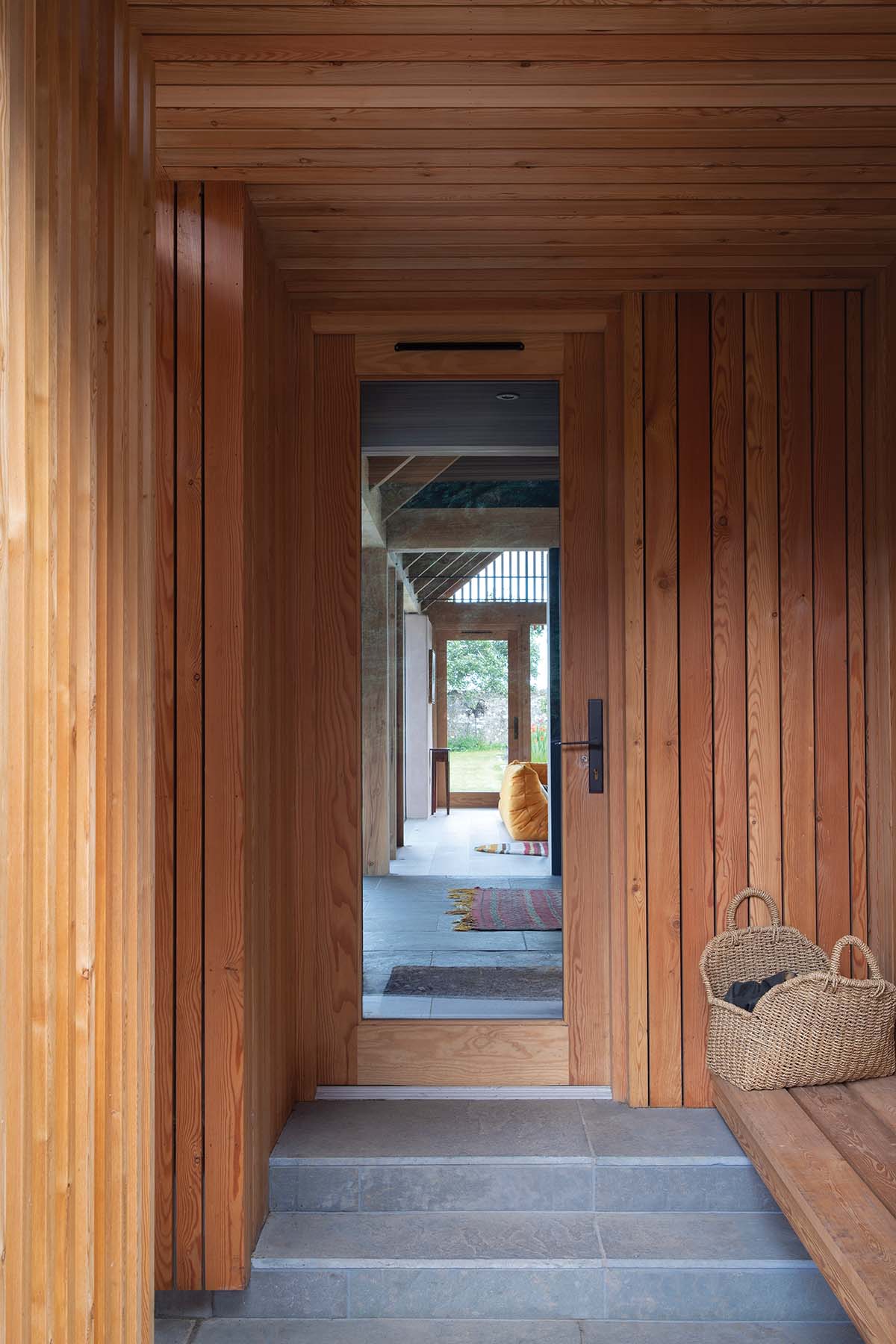
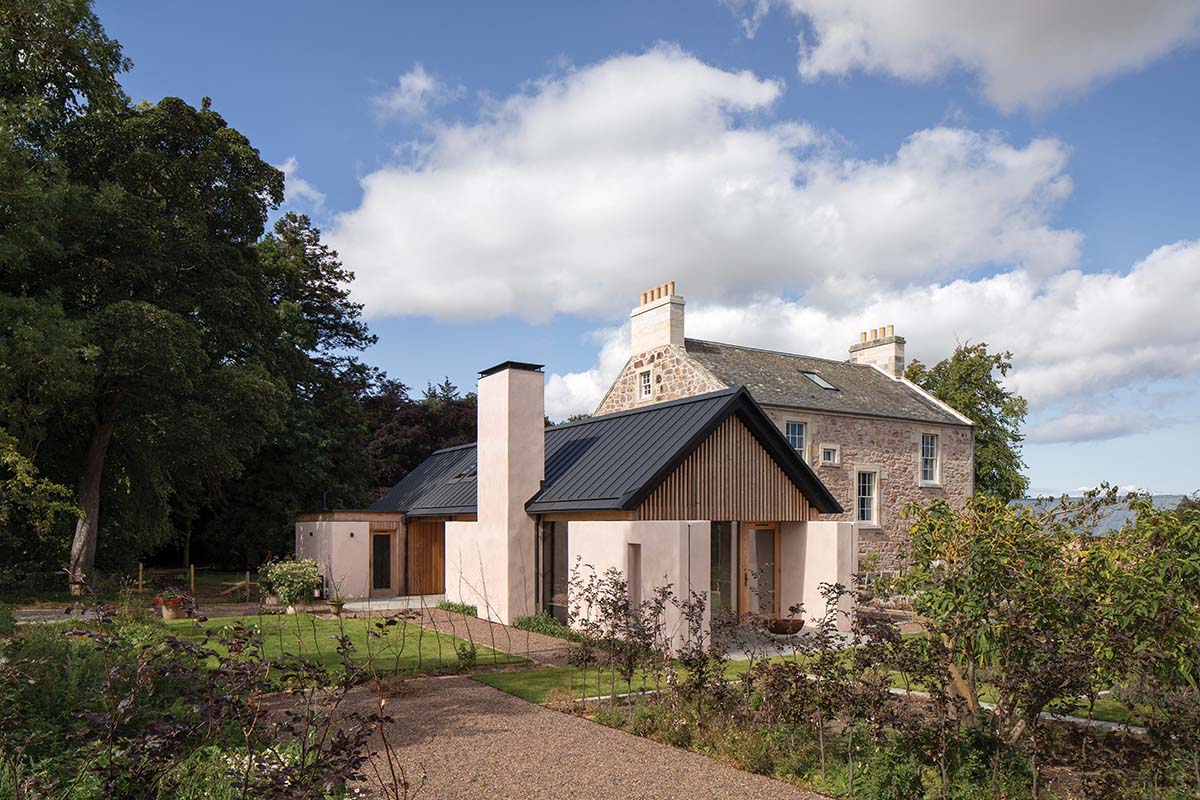
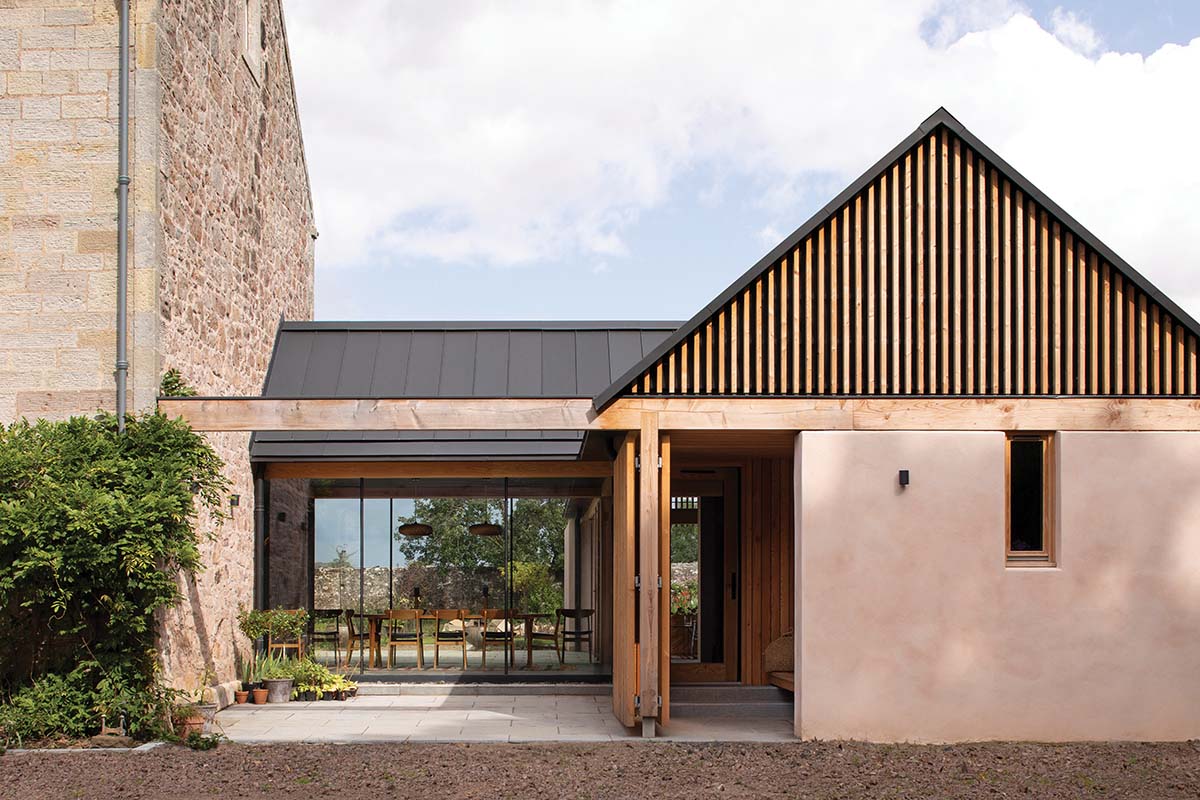
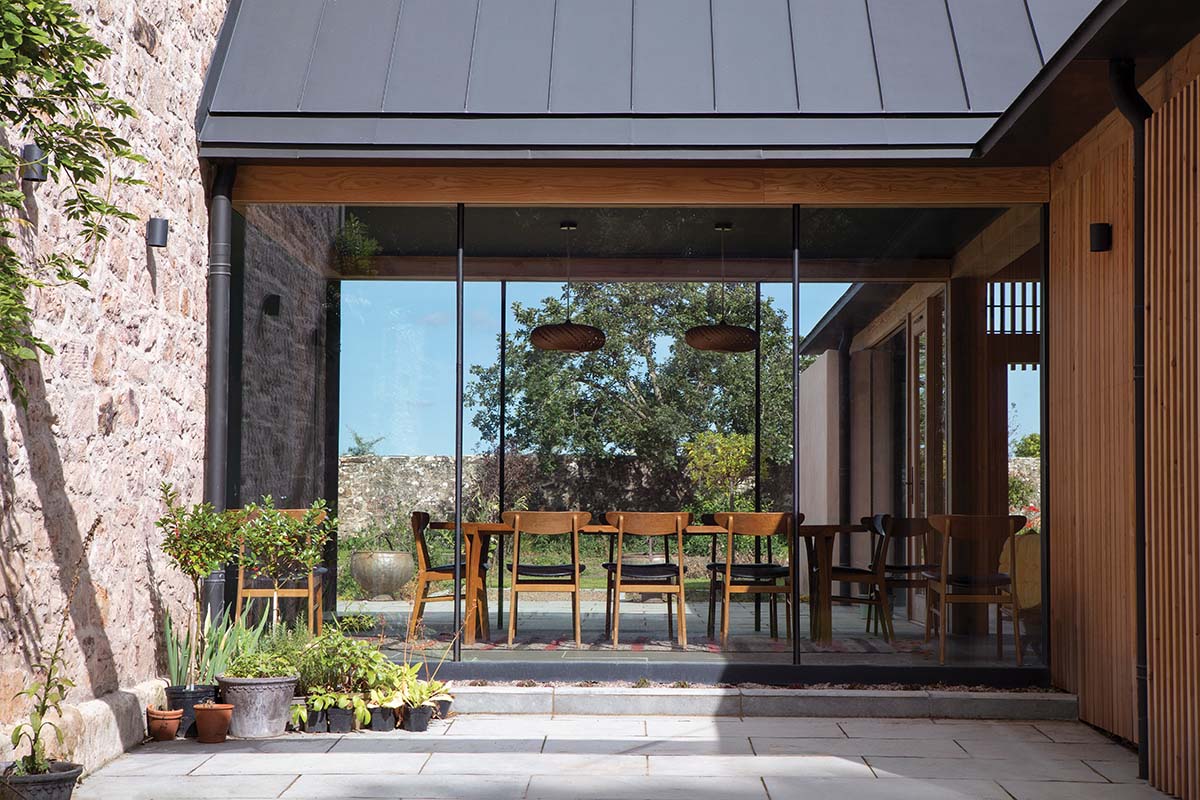
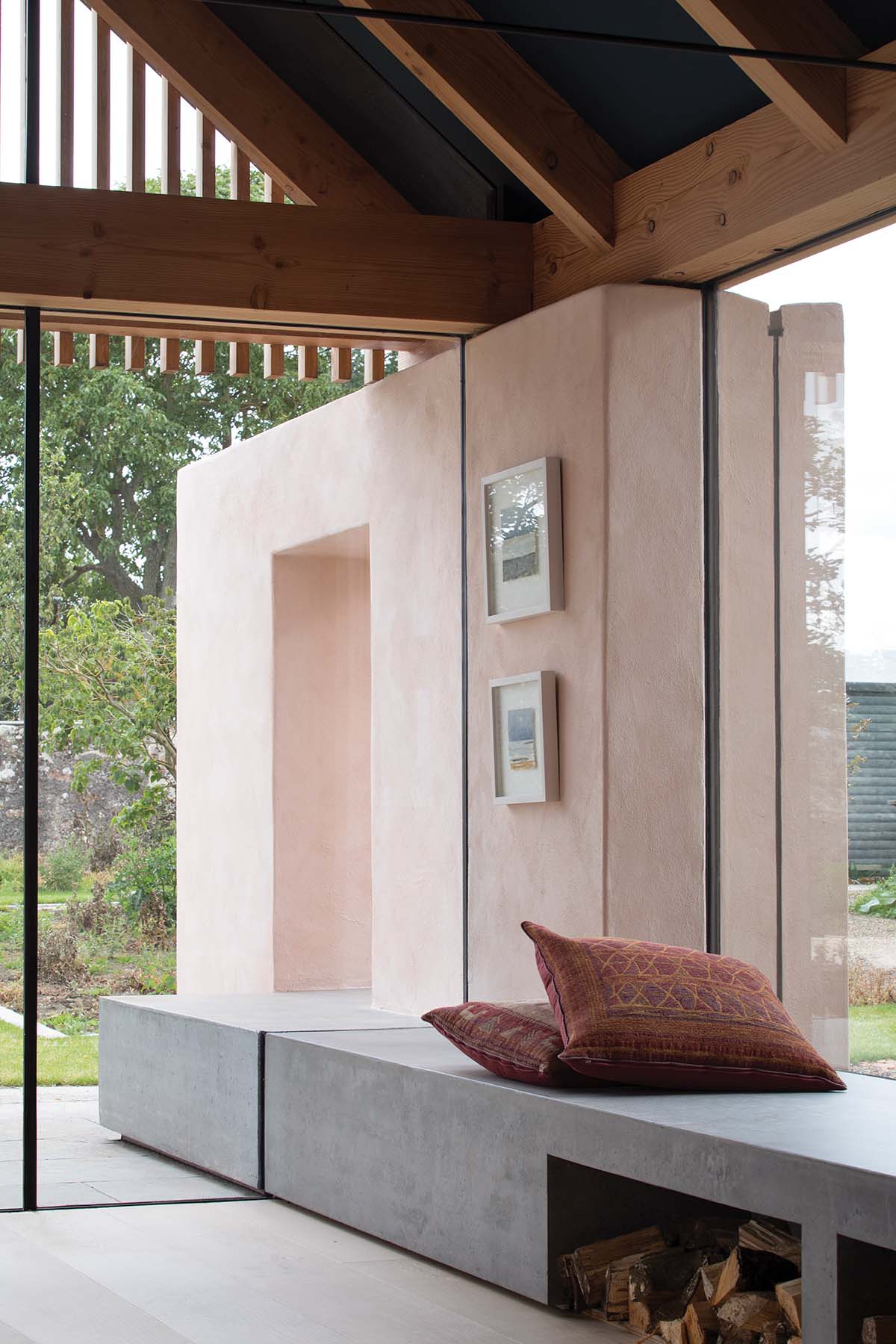
Phase two was the extension: a low, quietly assertive wing that reaches out from the southern gable of the Georgian Scottish manor house to form new spaces for living, dining and services, conceived as a contemporary echo of the estate’s former outbuildings. Its lime rendered masonry walls, expressed Douglas fir structure and zinc roof are deliberately deferential to the manor, yet unapologetically of their time.
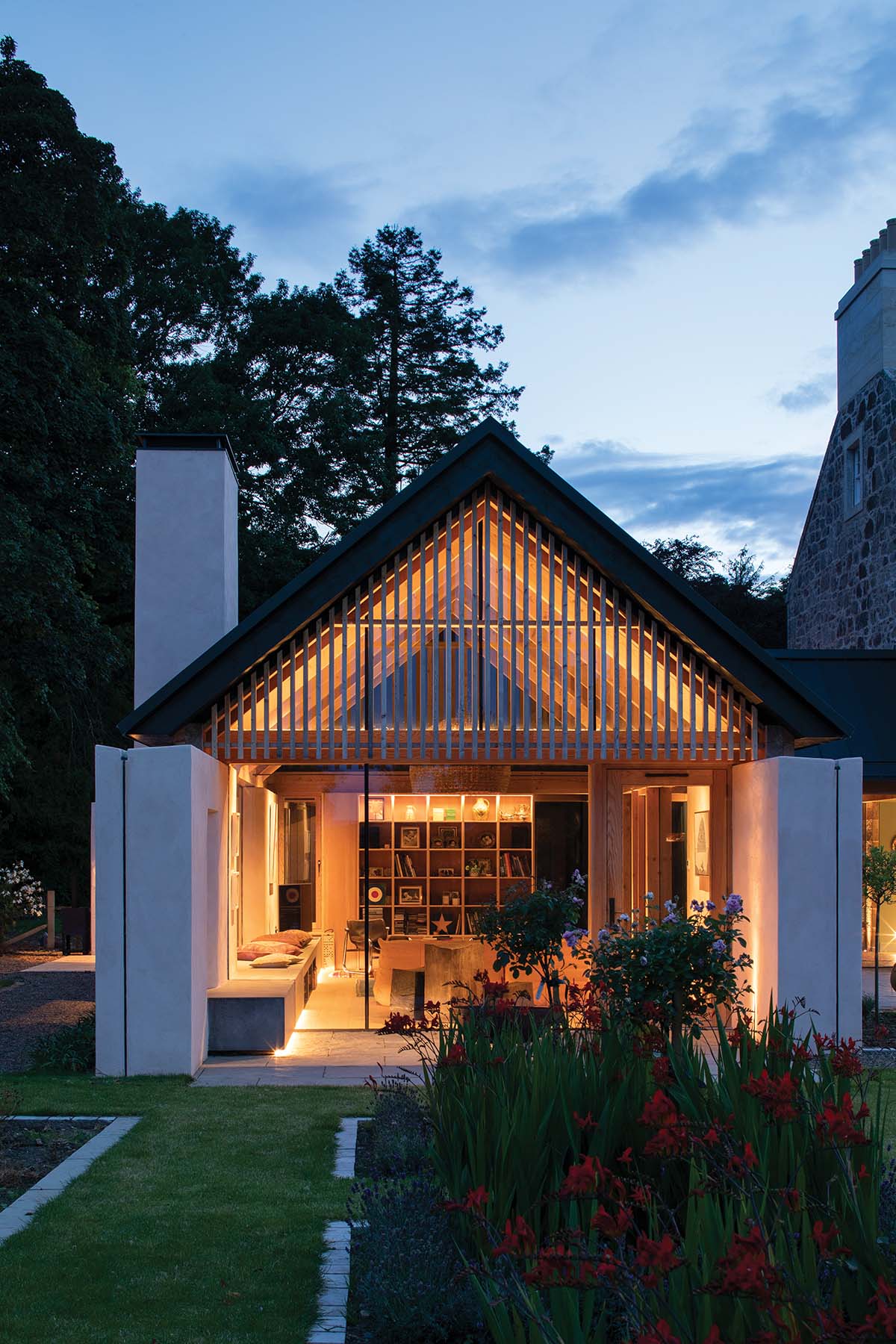
“We wanted the new rooms to feel as though they had been borrowed from the landscape,” says Thomas, “arranged almost like garden buildings, so the extension reads as something ancillary and supportive rather than competitive with the old house. The idea was always that the historic rooms would remain intact and legible, with the new architecture providing the spaces that simply couldn’t be accommodated there without compromising their character.”
This is an excerpt from issue 165 of Homes & Interiors Scotland.
Want to read more? Buy our newest issue here.
Like the look of this Scottish manor house? Read about a Hebridean equivalent below.
An innovative home in the Hebrides that is rooted in the past, but using modern updates