

Creating a warm and cosy space is a priority for most homeowners. What if you could heat your home in a way that not only cuts emissions but, together with insulation, can future-proof your home – keeping it consistently cosy and warm, and potentially saving you money in the long run?
This post was written in partnership with Scottish Government
Interior designer Banjo Beale has teamed up with the Scottish Government as part of a new net zero campaign to explore how a heat pump can work for different home types in Scotland.
Banjo headed out to the Perthshire countryside to meet Jane. Jane’s modern rural home was originally heated by an old liquid petroleum gas (LPG) boiler. Expensive to run and a hassle to maintain as she relied on fuel deliveries, Jane wanted a more practical and sustainable alternative.
Self-confessed tech whizz Al, meanwhile, showed Banjo how he has adapted his very first home in Falkirk into a renewable energy hub. Al had a traditional gas boiler when he moved in but since picking up his keys wanted to create a more sustainable set up.
Exploring their heat pump experience, here’s what Banjo has discovered.
Adapting your outdoor space
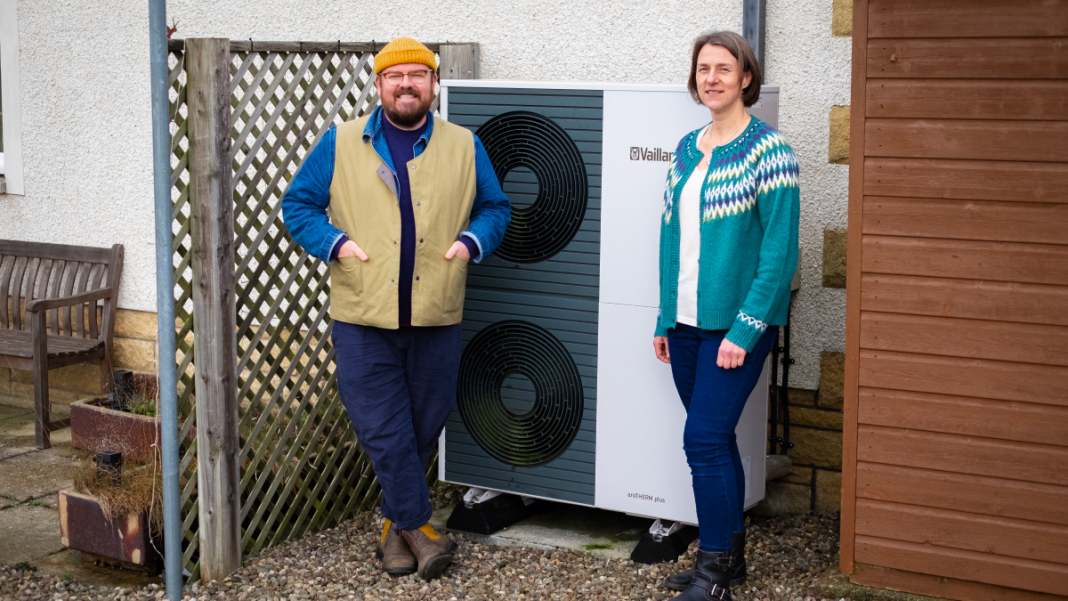
Heat pumps need a little bit of outdoor space, with both Jane and Al’s heat pumps tucked neatly into the side of their homes.
Jane also transformed the space where her LPG tank used to be in her garden into a wild nature pond, now home to diverse mix of wildlife.
Enjoying a steady warmth

Unlike his old boiler, which would blast out heat and need constant readjusting, Al’s heat pump keeps his home at a comfortable, even temperature. Working alongside a thermostat, it automatically adjusts how hard it works, according to how cold it is outside – so the warmth is always just right, without any fuss.
Al also loves having visibility of how his system is performing, and chooses to keep an eye on the data to stay in control. Whether he’s gaming, working in his study or hosting friends for dinner, he can simply relax in a cosy, consistent warmth.
Quiet enough to still enjoy the bird song
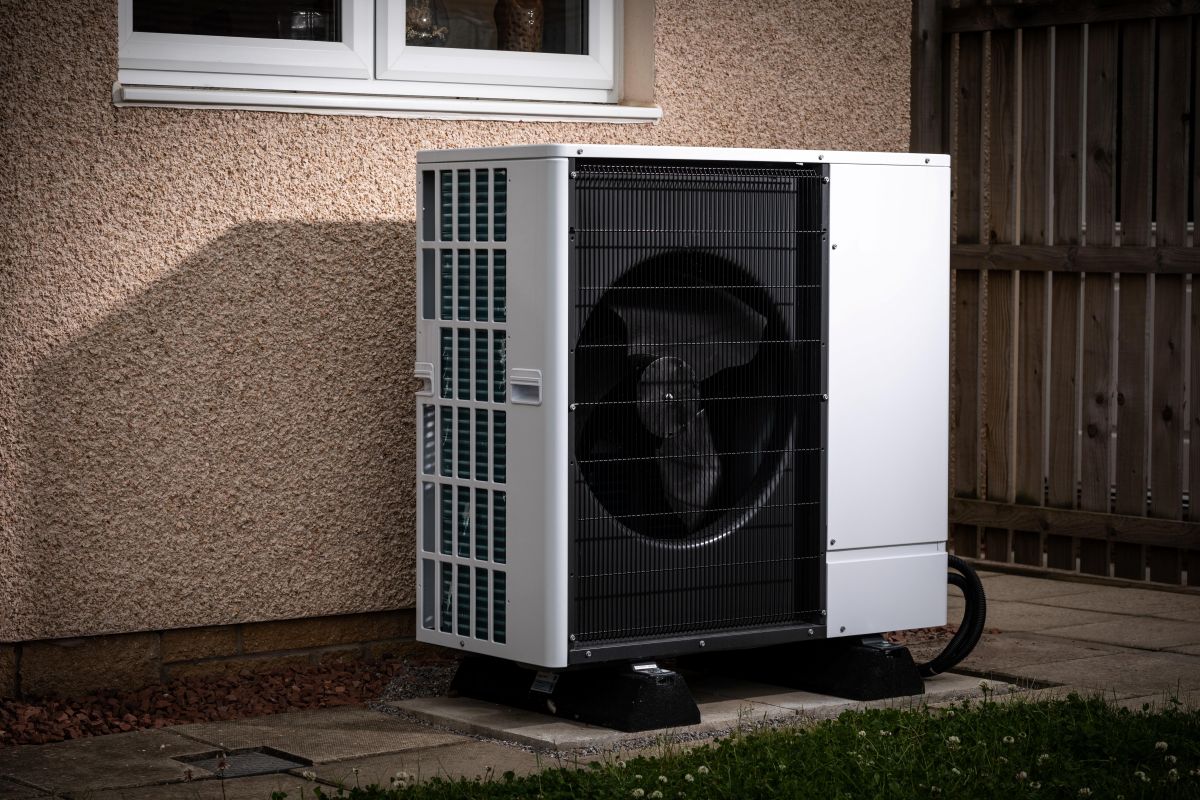
People assume that heat pumps are noisy, however both Jane and Al barely notice that theirs are there. As the heat pump only creates a quiet hum, Jane and Al can enjoy their outdoor spaces in peace and comfort.
Efficient, even in a cold Scottish winter
Even in the cold Scottish winter, Jane and Al’s heat pumps work effectively and efficiently to keep their homes at a steady warmth. Alongside their heat pumps, both also have solar PV panels and battery storage integrated into their homes, which has enabled them to become even more self-sufficient and to save money on their energy bills.
Because heat pumps run on electricity, most of which comes from renewable sources, both homes run on clean energy with no direct emissions which also benefits the planet.
Finding the right advice and financial support
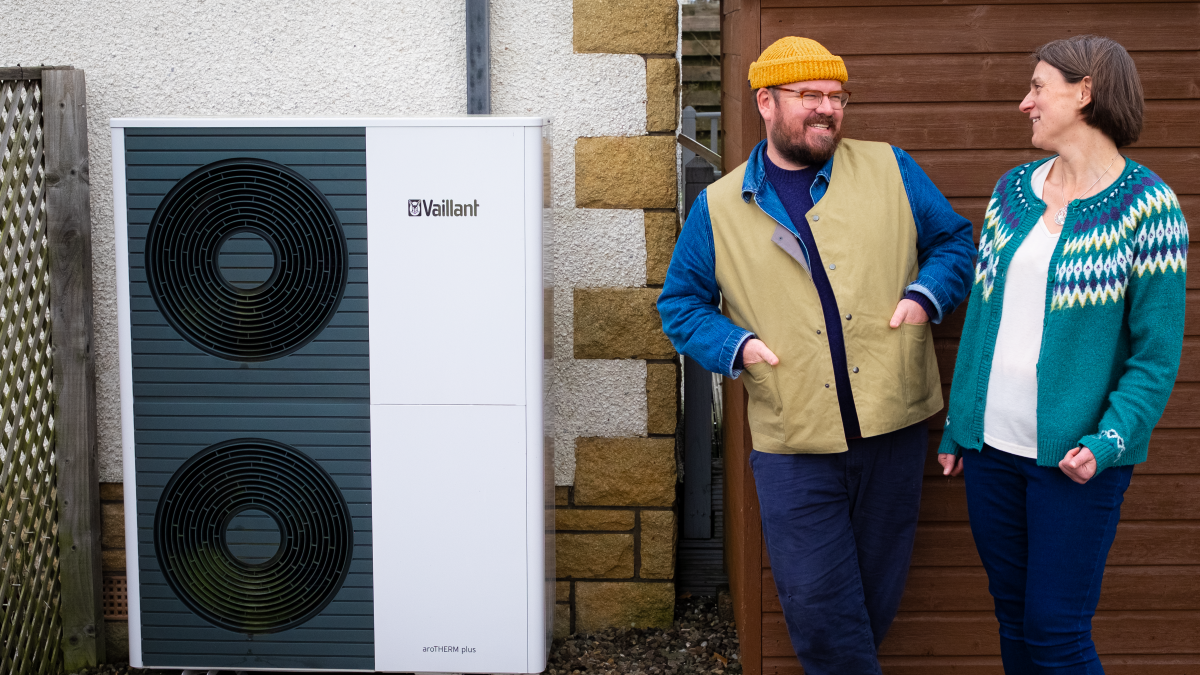
Before installing a heat pump, Jane did her own research – learning more about the technology from a family friend and exploring options online. She also received advice from Home Energy Scotland to help determine the most suitable heating system for her home, and funding support to make the switch sooner.
Top tip from heat pump owners
A top tip from Al is to do your research. Similar to Jane, he looked into finding out more online and speaking to people who had already installed a heat pump. He’d also encourage anyone thinking about installing a heat pump to try and see one in person and get hands on with the technology.
Learn more about heat pumps, how they work and the benefits they can bring to your home
Visit netzeronation.scot/take-action/heat-pumps
For free, impartial advice and funding support
Contact Home Energy Scotland at homeenergyscotland.org or call 0808 808 2282