

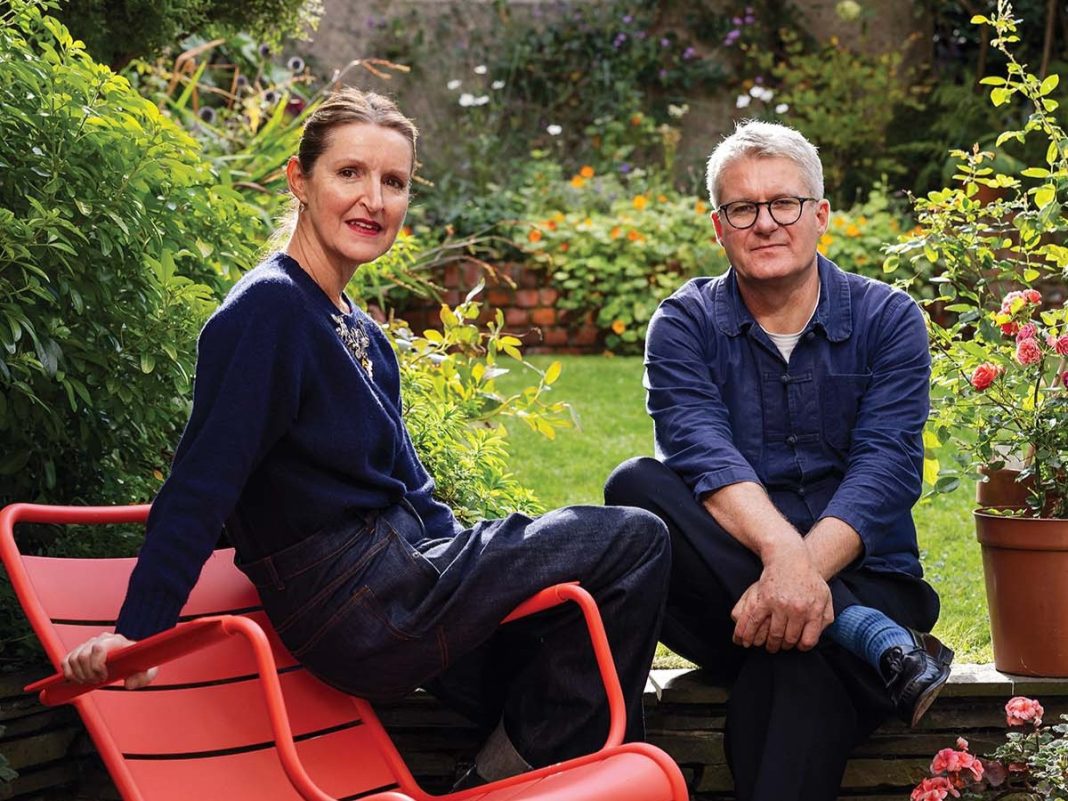
Glasgow’s most cutting-edge creative couple? Probably. But the gallerist and fashion designer are far too busy enjoying work and life to care about stuff like that
In St Margaret’s Church in Glasgow’s Southside are five stained-glass windows designed by Gordon Webster. They filter the sun through a patchwork of jewel-toned panes. The celebrated stained-glass artist created hundreds of them in his lifetime; a skill inherited from his father Alf, whose name and work ornament Websters Theatre in the west end. Gordon and Alf are no longer here, but their art still pulses in technicolour. Great art outlives us all.
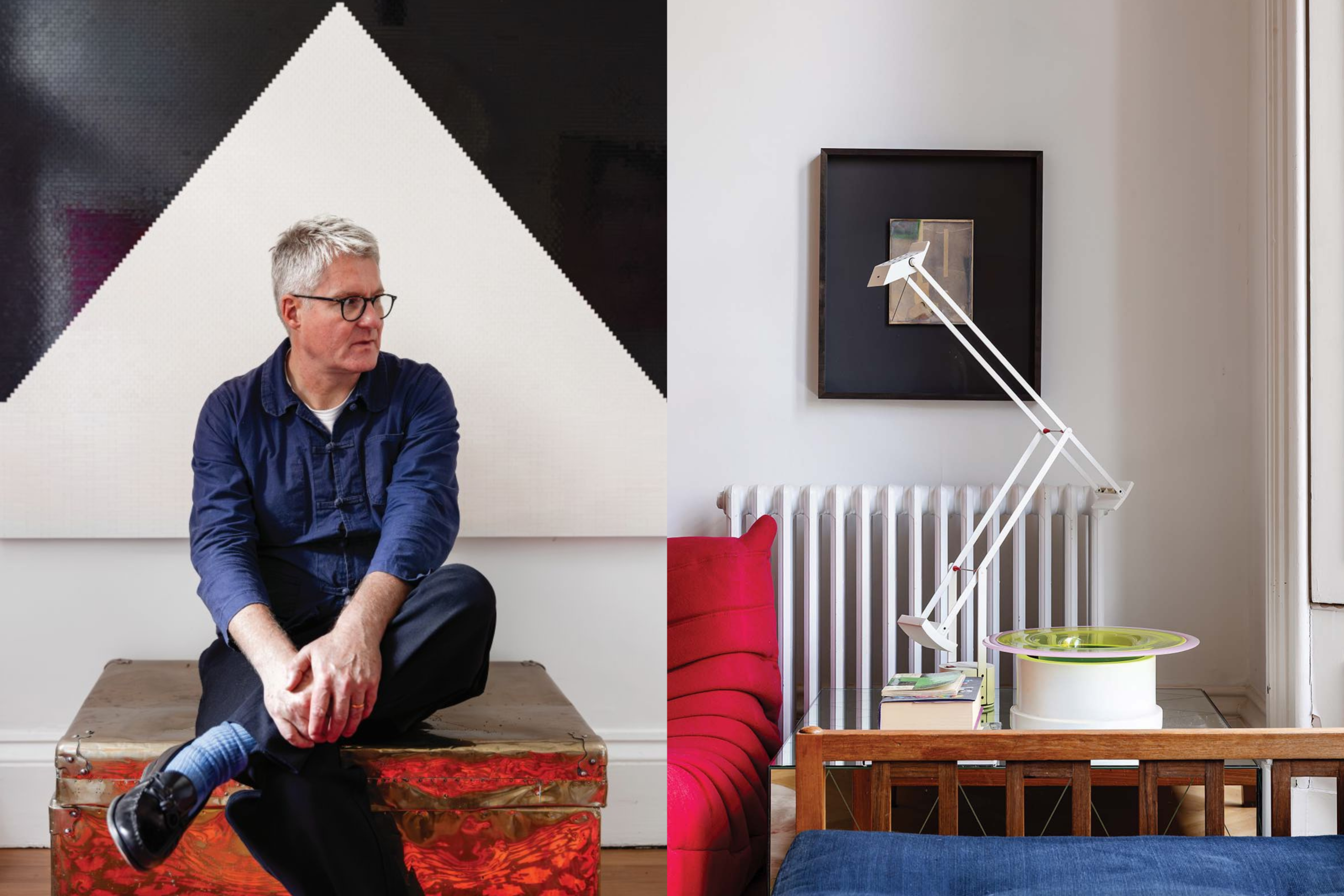
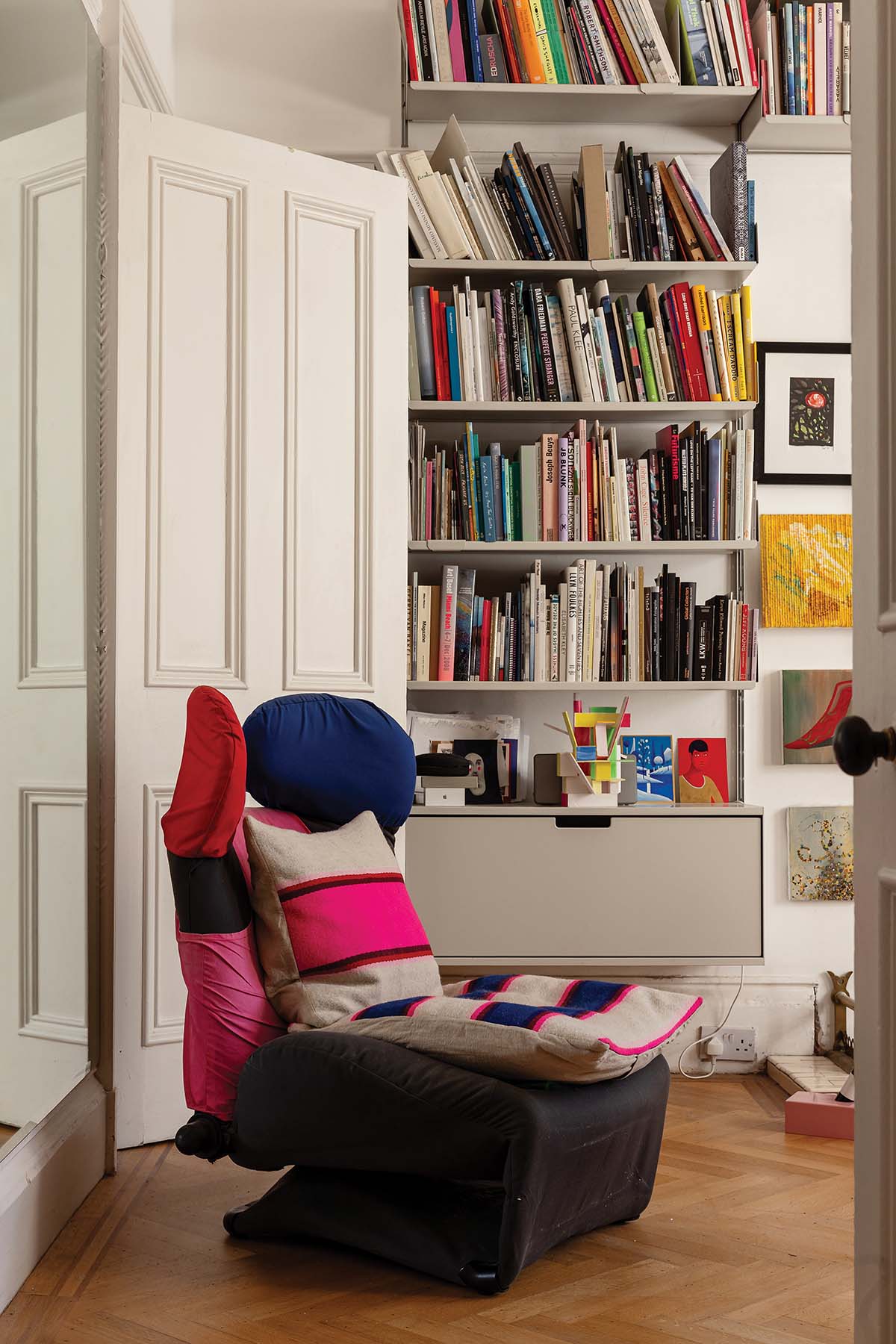
Not far from the theatre, Gordon’s grandson Toby Webster sits across from his wife April Crichton. The kitchen worktop sandwiched between them was hewn from a slab of wood that once resided in Gordon’s workshop. Every object in their Victorian terrace reveals a story. And, though they’d challenge this claim, none is quite as compelling as the story of a Glasgow couple whose contribution to the arts spreads far beyond the contours of their home city.
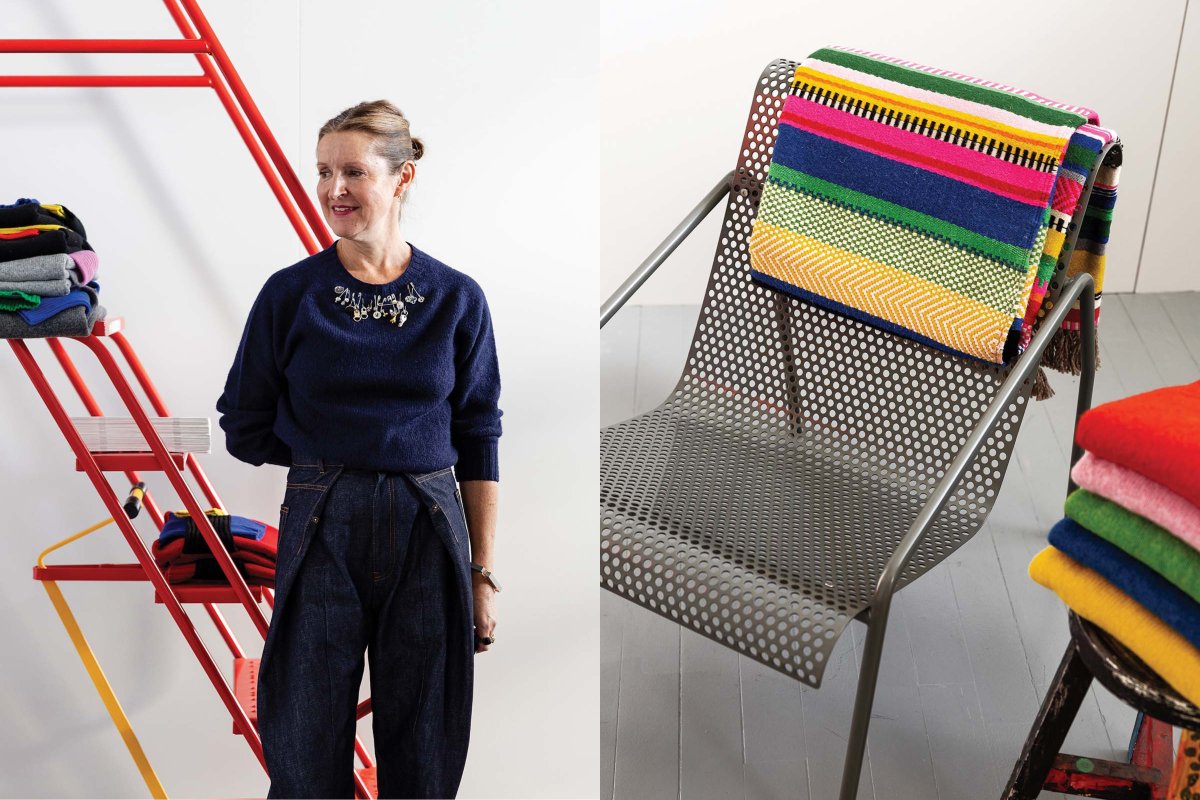
Toby, the founding director of The Modern Institute art gallery and interiors company Rendezvous, and April, the designer who co-founded the fashion brand La Fetiche, met in the late 1980s. April was studying art in Edinburgh, where she shared a flat with Toby’s sister, the tapestry weaver Emma Jo Webster. “Toby and I just got on really well,” recalls April. “We liked music, clubbing, thrifting, going to gigs… He’s an incredibly enthusiastic and curious person who likes odd, different things and opens your eyes to the world.”
For a few years, the pair flitted in and out of each other’s lives. Toby studied architecture and product design at the Glasgow School of Art then switched to environmental art, a course that counted the artists Christine Borland and Nathan Coley among its alumni. April moved to London to do fashion at Central St Martins, joining a tribe of young, alternative creatives who loved dressing up and going out. John Galliano had graduated a few years before and the city’s underbelly thrummed with an anarchic DIY spirit. “It was around the time of Leigh Bowery’s Taboo and the Blitz; the club scene was incredible,” says the designer. “We’d spend our weekends making outfits to go out in.”
She had adored fashion from a young age, inspired by her “otherworldly” grandmother. Post-graduation, she went to Paris and Milan with her book in hand, approaching designers. “You’re fearless at that age, aren’t you?” she says. “We’d go to Paris Fashion Week, knock on Comme des Garçons’ door and ask for tickets to their show. And they would say yes because they liked how you dressed. Anything’s possible if you just get on with it.”
Like landing a job as a stagiaire at Sonia Rykiel, say. April worked there for 22 years, launching the diffusion line Sonia by Sonia Rykiel and latterly taking the helm as the label’s creative director. The Parisian designer, revered for her idiosyncratic aesthetic, admired her protégée’s sartorial chutzpah. “She was fun and theatrical,” smiles April. “I once went to Monoprix in my lunch hour and bought a pink K-Way cagoule. She pinched it from me, tied it around her waist then went off for lunch at Café de Flore.”
Toby would get the bus to visit April in Paris, and by the mid- 90s, the pair were properly together. The designer divided her time between the UK and the French capital, and when she and Toby started a family, their three kids would come on sojourns to Paris too. “It was beautiful. We’d spend our days walking around the zoo,” says Toby. “But we do ask ourselves now how we actually managed to do it – it was a lot.”
By 2015, and working for Marc Jacobs in New York, April knew it was time to start a label on her own terms. “I adored Marc and the way he creates, but [being there] felt alien to where I was at in life; I was about to turn 50 and everyone in the studio was 20-odd. Plus, the travel wasn’t sustainable.”
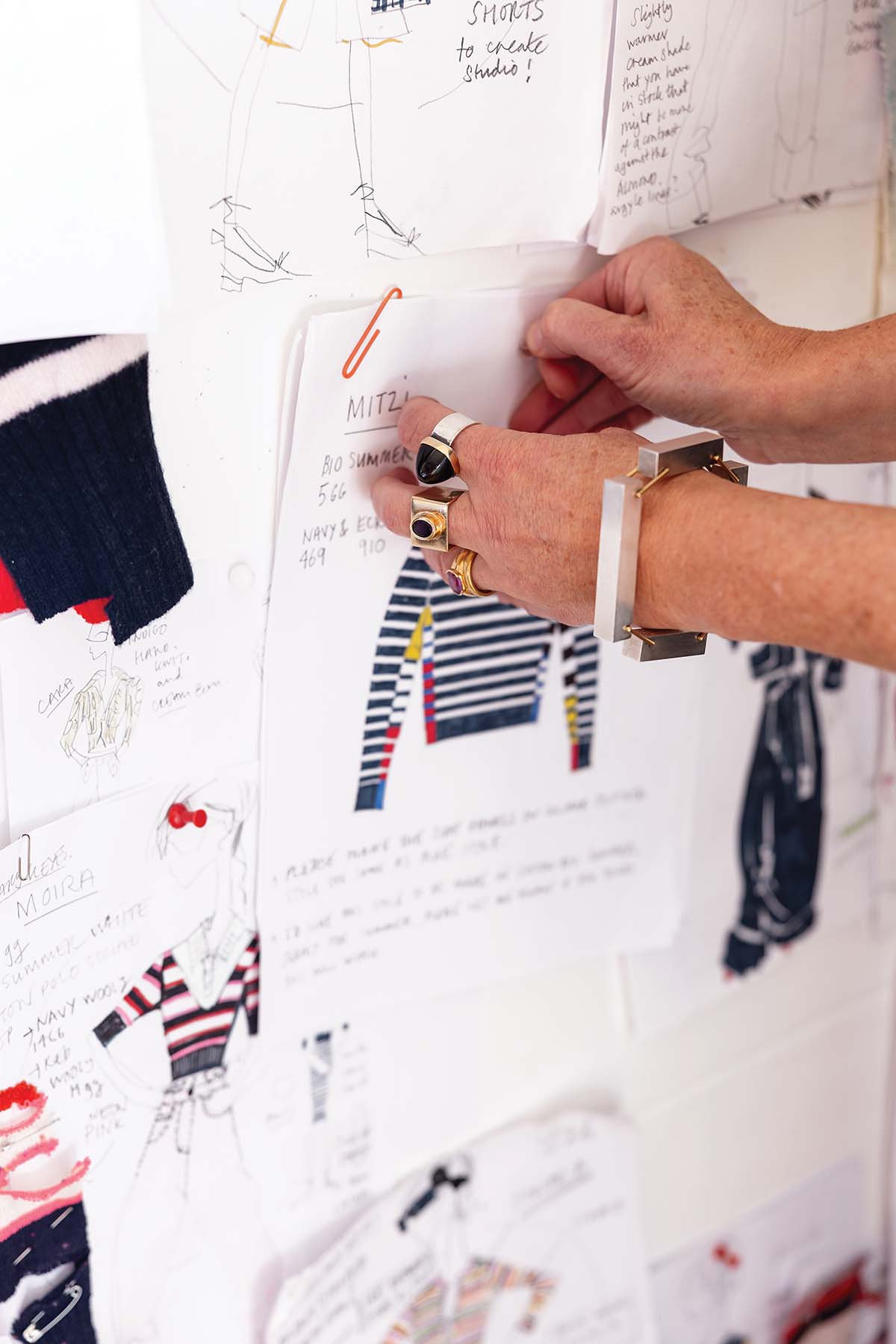
In 2017, along with fellow Rykiel alum Orély Forestier, she launched La Fetiche, a brand that infuses easy-to-wear staples with joyful eccentricity – think Fair Isle knits woven in day-glo neons and glossy raincoats garlanded with paisley-print pockets, all made by skilled artisans. “We wanted to work with heritage makers and have a nostalgic sensibility, but make it more graphic and interesting,” she says. Eight years on, they have celebrity fans (including Tom Daley) and their stockists span four continents. All of the stock lives in their Glasgow showroom, and many of the garments are made nearby too. How thrilling that a trench coat born in Cumbernauld could find a home in South Korea.
April, says Toby, “was more major before I was”. But he was always working towards something big, even if he didn’t yet know what. He had never known life without art; growing up he spent every Wednesday in his grandfather’s studio, painting and kiln-firing glass. “We thought it was normal to be an artist in Glasgow – it was in our DNA,” he says. “Looking at Glasgow’s buildings and public spaces, and the way that creativity exists in those places, is very inspiring. You absorb the fabric of the city.” Though Toby worked in London in the early 1990s for the designer Ron Arad (“and in a lot of restaurants,” he laughs), he and April were inevitably drawn back into Glasgow’s bosom.
This is an excerpt from issue 163 of Homes & Interiors Scotland. Want to read more about April and Gordon? Buy your issue here.
This Life: The Mercat Café’s Laura May Wilson weaves style and soul into Culross