

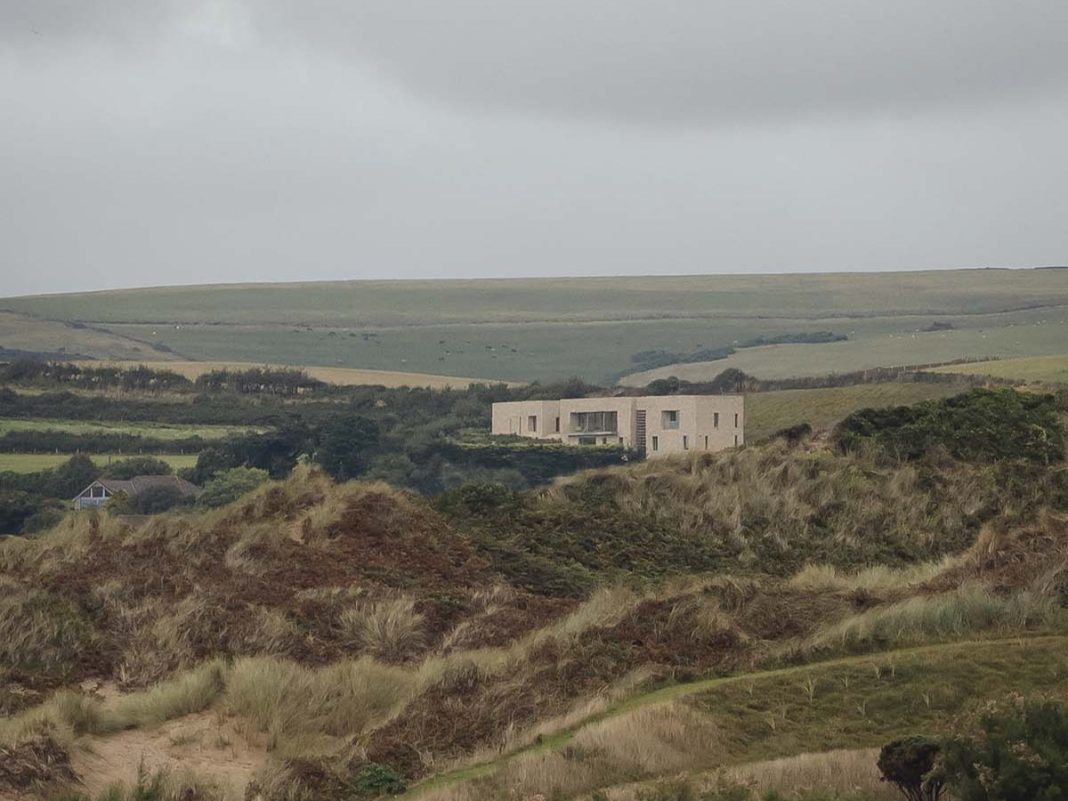
Pared-back and self-effacing, Bay House keeps a deliberately low profile. But this build on Devon’s north coast is worthy of much closer inspection
Alastair Bowden’s description of Bay House as a “gentle giant” is apt. Do as the architect suggests and climb up towards its location above a village on the west-facing coastline of North Devon; you’d barely even know it’s there, save for the tallest reaches of its pale Purbeck stone façade peeking above the hedgerows of a sunken lane.
Lying low within the natural topography of the hilltop plot, it seems on first impressions to be a modest, single-storey home. But look again and you’ll see it gradually reveal itself, stretching out lazily in layers down the reverse slope, tucked into the lush green landscape like a slumbering goliath.
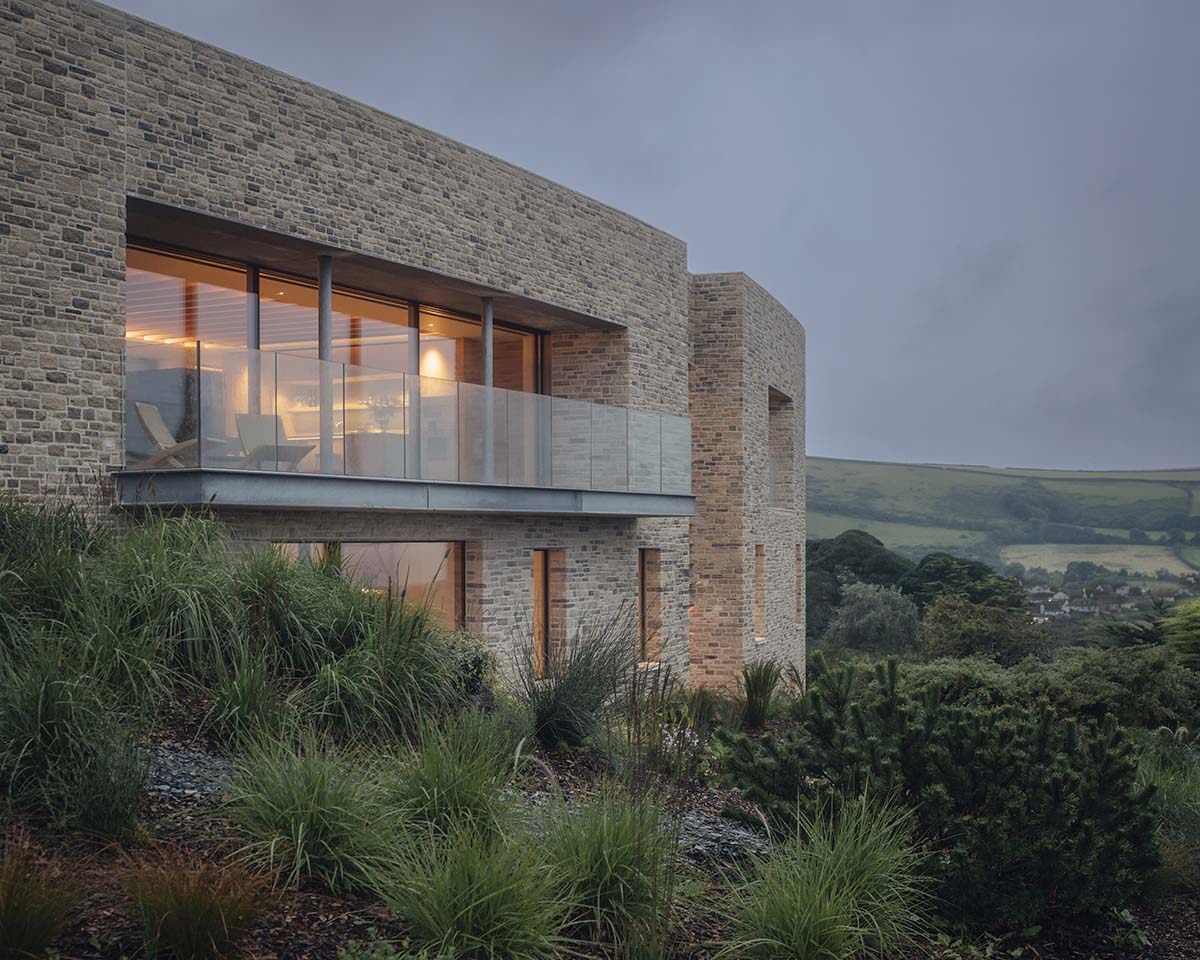
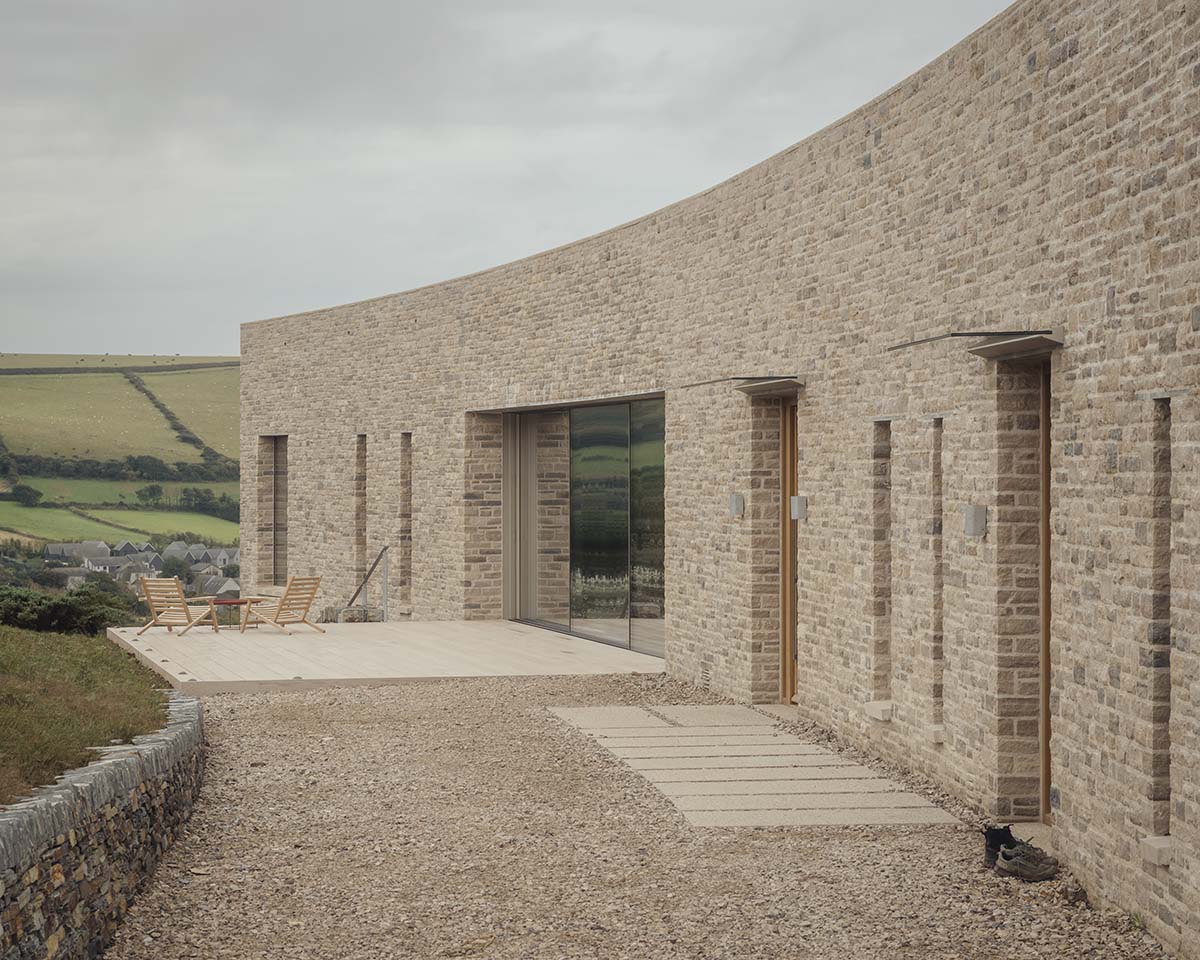
The terrain around Bay House is full of irregularities, from the sharp bend of the ancient lane it lies alongside, to the lumps and mounds of the hillsides (nature doesn’t do straight lines). For it to work, its architects, from English practice McLean Quinlan, reasoned that the home had to curve. “If you stuck a big blocky building there, it would look quite harsh,” says Kate Quinlan, who designed Bay House together with fellow directors Alastair Bowden and Fiona McLean. “We were trying to do something that blended in. It’s a flat roof; it’s a big chunk. But because it’s got that curve, it almost feels more like a cliff face. It’s just not as jarring.”
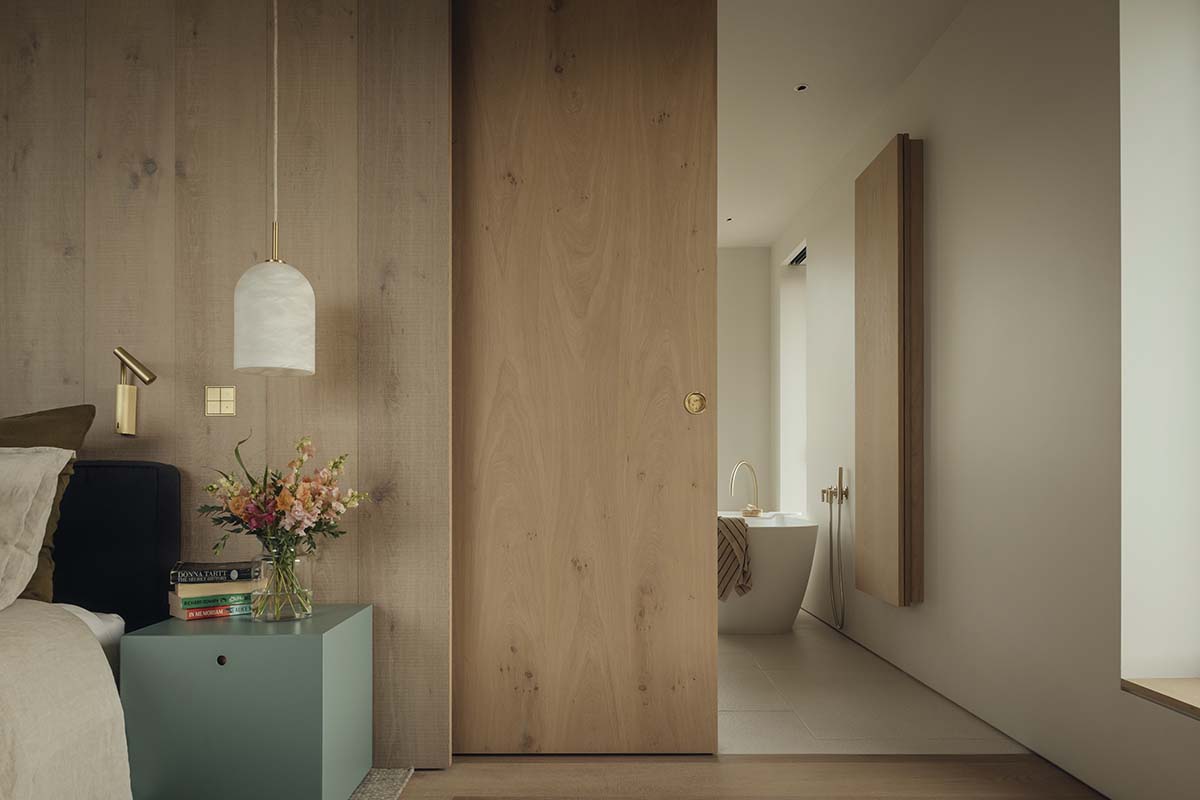
Designed as a second home for an active, community-focused family, the five-bedroom, three-storey low-energy eco-house was completed last May after a three-year build. Factor in a false start with a different architecture practice before that, and it has been the best part of a decade in the making. The family have longstanding roots in the local community, where for years they owned a holiday house on the same plot (a plain 1970s bungalow, now demolished). They were determined to see through their dream of a bespoke coastal home, shaped to the landscape they love and their favourite everyday pursuits of surfing, cycling and walking (hence a large garage and carefully sequenced utility spaces, for stowing muddy and wet gear upon arrival).
The family insisted on using a local building contractor Oceanside Property Development whom they were friendly with, based in the village just down the road. The architects admit they were a bit uneasy about the idea at first, as it’s their preference to keep relationships purely professional. But in the end it worked brilliantly. “The builder and all his team really put their heart and soul into it,” says Kate.
“He even made a special gate so he could walk there quicker from his own house,” smiles Alastair.
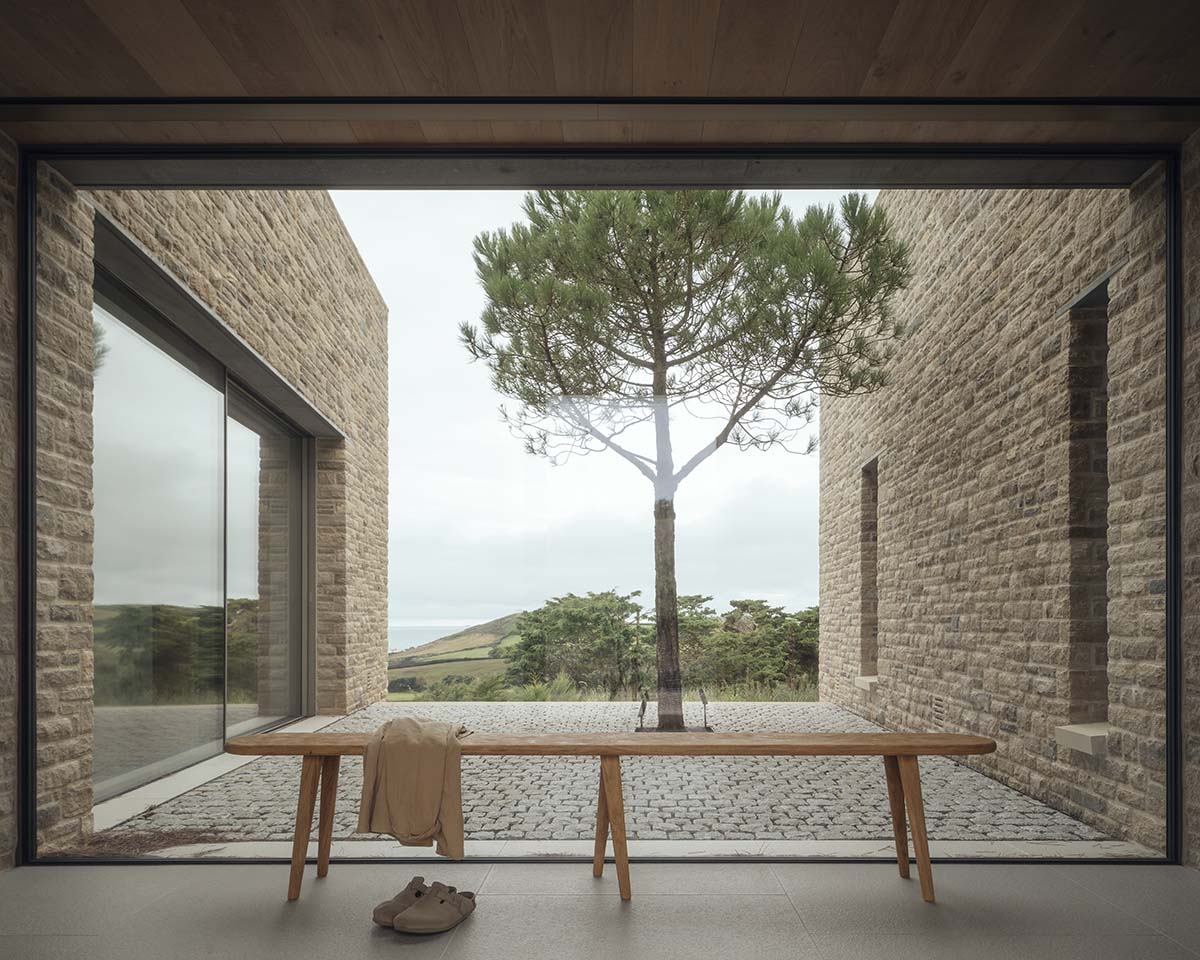
Finding just the right type of stone for the façade – resilient enough to cope with the rugged seaside weather, yet fitting in with the local vernacular – was one of the key first building blocks of the design. The search took a while. “We looked at a lot of stone,” laughs Alastair. “The local stuff is really dark and quite gloomy, especially when it gets wet. It just wasn’t the right appearance – the beach and the dunes here are all very light-coloured. So, we searched far and wide and found the Purbeck stone in the neighbouring county of Dorset.”
Native to the Isle of Purbeck, this type of limestone is known for its durability, and has been used in construction around the south of England since Roman times. “It has this really nice, sunny sort of quality, so even on a dull day it looks bright,” Alastair adds. “It comes from a little bit further away, but still is very much of the West Country.”
Temperatures and conditions on this stretch of the North Devon coast can vary wildly, from high heat to extreme winds, rain and salty sea spray. Bay House has been built from the ground up to resist it all. The walls are deep and solid. Where the house cuts into the landscape at the rear elevation, a slender 80cm void has been cleverly left between the wall and the embankment, beneath an external staircase. The space hosts services, and provides a protective layer that will ensure the longevity of the house. “It’ll keep out the damp,” explains Kate, “and it means that you can access the rear of the house, which otherwise would be against earth. We’d like this building to be around for a long time.”
This is an excerpt from issue 162 of Homes & Interiors Scotland. Want to read more about Bay House? Buy your issue here.
The flow in this bright two-storey home makes absolute sense for its owner’s lifestyle