

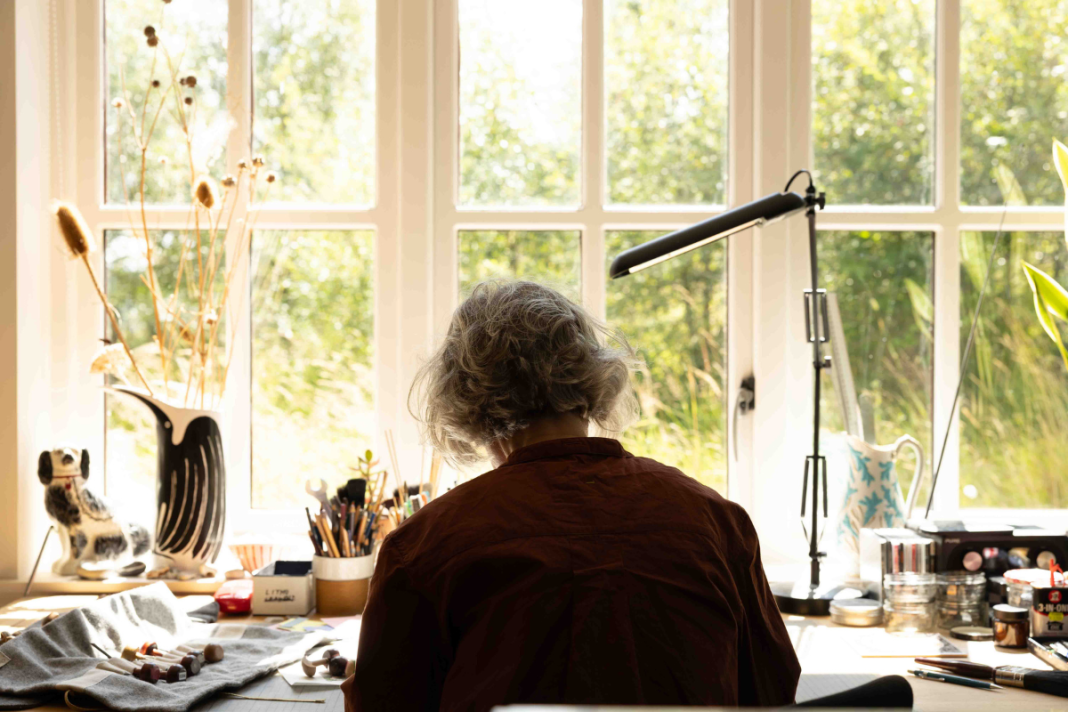
Inspiration is everywhere to be found in the wildflower-filled garden and art-filled Speyside home of the printmakers and St Jude’s founders
Angie and Simon Lewin’s dog Piper leads a contented life with his two humans. Each morning, the border terrier trots into his elevated garden, looks to the curvy summit of Ben Rinnes with the rolling hillsides of Moray on either side and sniffs the fresh moorland air.
Piper is an artist’s dog. He is named after one of Angie’s artistic heroes, the twentieth-century English Modernist painter and printmaker John Piper.
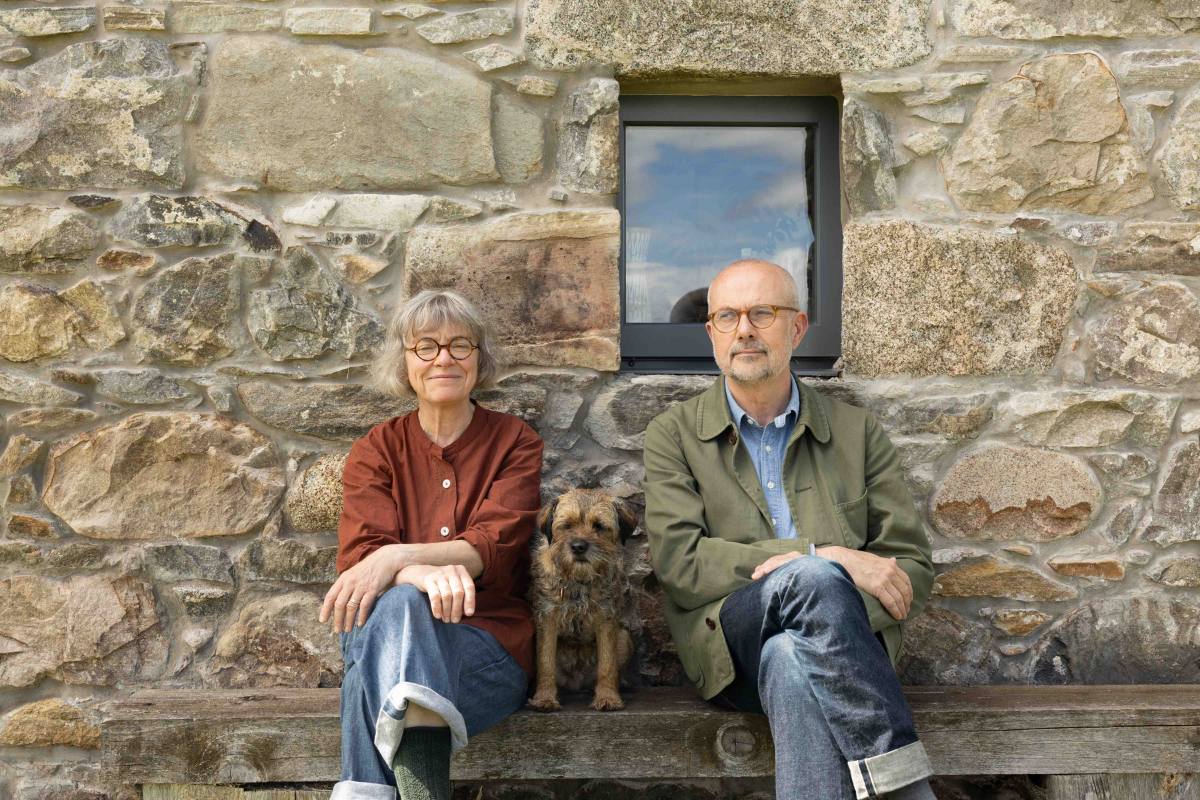
Like John Piper, Angie is drawn to the rich, multi-layered and detailed patterns of the natural world around her, be that in Speyside, the Outer Hebrides or Norfolk. Her work also finds its way from print and paint into other media. You may well have sent a greetings card with an Angie Lewin design, or bought fabric with her Dandelion designs on it. I know I have an Angie Lewin calendar on my wall.
I also have each volume from Thames & Hudson’s popular The Book of… series featuring Angie’s illustrations of pebbles, garden flowers and wild flowers with text by her friend Christopher Stocks. Their next one, The Book of the Seashore, will be published in 2028.
In Angie’s work, anemones, borage, dahlias, fritillaries, dogwood and humble seed-heads or feathers emerge from favourite vases or bowls, depending on the place she draws or paints. “For me, each print and each painting involves the next step onwards,” she says with a smile. “There’s a link between everything.”
A walk around the Highland steading she shares with Simon is like entering into their melded minds, with added strong coffee made by Simon, accompanied by delicious cake baked by Angie.
They both work from home, she in a studio space next to their restored steading, and he in the steading itself. A graphic designer, curator and publisher, Simon is also an accomplished musician and runs a record label, Blackford Hill, named after the place they used to walk their dogs in Edinburgh.
The couple moved to Speyside full-time in 2020, having previously lived in Hackney, Norfolk and Edinburgh.
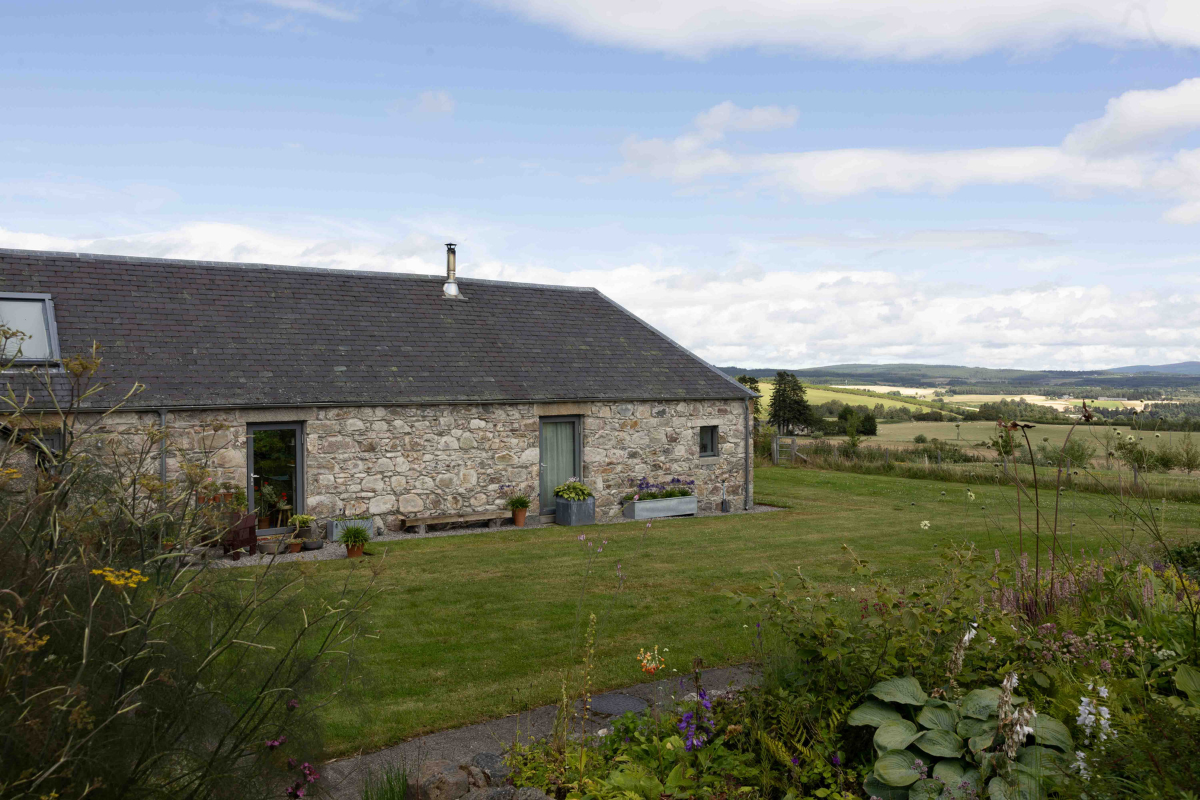
The property, which consisted of an old farm cottage, a steading and the footprint of a barn, was derelict when they bought it in 2002. Overrun by sheep and rabbits, it had been uninhabited for more than 30 years. The cottage, where Angie now has her studio space, was renovated with the help of a local architect in the early 2000s.
Work on the adjacent derelict single-storey steading began in 2010, led by architect Mary Arnold-Forster who was then working with Skye and Glasgow-based practice Dualchas. “I had seen work by Dualchas before and thought its architects had the right approach,” Simon explains. “It was a great experience working with Mary and also with our brilliant local builder Willie, who knows this area inside out.
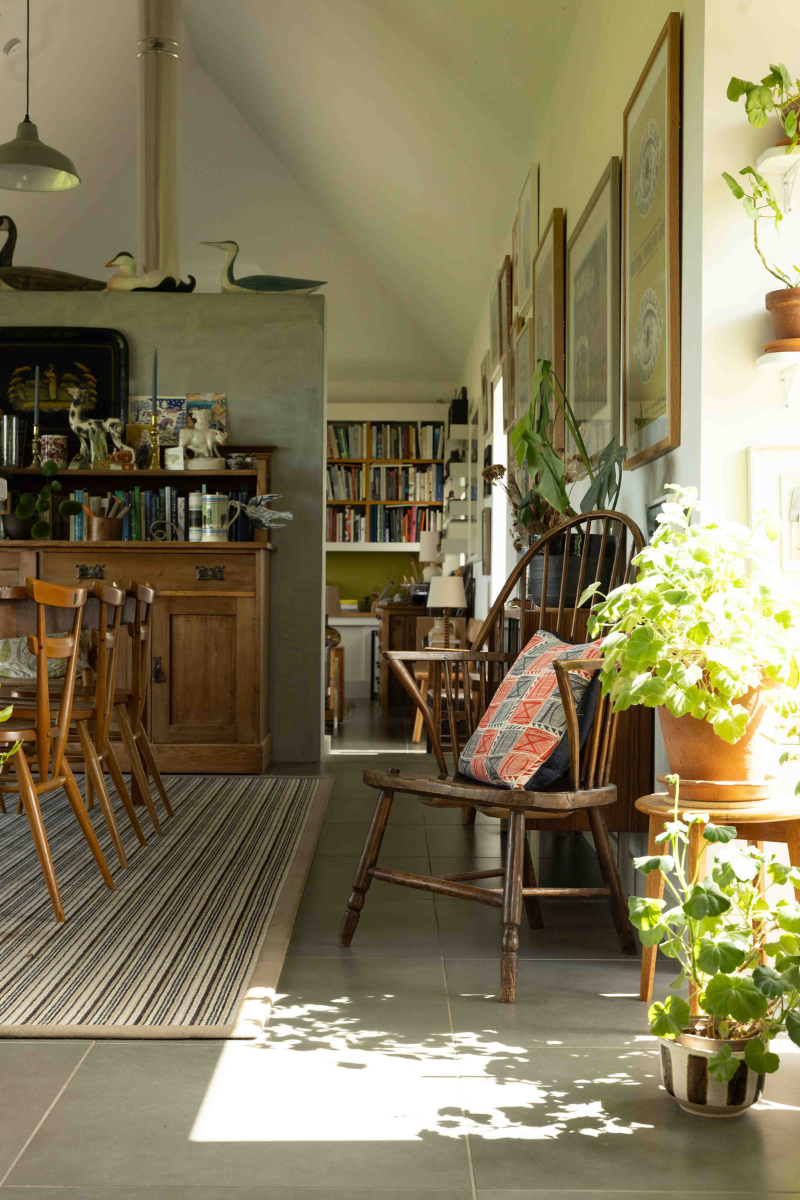
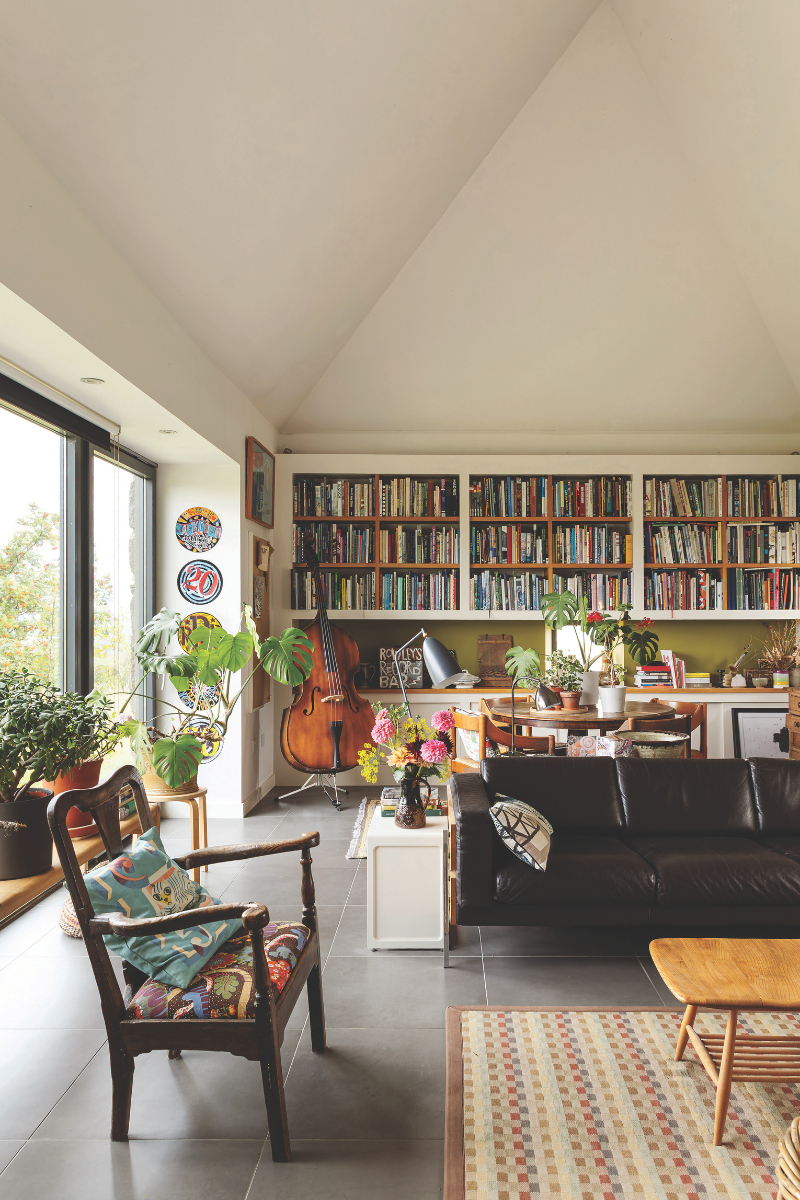
“The roof was sound, which was a great bonus. Mary brought in lots of light by way of cleverly positioned windows, giving us light from above and stunning views of the countryside in all weathers. It’s a very cosy home, especially if you look down from the kitchen, through our dining area and into the seating area, where I often work.”
The Lewins have created a business around their artistic lives. A creative child, Angie spent long hours in her father Stanley’s garden in the quiet Cheshire street where the family lived.
She was the youngest child with three older brothers and often drew in the garden. She moved to London in the 1980s to study fine art printmaking at the Central School of Art and Design, before completing a postgraduate degree in printmaking at Camberwell School of Arts and Crafts.
After graduating in 1986, she continued to work as a freelance illustrator, but she always missed being in the garden – and being with people. When she met Simon in London in 1993, he was working as a graphic designer and running his own music label. In 1994, she took two years to study horticulture and garden design at London’s Capel Manor College.
“This was an experience that changed my whole approach to creating artwork,” she says now. “Part of the training was looking at the structure of plants. I used to draw them closely and became fascinated by their make-up, especially those about to flower or the ones which had flowered already.”
In 1998, the couple bought a holiday home in Weybourne in north Norfolk, where Simon, who grew up in Lincolnshire, had spent childhood holidays. They both loved the way of life there, particularly the outdoor side of it, and ended up moving to Norfolk full-time.
It was there that Angie returned to her first love, printmaking, developing her trademark style after closely studying alexanders flowers and grasses on Norfolk cliff-tops and turning them into flowing, musical shapes of linocuts, wood engravings and lithographs.
She incorporated favourite patterns from vintage pottery. The designs echoed the style she loved so much in post-war artists such as designer Lucienne Day or printmakers from the 1930s and 1940s such as Edward Bawden and Eric Ravilious.
The couple moved to Aylsham in Norfolk and Angie’s work began to get noticed in London and beyond. Her palette is black and white with chalky colours and occasionally brazen pops of red, blue and tangerine.
A collector of her prints suggested it would work well on fabrics, and this chance comment led to the couple establishing a gallery, St Jude’s, in Aylsham in 2005. There, they started to sell her designs on fabric and cushion covers and, a few years later, wallpapers.
This developed into making work alongside artists they admired – the likes of Mark Hearld, Michael Kirkman, Ed Kluz, Emily Sutton, Jonny Hannah and others. St Jude’s also included twentieth-century printmaking heroes such as Edward Bawden and Sheila Robinson.
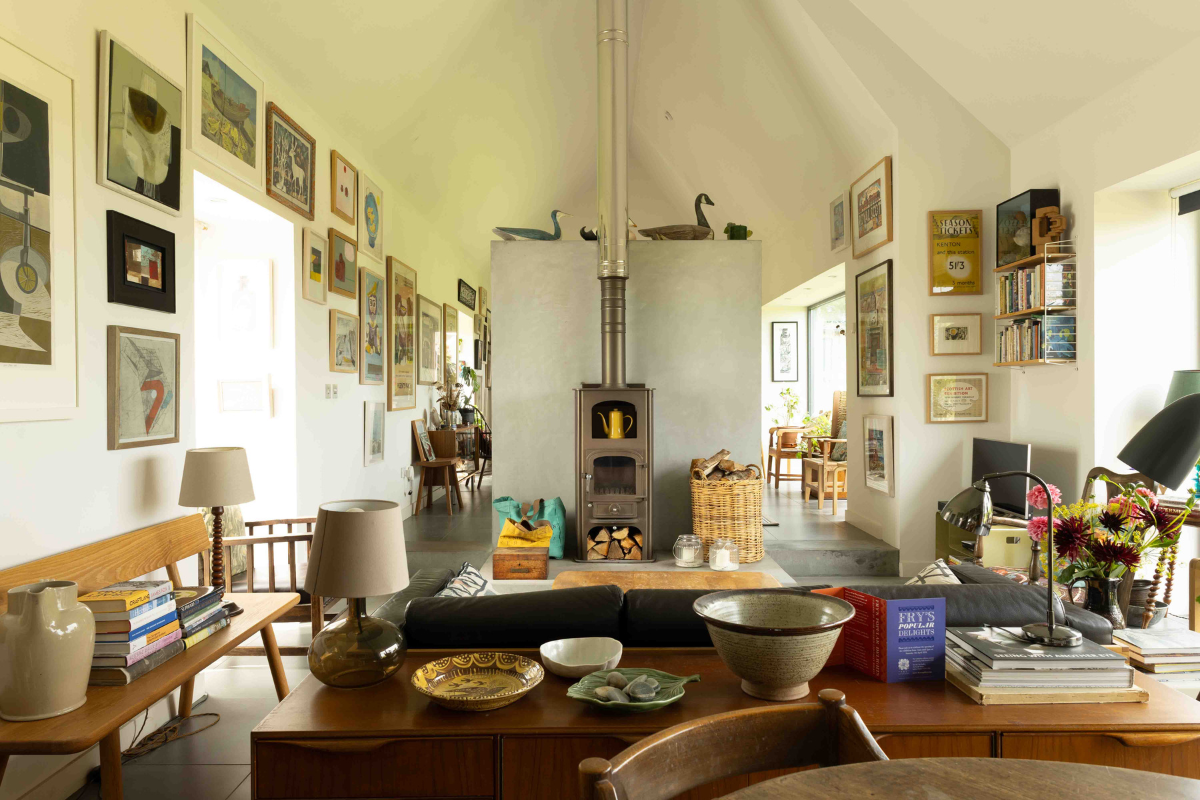
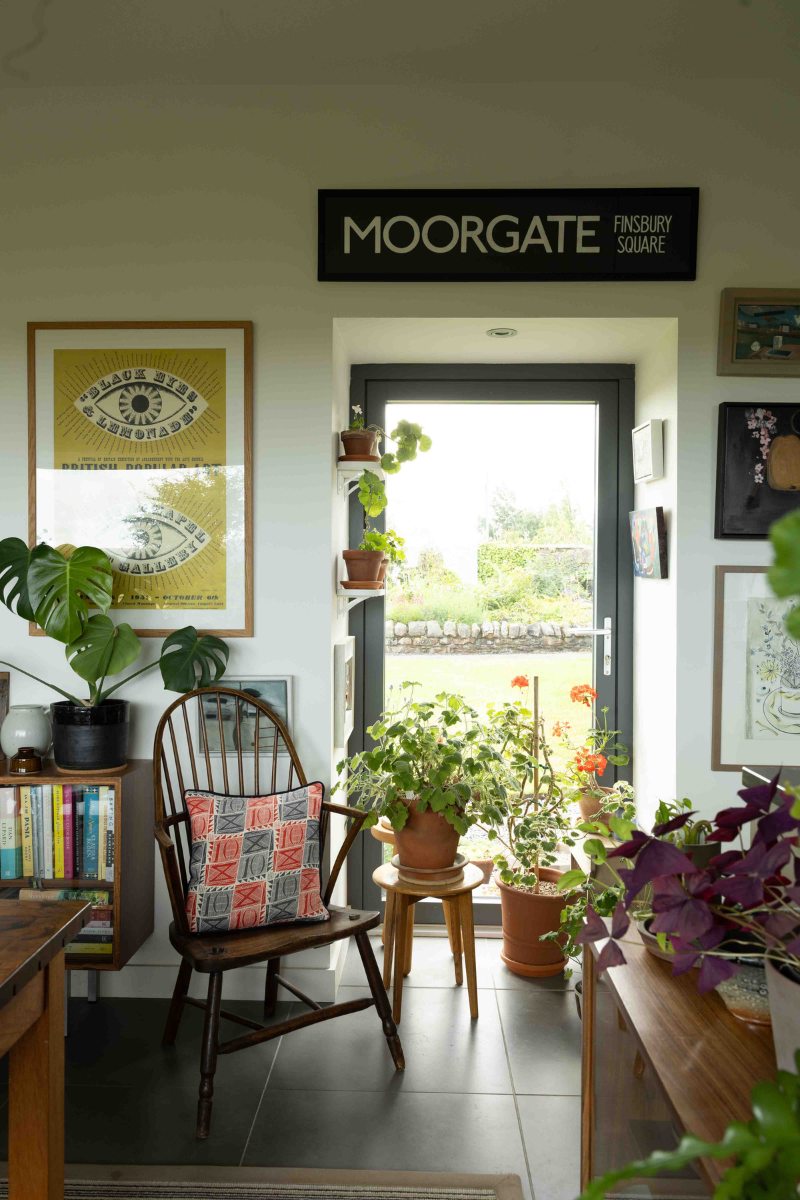
Today, the business continues to thrive with a base in Norfolk, and many of the works in the couple’s home today reflect the friendships developed through the venture. There are paintings, prints, drawings and sculptures on every surface and wall of their home. Angie is a book lover as well as a print lover, so there are books aplenty, not to mention exuberant foliage.
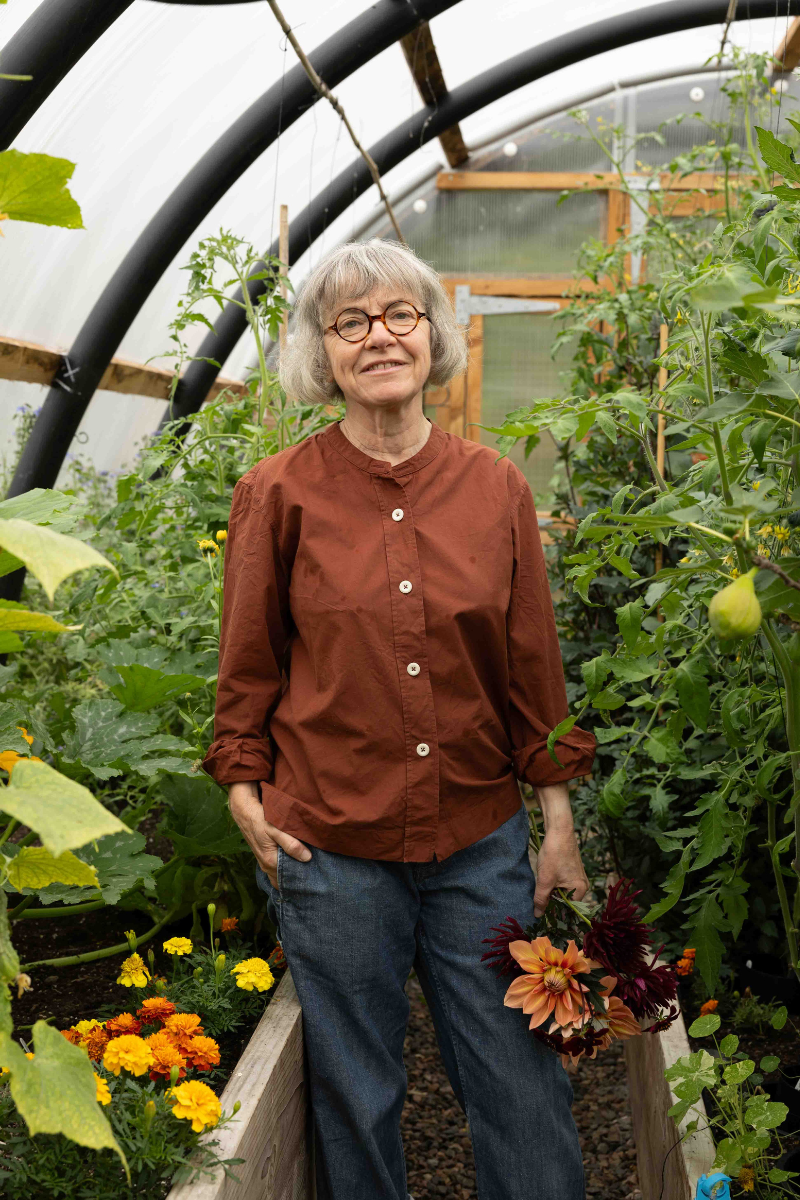
“House plants are Simon’s speciality and gardening is my area,” Angie laughs. Cut flowers in beautiful ceramic containers are dotted around the steading, including the bathrooms where they dance around ceramic wally dugs – some vintage, some with a contemporary twist. Most of the flowers are grown by Angie in her garden or in a Polycrub (Shetland-made storm-proof polytunnel). “It is particularly robust for this part of Speyside where we live,” she explains, “And it means I always have flowers available to draw or paint.”
The couple’s working day is companionable. As well as his work with St Jude’s and Blackford Hill, Simon is a consultant for artist-led publisher Art Angels. He is usually busy in the steading.
In her studio, meanwhile, Angie makes linocuts, woodcuts and screenprints when she is not painting.
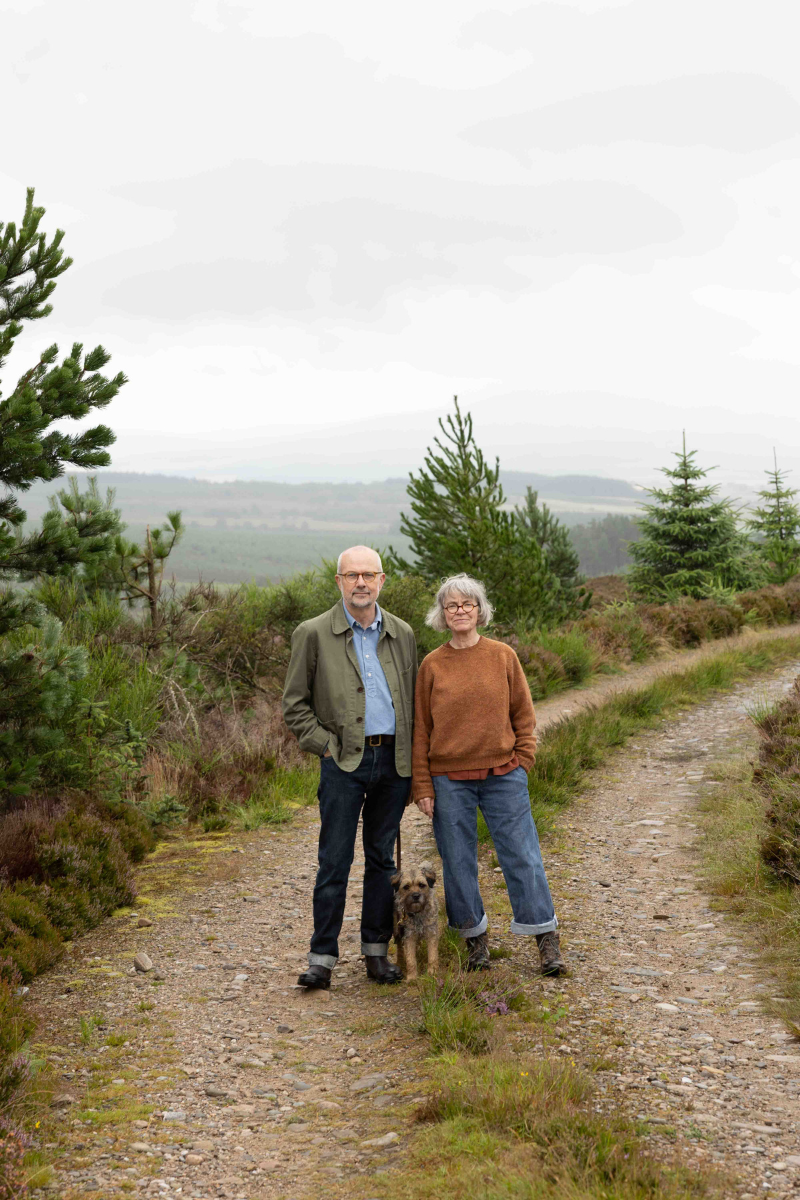
The garden also happily takes up much of her time. “Our working day is different as what we do is different, although we both love the joy of print,” says Angie. “We don’t step on each other’s toes, but everything in our home and business life has evolved organically. If I had ever designed a plan, it would have worked out this way!”
Angie Lewin’s exhibition of watercolours, Cultivated Colour, is at the Scottish Gallery in Edinburgh, from 1 to 24 October 2026. A major exhibition of work by St Jude’s artists, The Art and Craft of Print is at National Trust Mottisfont in Hampshire until the end of October
Meet Mark Donald, the chef behind the two-Michelin star Glenturret Lalique restaurant
Meet Mark Donald, the chef behind the two-Michelin star Glenturret Lalique restaurant