
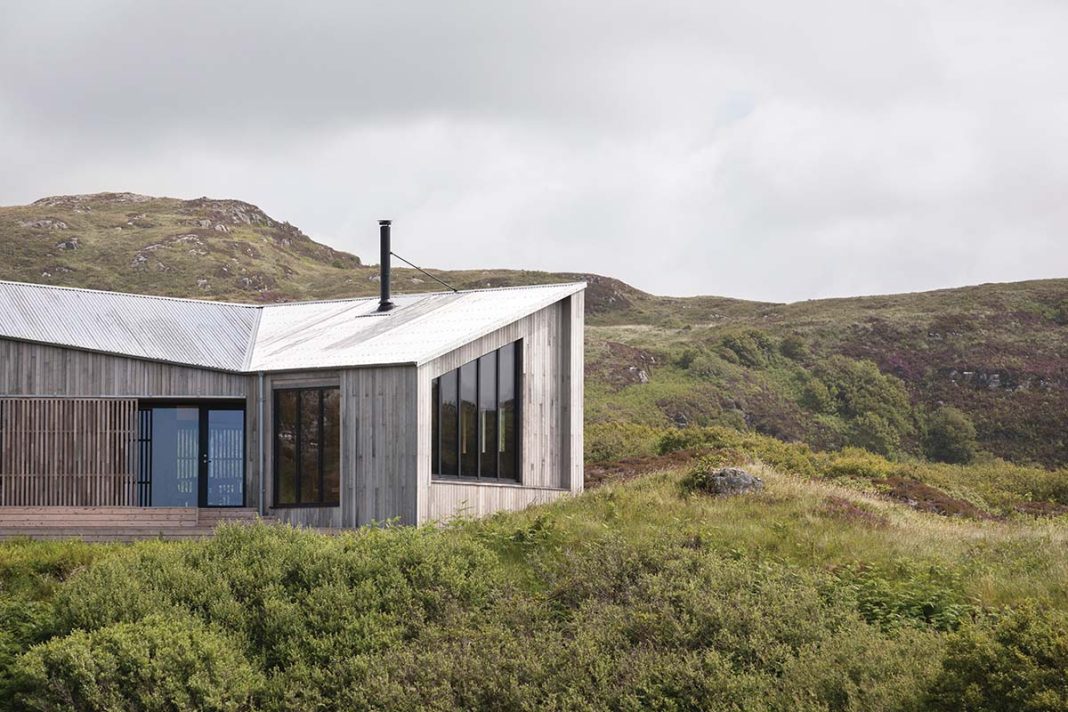
Building in one of Scotland’s remotest corners is a challenge, but it’s worth it when the reward is living here, in a beautifully designed, ultra-eco-friendly house
When it comes to a house, it’s always a good sign if the idea of being stuck inside it is seen as a positive rather than a negative. It says even more if the designer of said house would be quite happy to be imprisoned there. So it is with Thomas Fitzgerald, the architect behind Taigh na Coille, a remote house on the far north-west coast of Scotland. “I actually spent a week there on holiday and there was at least one day where we were basically trapped indoors by bad weather – but what a lovely place to be trapped!”
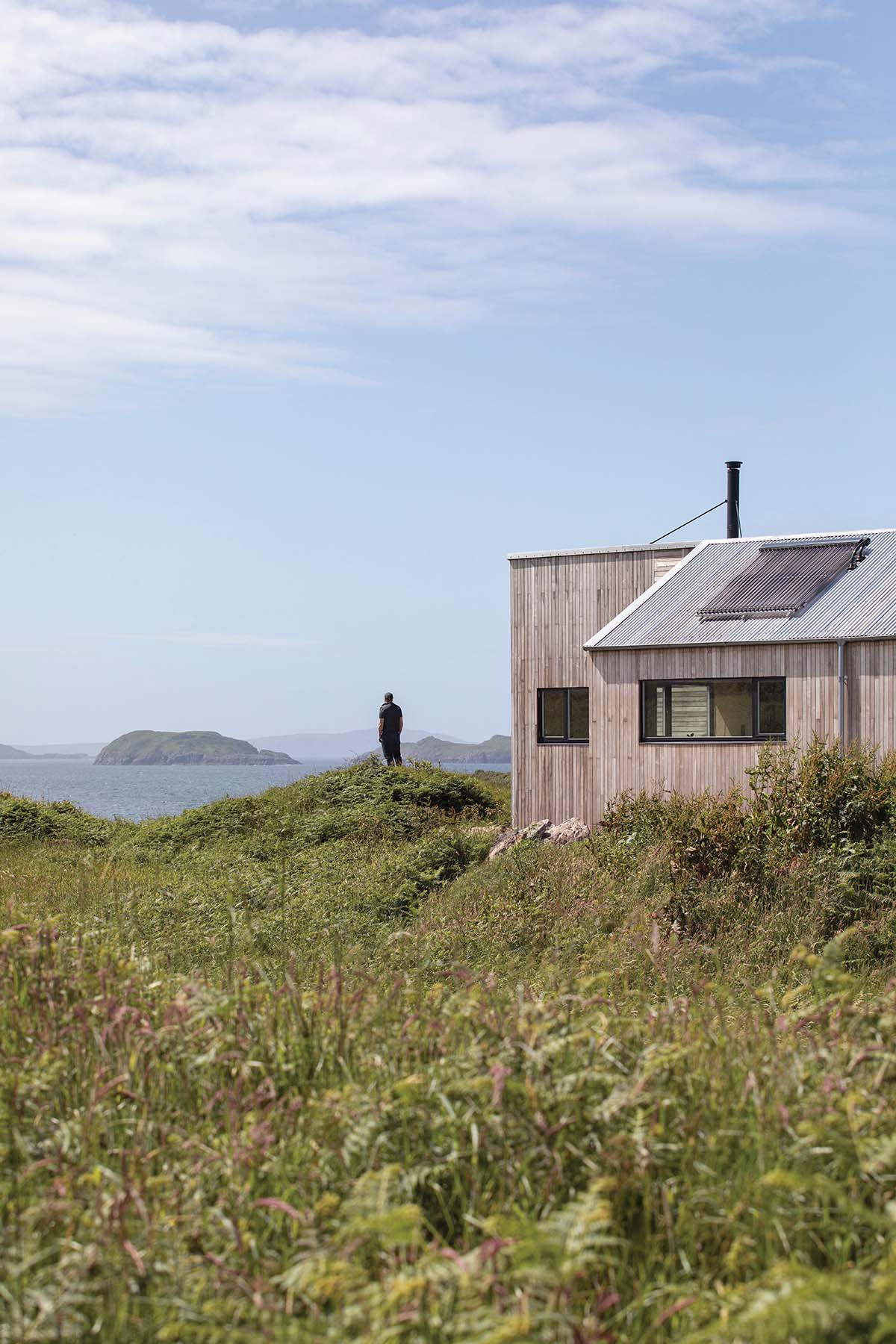
It’s not just the weather that could lead one to feel pleasantly cut off from, well, everything. The very geography of the place adds to the sensation of blissful isolation. If you were driving from the central belt, you’d head up past Ullapool, then keep driving north for another hour.
For Thomas, that meant a five-hour journey from the South Queensferry offices of WT Architecture to visit the site. “Once you get there you have to go down a mile-long single-track road and then go through some woods and over a hill,” he says. “Then you eventually get to this spot that’s almost the last bit of hill before it drops down to the rocky shore, and finally you can see across to Lewis.”
It might seem like a long way to go for a bonnie view and some peace and quiet, but the Perthshire-based clients had a deep emotional connection to the area. “The land has been in their family for 50 years,” explains Thomas. “They’d spent a lot of their childhood going there so it wasn’t just a plot they bought online and wanted to stick a house on. It meant a lot to them.”
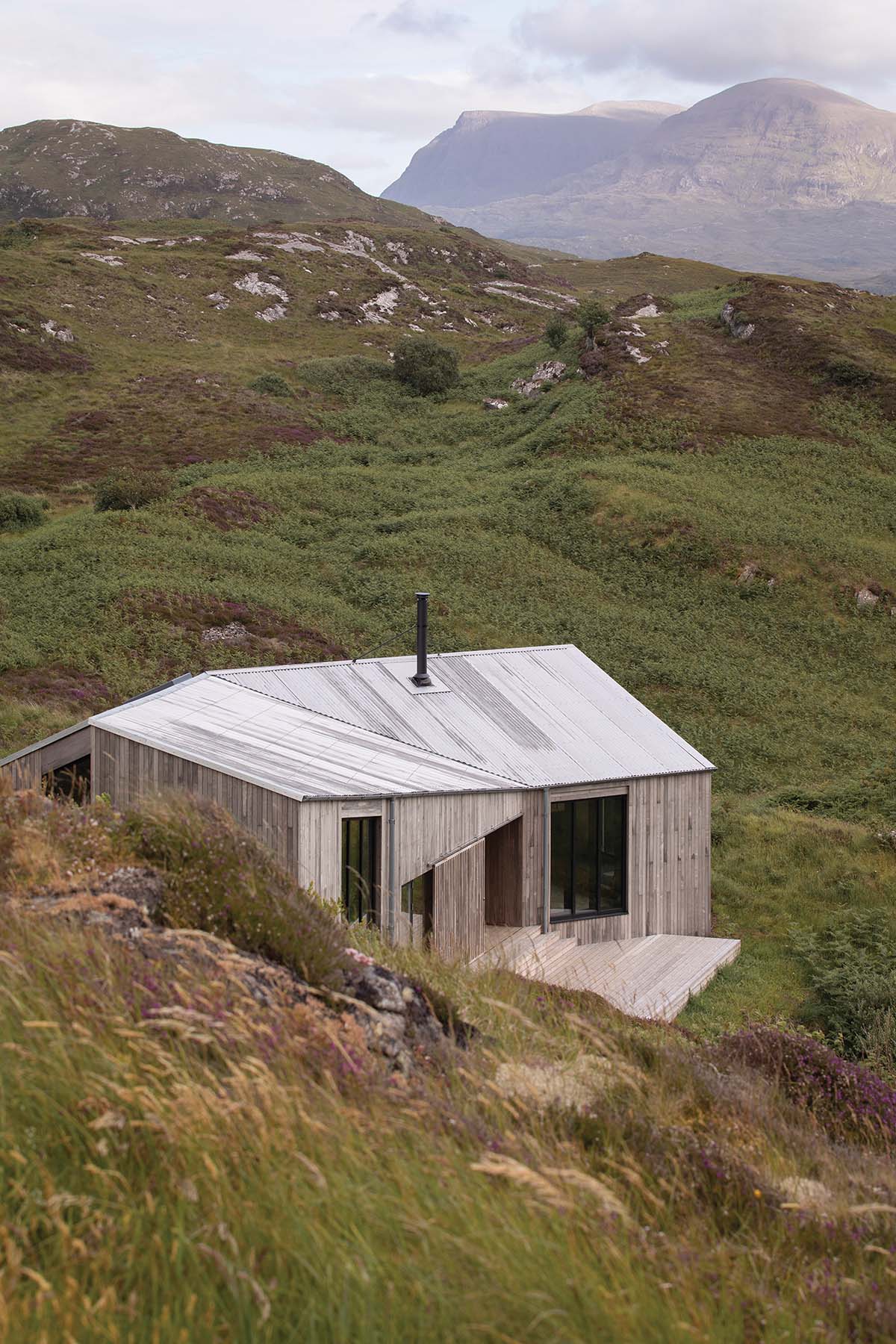
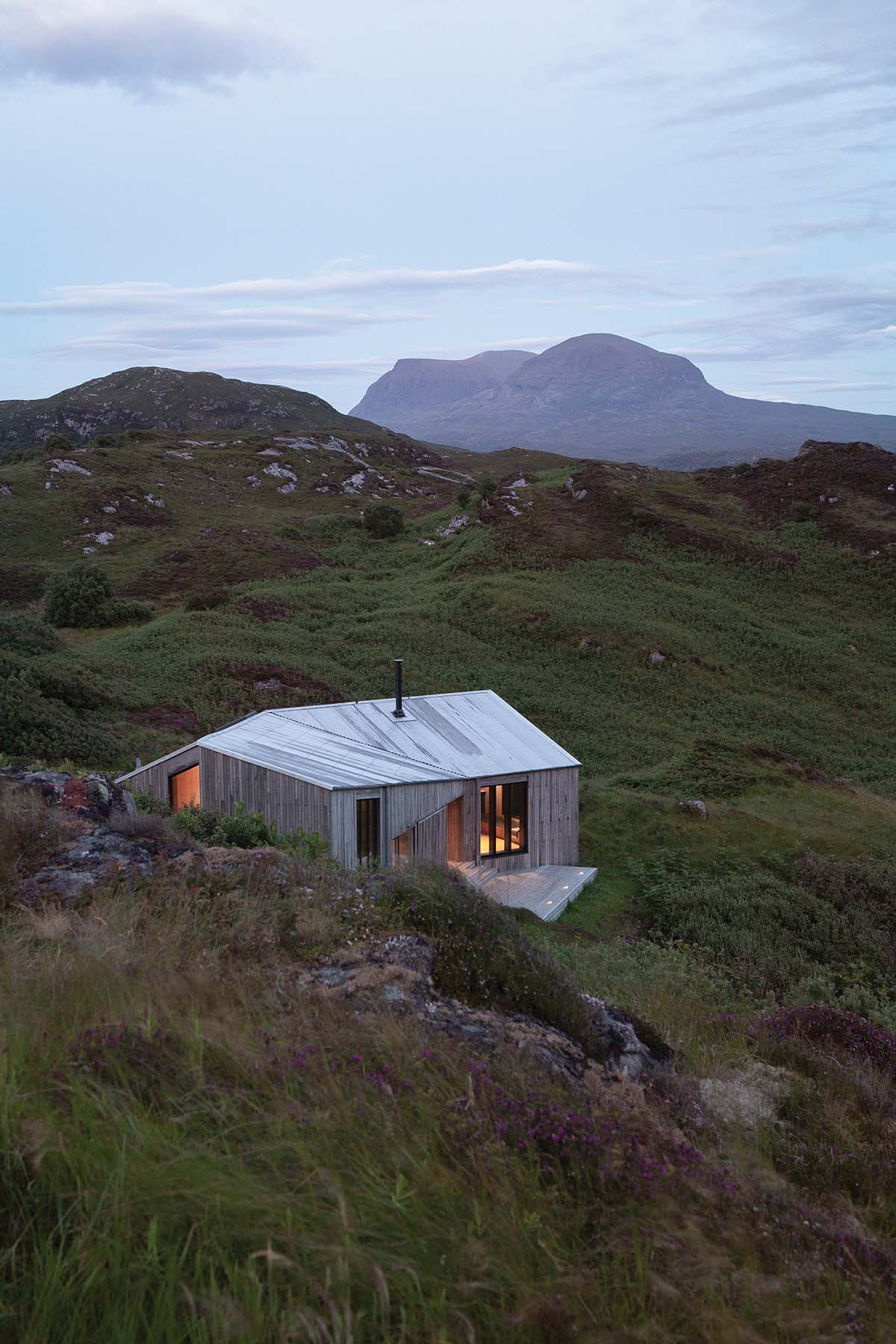
The brief was for a bolthole to escape to with family. As they wouldn’t be there all the time, the clients needed a house that was easy to maintain and could be ‘turned on and off’ quickly, so it wouldn’t take days to heat up if they arrived in the depths of winter. Before work could begin on the design, the right site had to be found – not a straightforward task on a rocky, uneven hillside in the middle of nowhere. “We did wonder if we could put it on top of the hill,” recalls the architect. “But, with the weather, that would have been asking for trouble. So we settled on a spot that sits slightly on the rise of the hill but in a bit of a saddle. There’s a little promontory in front, so it doesn’t get blasted by the wind but still has great views.”
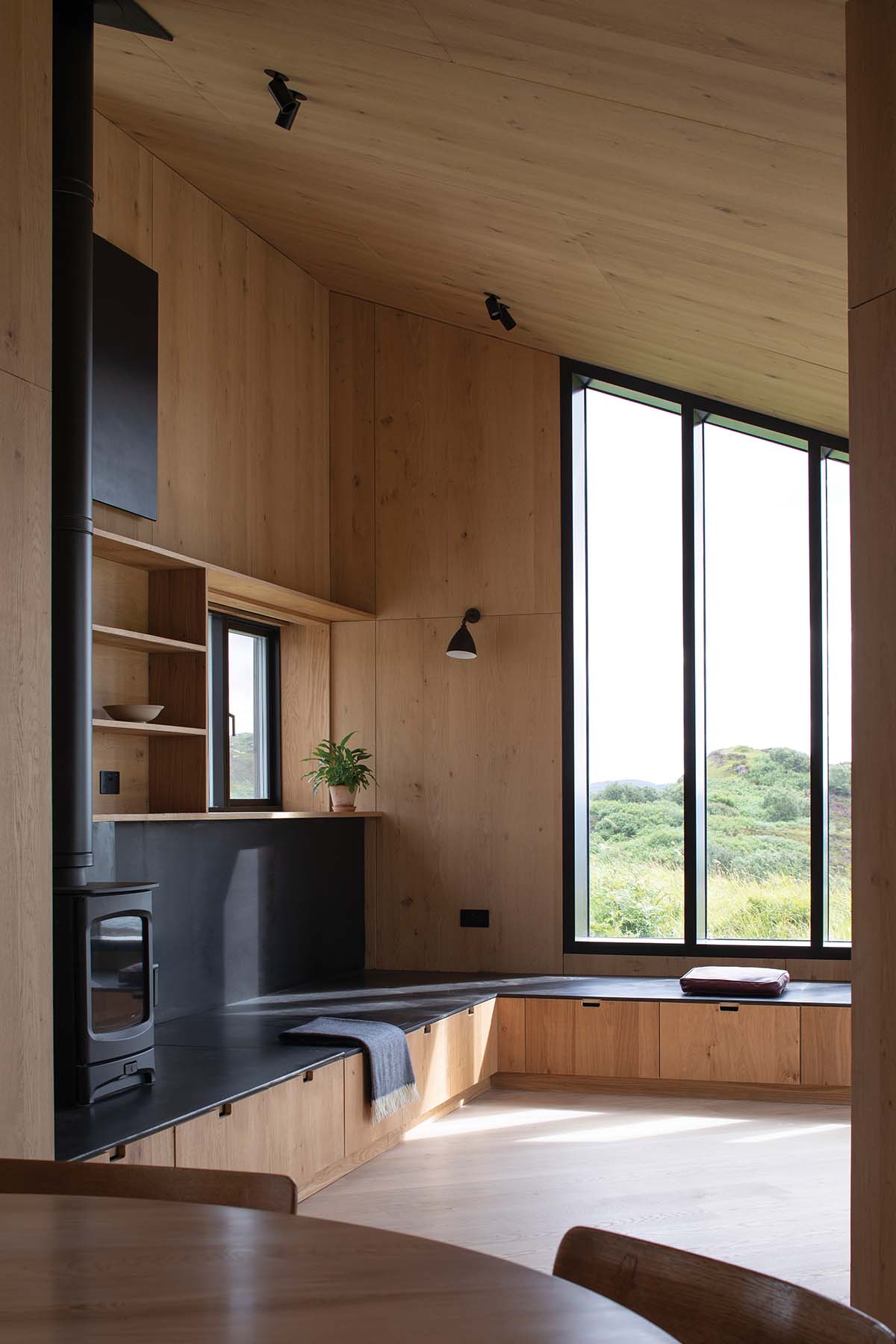
The undulating topography of the site was one of the factors that determined the design of the building. This is no simple rectangular box, after all, but rather a fascinating collection of angles and levels that make it both visually arresting and sympathetic to the surrounding landscape. “I had this idea of four different ‘pods’, initially imagining them as four physically separate buildings linked by internal or external spaces. And then we developed that theme, but brought them together more, putting them within a single envelope to make it all a bit more compact.”
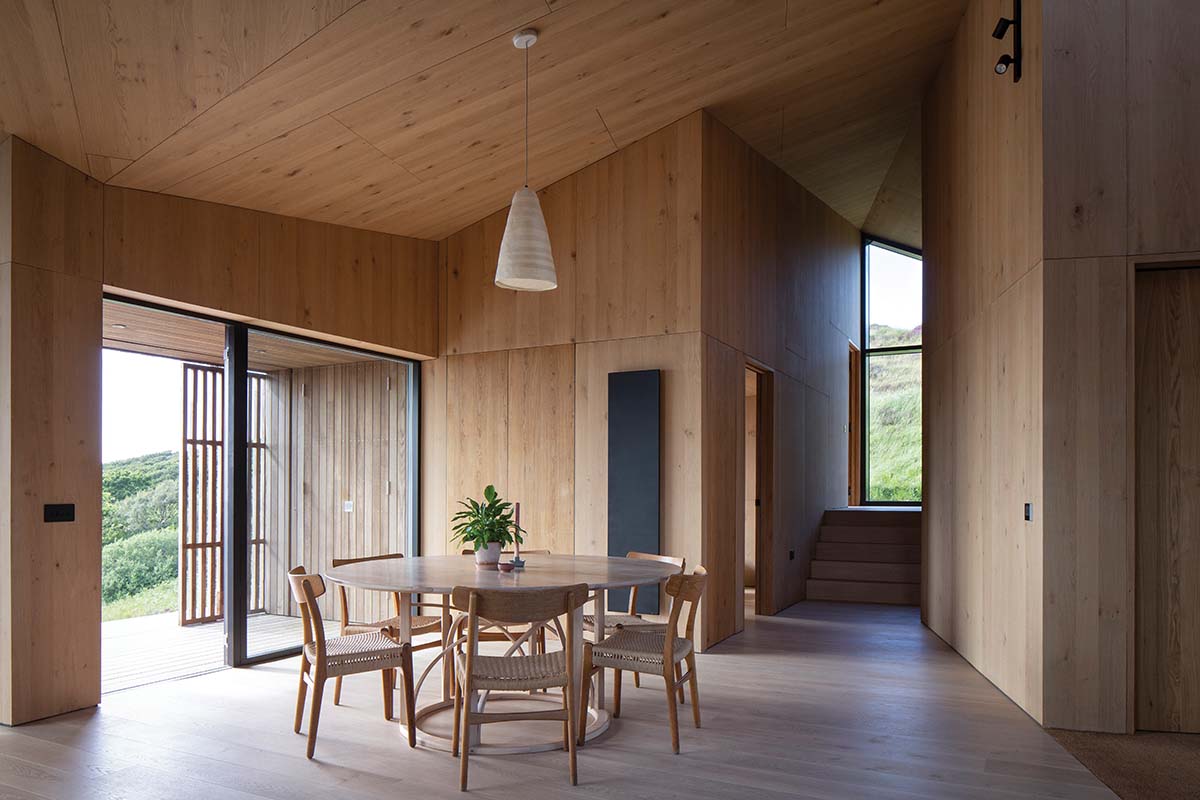
The design that was agreed with the clients was formed of four distinct areas: one containing the two bedrooms; one with two bathrooms and a utility room; a kitchen area which is open to the central dining area; and the living area off it.
A big question was whether planning permission could be secured. “We knew it was potentially very controversial,” says Thomas. “This is a nature reserve and a Site of Special Scientific Interest, so it’s incredibly environmentally sensitive.”
This is an excerpt from issue 163 of Homes & Interiors Scotland. Want to read more about this ultra-eco-friendly house? Buy your issue here.
This eco home on Devon’s north coast deliberately keeps a low profile