

Susie Redman’s unique approach to textile art blends traditional basketry with loom-woven cloth, creating sculptural home pieces that challenge preconceptions
I was involved in healthcare for much of my working life, first as a clinician and then as a university academic. But most of my spare time was spent gardening and making, designing Fair Isle-style knitting patterns and learning how to make textiles. Visiting galleries and museums from an early age informed my understanding of design, colour and sense of place. I set up my textile studio in 2016 and now weave full-time.
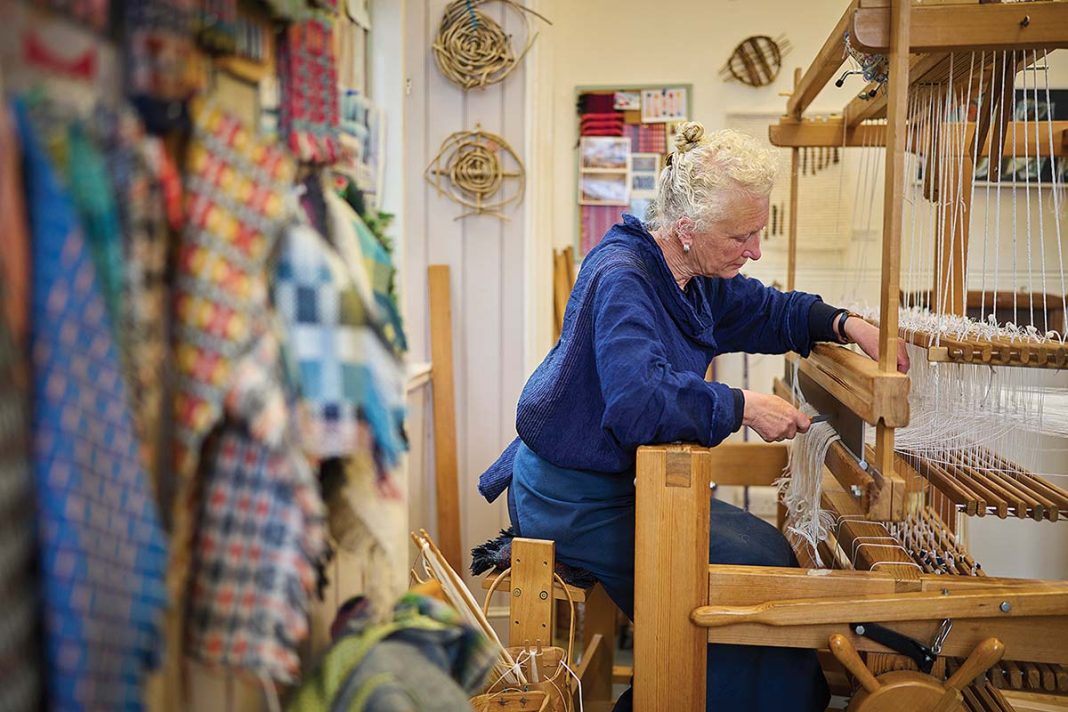
My traditional Swedish floor loom was a gift, and it led to a new career and weaving journey. I was on holiday at a friend’s idyllic house in rural Spain when I was introduced to a local artist who had her studio in a hilltop village. There, in the corner of her workshop, was the loom, left behind by its previous owner. When I heard that it was about to become firewood, there was no doubt in my mind that it had to come to Scotland. It arrived in carefully labelled pieces late one December night. I had to figure out how to put it together and then I needed to learn how to use it.
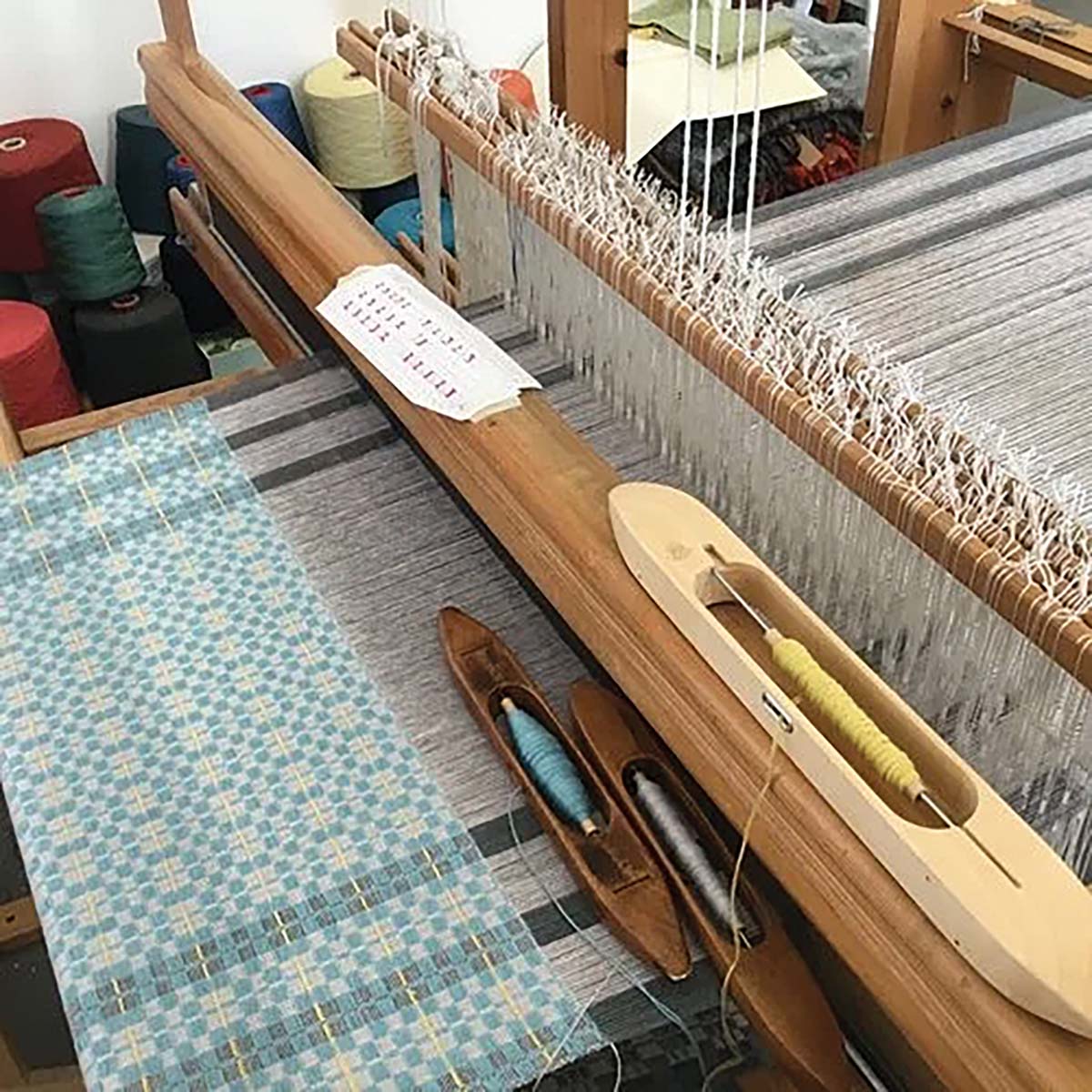
After an initial introduction to weaving with Cally Booker in Dundee (Bonny Claith), and a couple of short courses with James Donald in Edinburgh (PickOne Weave) where we wove on small table looms, I was able to spend some time at the Swedish weaving school, Vävstuga, in Massachusetts, where we used floor looms just the same as mine. It was there that I learned the principles of rug weaving and weaving with linen, and was really able to grasp the diverse range of possibilities of my eight-shaft countermarch loom.
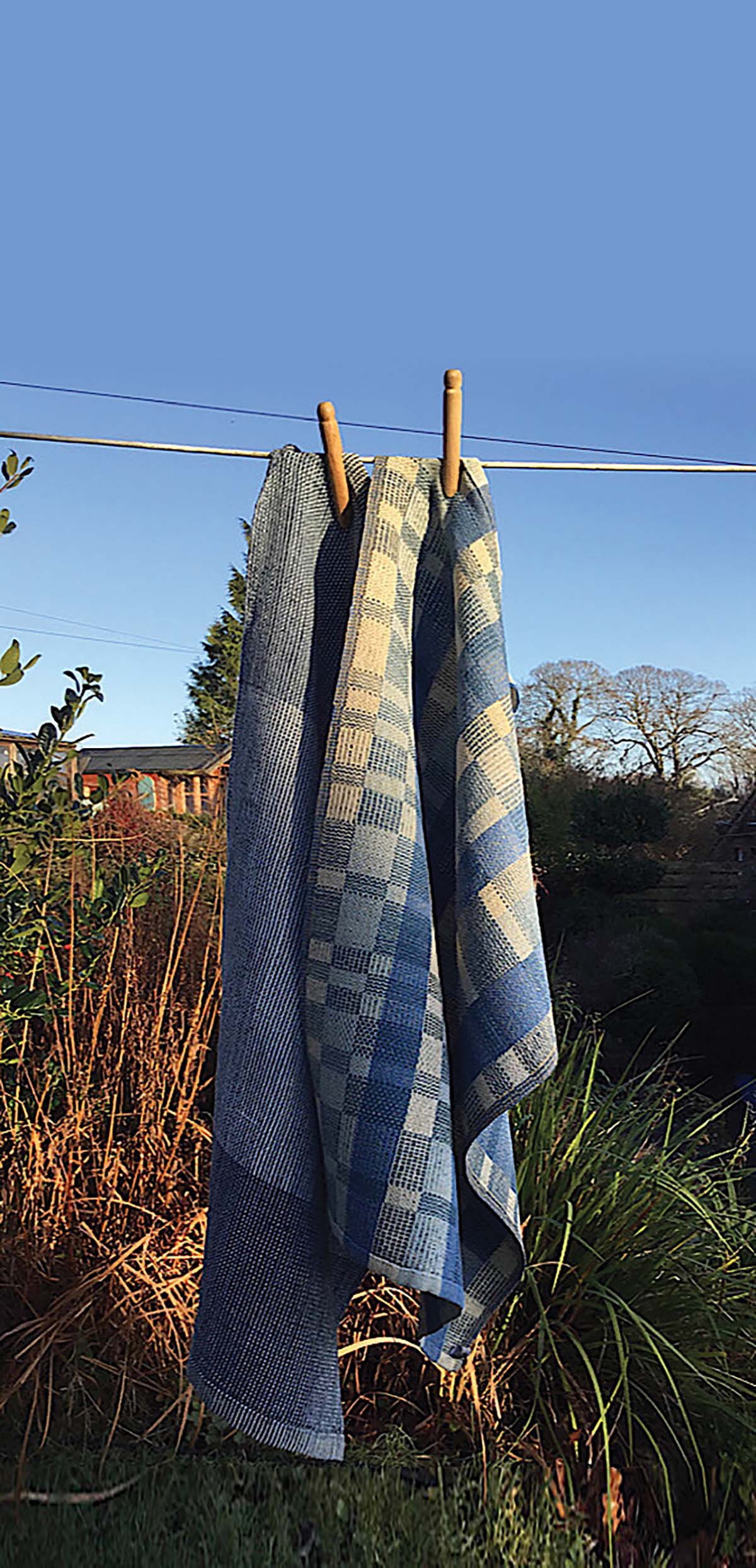
I am drawn to the work of the Bauhaus weavers like Anni Albers and Gunta Stölzl, and more generally to mid-century Scandinavian design aesthetics and colours. This is especially evident, I think, in the patterns and colours of my rugs, blankets and table runners.
I weave colourful pieces for the home such as cushions, blankets, hand towels, table runners and floor rugs, as well as screens that can be used to divide a room or as wall hangings. I enjoy weaving soft cosy wraps and scarves too. All of these are what could be described as my bread and butter, and are mostly sold directly from my studio on open days or have been commissions for a particular room or piece of furniture.
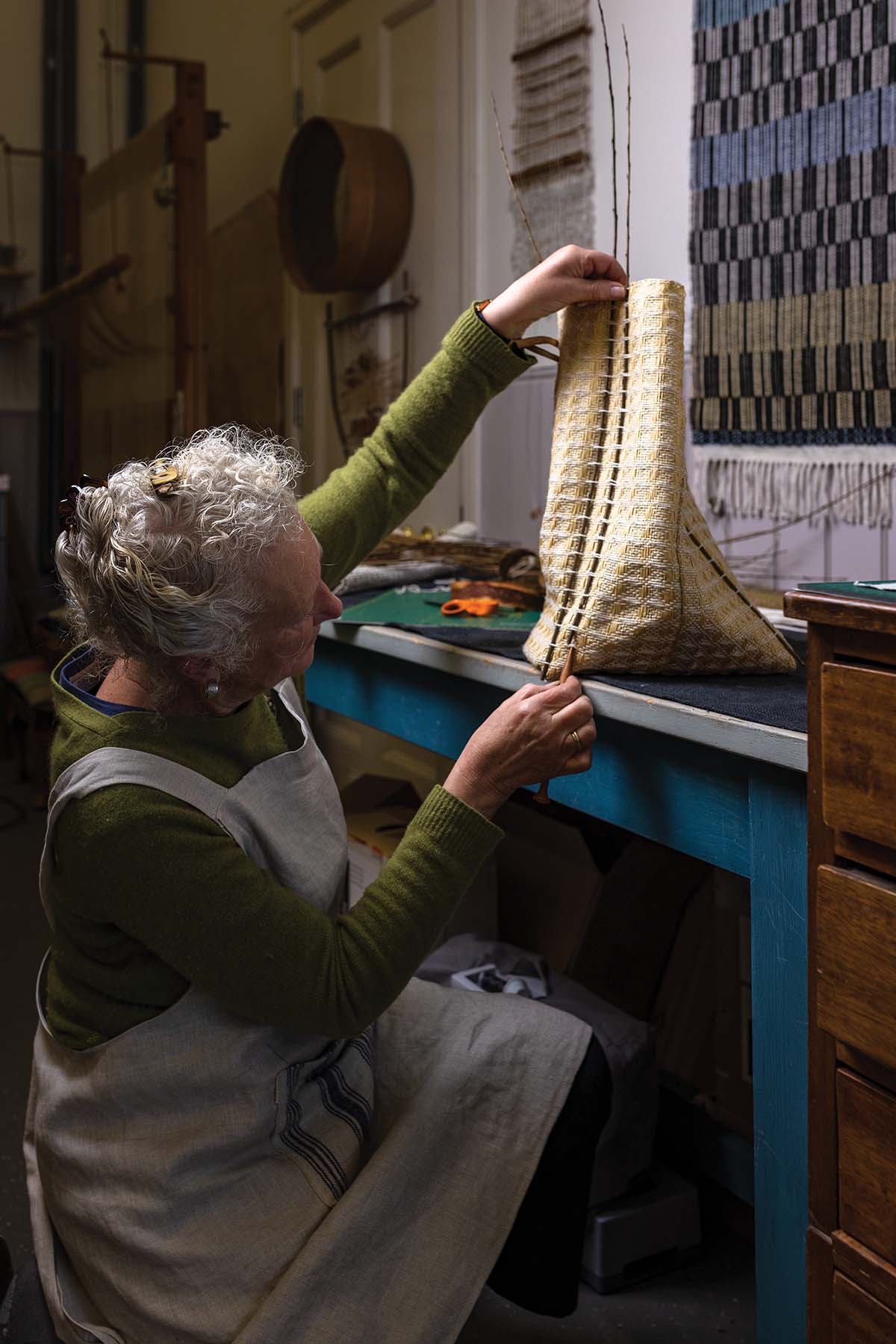
More recently I have started to weave three-dimensional sculptural vessels. I use a linen warp with paper wefts, with willow rods to provide structure and form by taking account of their natural curve as I weave them into the textile. The vessels provide a repository for treasure found on walks when I’ve filled my pockets with beautiful pebbles, seed heads, pieces of slate or even bark from fallen trees. All of the yarns I use are natural fibres, organic where possible and sourced as locally as I can get them. I’m committed to using fibres that will complete an ecological regenerative cycle.
Over time, the environment close to home and my coastal path studio, local woodland and of course my garden has become an intrinsic part of my creative practice. The garden is where I grow a few square metres of flax, beautiful blue flowers followed by the precious stems that I process through drying, retting then heckling and scutching to give lovely home-grown linen. I only process a fairly small quantity so I use it as a weft yarn – that way, none is wasted as it would be if used as warp. Additionally, I help to care for a willow garden in the old Ravenscraig walled garden in Dysart, Fife. I’ve been able to cut willow rods to use in my loom-woven paper and linen sculptures.

My day often starts with a walk to my studio, taking in a small section of the coastal path where I make a mental note of what is flowering and fruiting. Since my studio is on the path, I often get visitors calling when they see the door open and my loom visible from the window. Fife has a long history of weaving and spinning, so visitors often have weaving tales to tell. I spend most of the morning planning weaves, and doing preparation, winding a warp and dressing the loom then weaving for the following few days or a week or two.
Around mid-afternoon I head off home, and in fine weather I’ll mess around in the garden, or take a foraging walk in the woods or local pathways. Recently my foraged foods have included sloes, wild damsons, brambles, rosehips and gorse flowers. Some of these find their way into the freezer for winter, while others are made into sloe gin, compotes and cakes.
Visit the Susie Redman website | Follow Susie Redman on Instagram
Meet the Maker: Natalia Manczak, Glasgow-based paper florist and botanical sculptor