
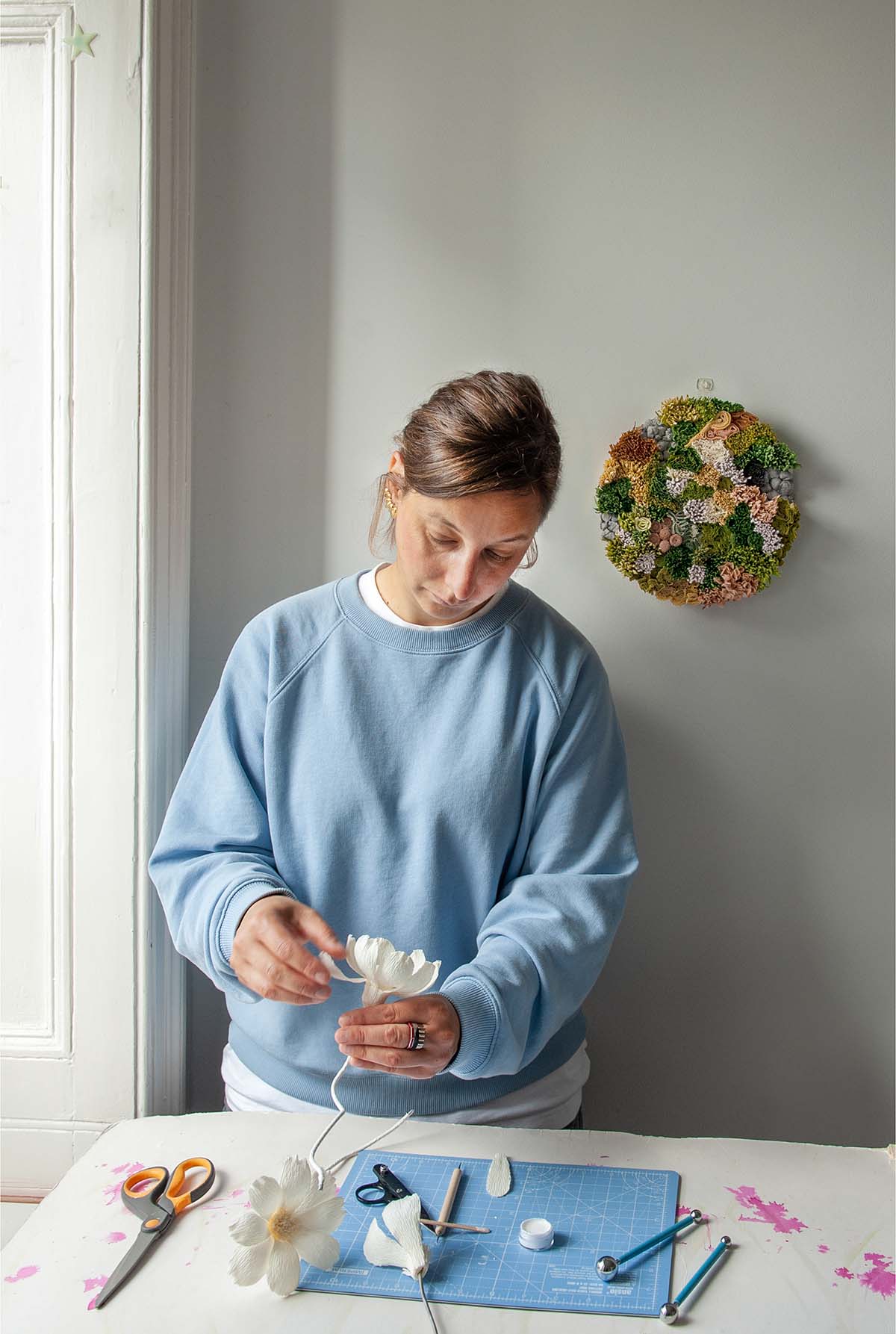
Natalia Manczak is a paper florist and botanical sculptor based in Glasgow. Here, she shares memories from her creative childhood and reveals the cultural significance of her practice
I always wanted to be an artist when I was at school in Poland, but I was never considered ‘good’ at art – I couldn’t draw or paint. Back then, I believed a ‘real’ artist had to be a painter or someone exceptionally talented in a specific medium. What I did do, though, was paper floristry. I was surrounded by handmade paper flowers, even if I never saw them as art.
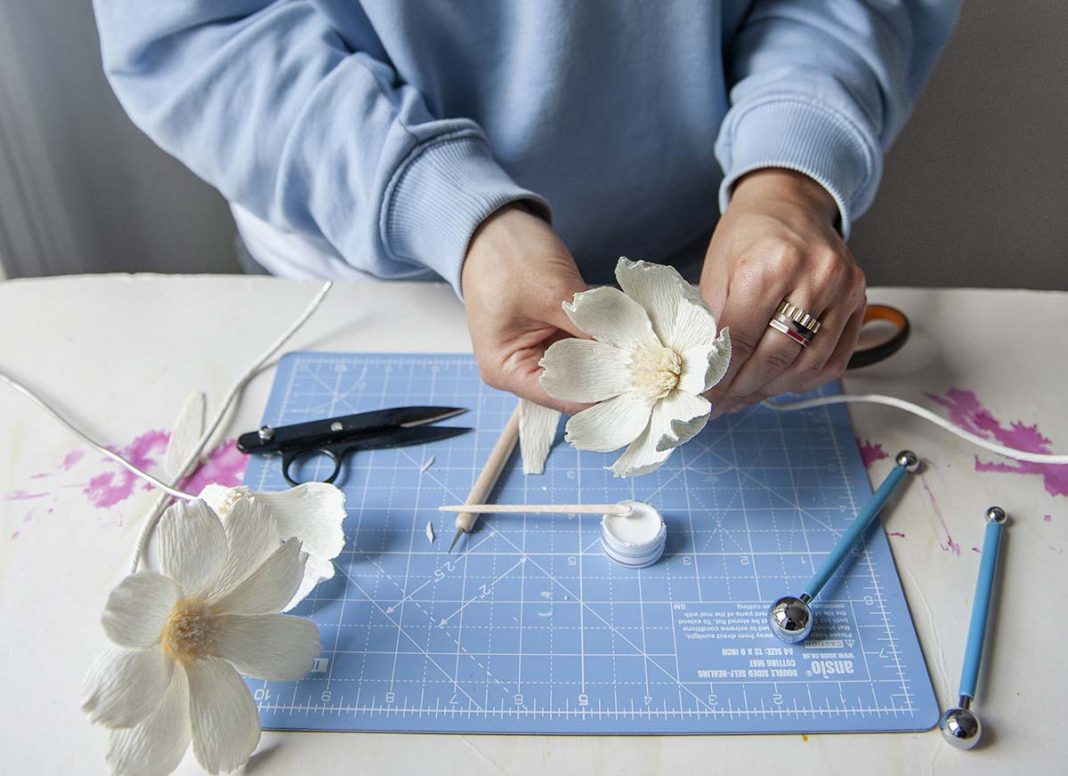
Colourful paper flowers were once one of the most common decorative elements in rural Polish homes, and the art of paper floristry was primarily practised by women. During long winter evenings, they would craft flowers from paper or crepe paper, typically bought from travelling sales men. The flowers were then attached to thin twigs (floral wire is more commonly used nowadays). Stiffer paper would be used to create leaves.
Nature served as the main inspiration, and stylised roses, chrysanthemums, poppies, daisies, cornflowers and forget me-nots were the most popular types that were made. Various techniques evolved to give the petals texture – cutting, twisting, rolling and even ‘sugar-coating’ or ‘swaddling’ the paper. These handmade flowers were used to decorate rural homes all year round, but especially during religious holidays. These elegant pieces of paper floristry adorned walls, ceilings and home altars, and played a central role in processions and wreaths for All Saints’ Day.
Today, the craft is celebrated as an important part of Poland’s cultural heritage. I came to Scotland intending to stay just for a gap year so I could learn English and then return to Poland. But within a few months, I realised how much I enjoyed living here. I saw more possibilities and freedom to pursue what I truly wanted to do. So, I went to college to study photography.
I travelled extensively around Scotland and completely fell in love with the landscape. In my final year, I decided to do a project involving five shop window displays (each 2m by 2m), decorating them with nothing but recycled paper, then photographing them under different lighting. I had a job in a restaurant while I was a student, where they printed a new menu every day. It broke my heart to see so much paper thrown away, so I decided to use it to build my window displays. I’ve always recycled paper.
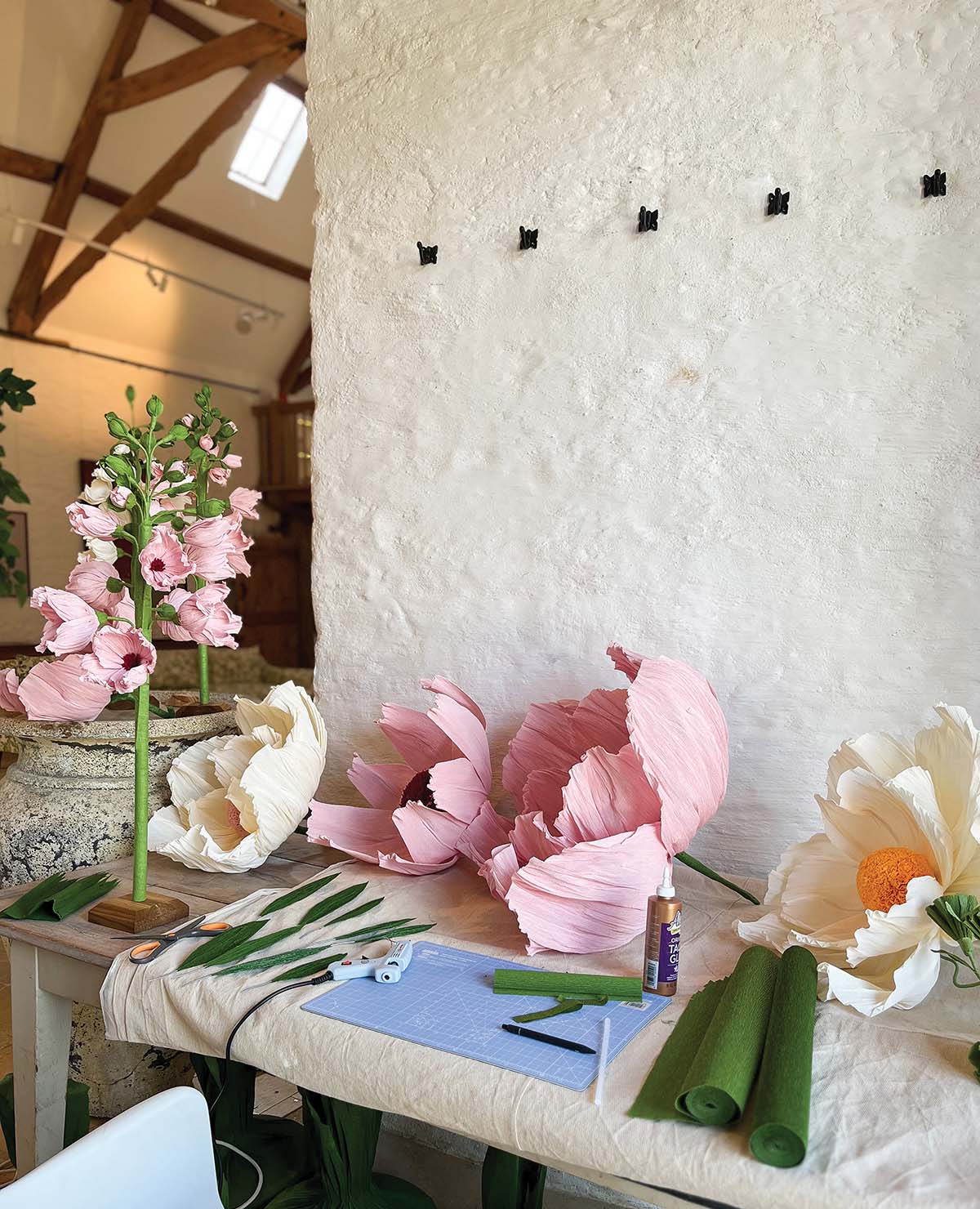
In Poland when I was a child, we were encouraged to collect waste paper, then bring it in to school so it could be sold to raise funds. Nationwide competitions were held to see who could bring in the most. The only competition I ever won in primary school was thanks to my grandad, who was passionate about recycling, and our neighbours, who helped collect paper with me.
Doing the window display project was an amazing experience, and I loved the images I created. Unfortunately, my tutor wasn’t impressed – he said they were “too arty”. But at that moment, I knew paper would be the main material in my future creations. Its versatility, texture and endless possibilities spoke to me in a way nothing else had I’ve learned everything about paper flower-making by simply playing with paper.
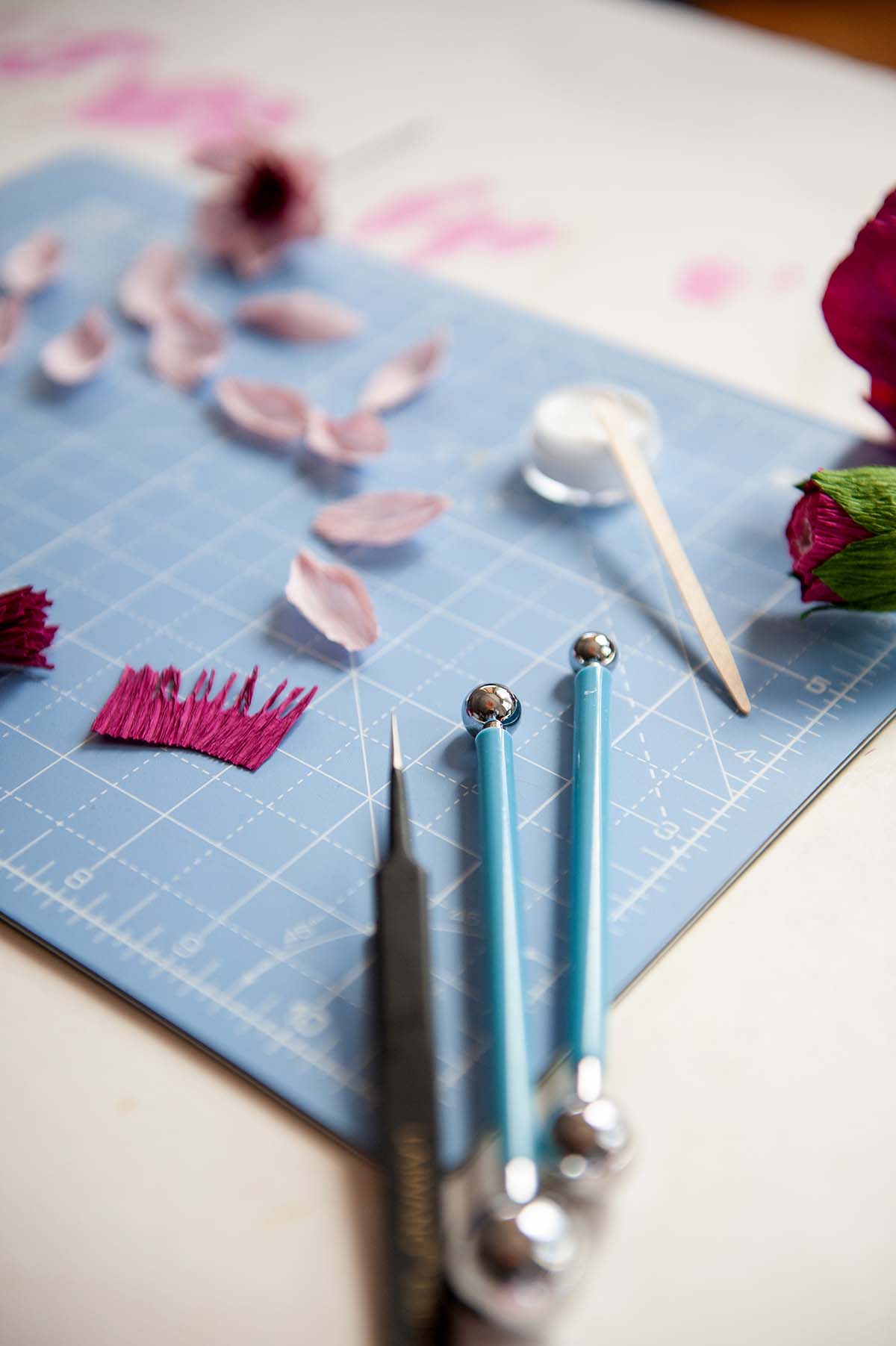
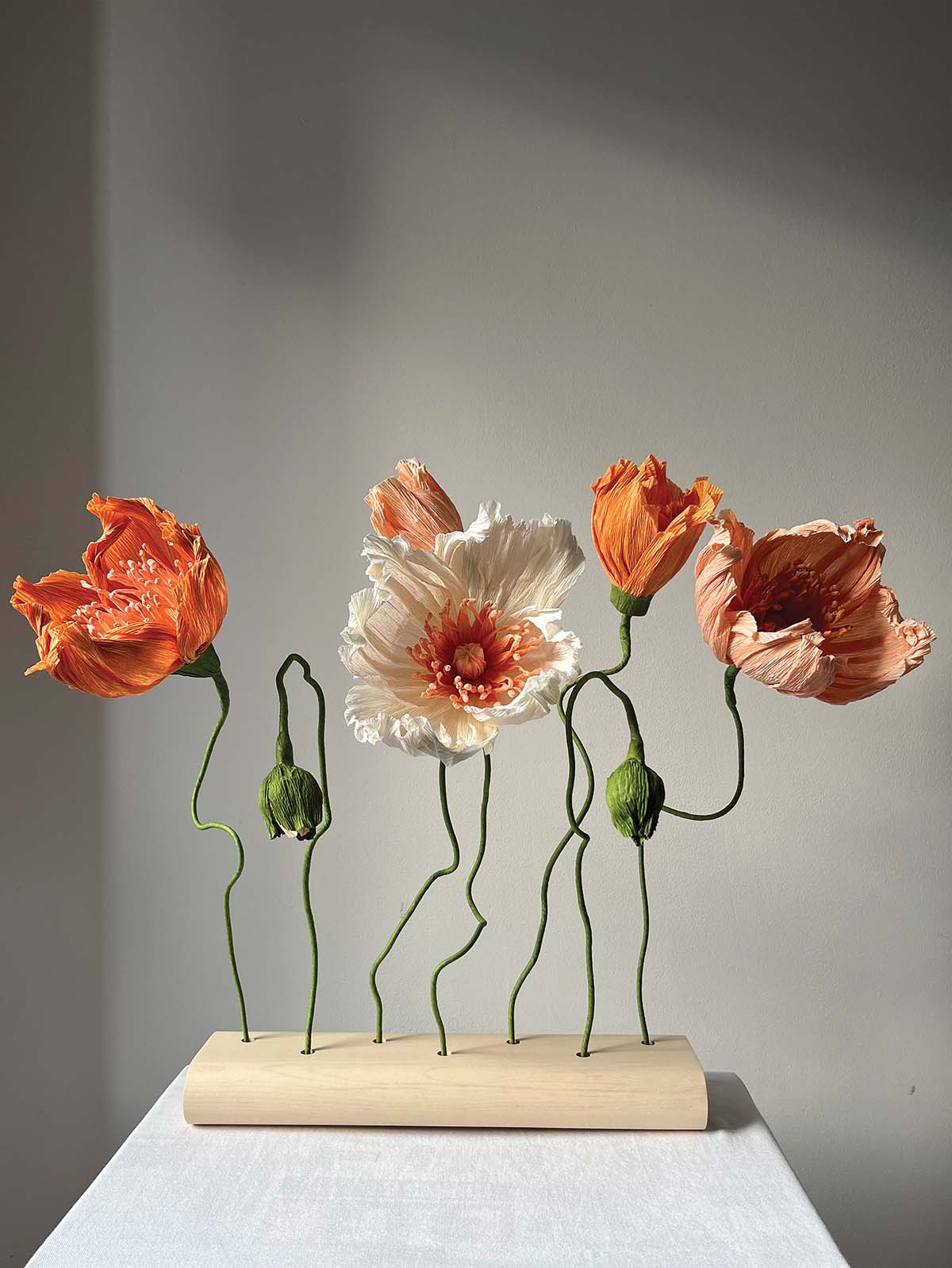
I don’t enjoy following tutorials or strict instructions – I always need to find my own way. That’s why I prefer to create imaginary flowers rather than copying nature. But, just like in nature, no two of my flowers are the same.
My main material is Italian crepe paper – there are only two factories in the world that produce this kind of paper. What makes it unique is its plasticity and versatility. It’s a very sturdy paper that holds its shape for many years, which gives my flowers a sustainable quality. I like to call them forever flowers.
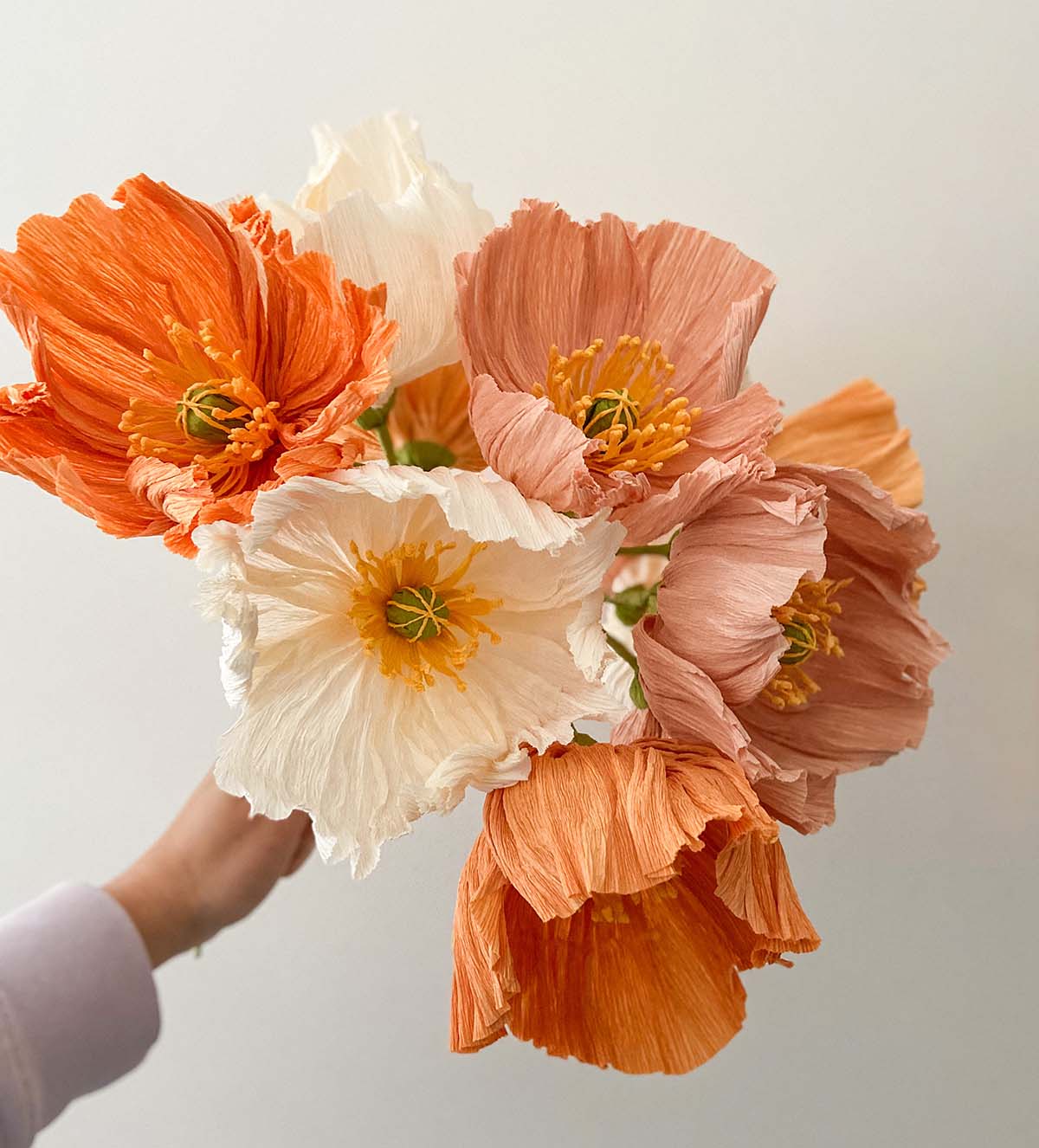
I also constantly experiment with painting my flowers. I enjoy trying new techniques in paper floristry, but mainly I love painting them with natural dyes like tea, coffee, beetroot juice or avocado skin. Everything influences me. I might see something in a movie, music or while cooking that ignites an idea. Nature and the Scottish landscape have a huge influence on my work – the colours, the shapes and the light, especially when I’m outside the city and see the play of shadows and light on the mountains, for example. Every so often, I create paper landscapes, which I always carry in my mind. It’s like a picture I try to recreate using paper.
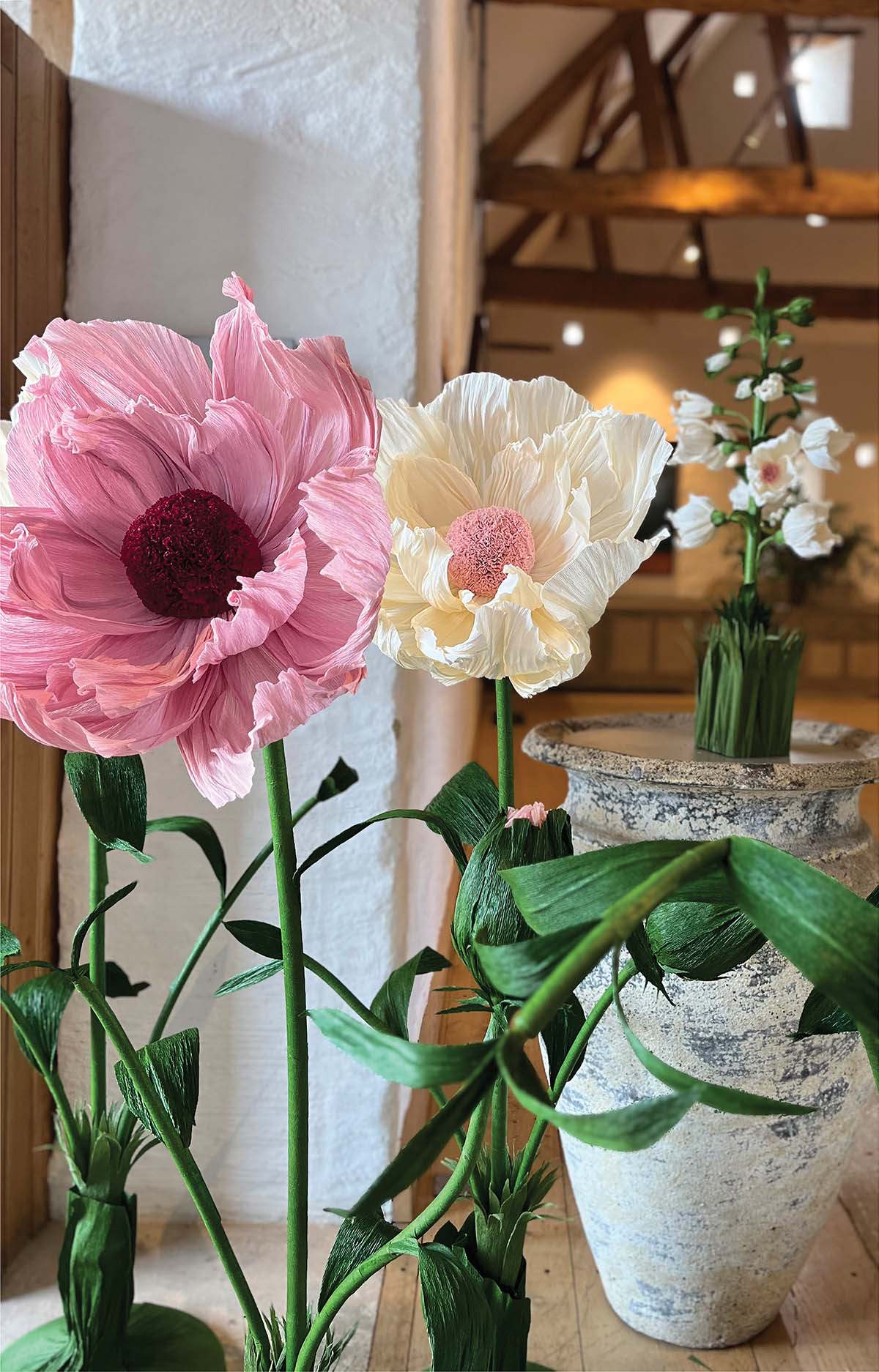
Living in Scotland is incredibly rewarding because of nature. The greenery is so deep and the landscape is unbelievably saturated yet dramatic at the same time. I love travelling around to gain new perspectives and see things I haven’t seen before. At the moment, I’m also exploring fabric with great curiosity. Last year, I collaborated with Rediscovered By, a textile and wallpaper design studio led by Charlotte Krone, which was really interesting and inspiring. I always strive to be as unique as possible with my paper floristry – whether I’m working for an individual customer or a big luxury brand.
Visit the Natalia Manczak website | Follow Natalia Manczak on Instagram
Enjoyed learning about paper floristry? Meet another of Scotland’s finest makers below.
Meet the Maker: James Donald, weaver and founder of PickOne clothing