
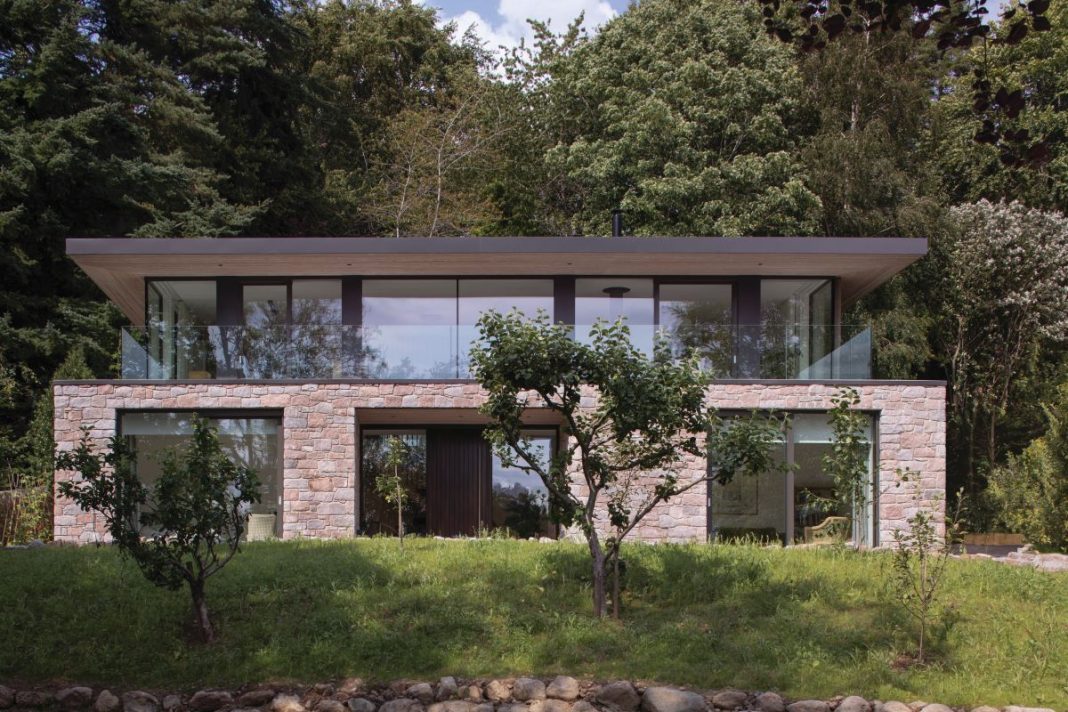


Architect, builder and client all played a part in the composition of the well named Harmony House, a recently completed home of glass, timber and granite in Aberdeenshire
Harmony House, a symphony of timber, granite and glass, was in many ways composed around one key feature: a grand piano. The home was built for Henry and Liz Allen on a steeply sloping plot near the River Dee. Their piano, an Estonia Grand, was a gift from Liz’s late parents about 20 years ago. She likes to play modern jazz classics on it whenever she finds the time. “It gets well used when the family come over too,” she says. “Two of our children play – one is a professional musician.”
Back when the Allens first engaged award-winning, sustainability-focused Aberdeenshire architecture practice Brown & Brown to craft them a bright, warm and “exciting” place to live in retirement, the conversation became in part about finding a dedicated space in which to fit the instrument. Luckily, shaping a home around a specific possession was nothing architect Andrew Brown hadn’t been asked to do before. “We’ve designed around all sorts of items over the years, from grandfather clocks to different pieces of furniture,” he says. “But a piano was a new one for us.”
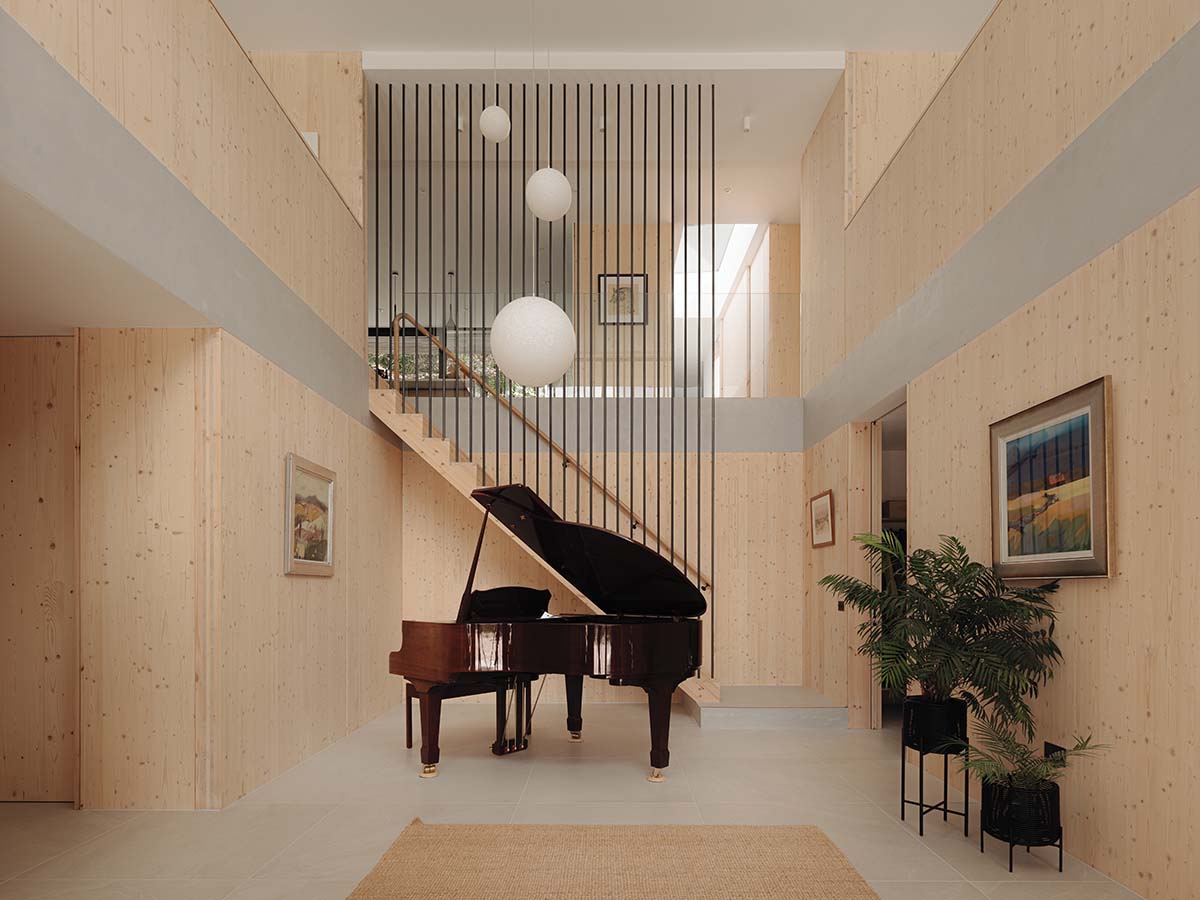
The obvious place to put a large, loud and not-easily-moved item like a grand piano would have been a public room such as the lounge, but space was at a premium on a tight floorplan. Eventually, it was proposed that the six-foot-long Estonia should go literally at the centre of the property, in the double-height atrium where a short stairway connects the two levels (the living spaces are on the upper level, for more light, views and privacy). “That gave us the opportunity to create a space with volume, and to think about how the piano would sound in that volume,” Andrew explains.
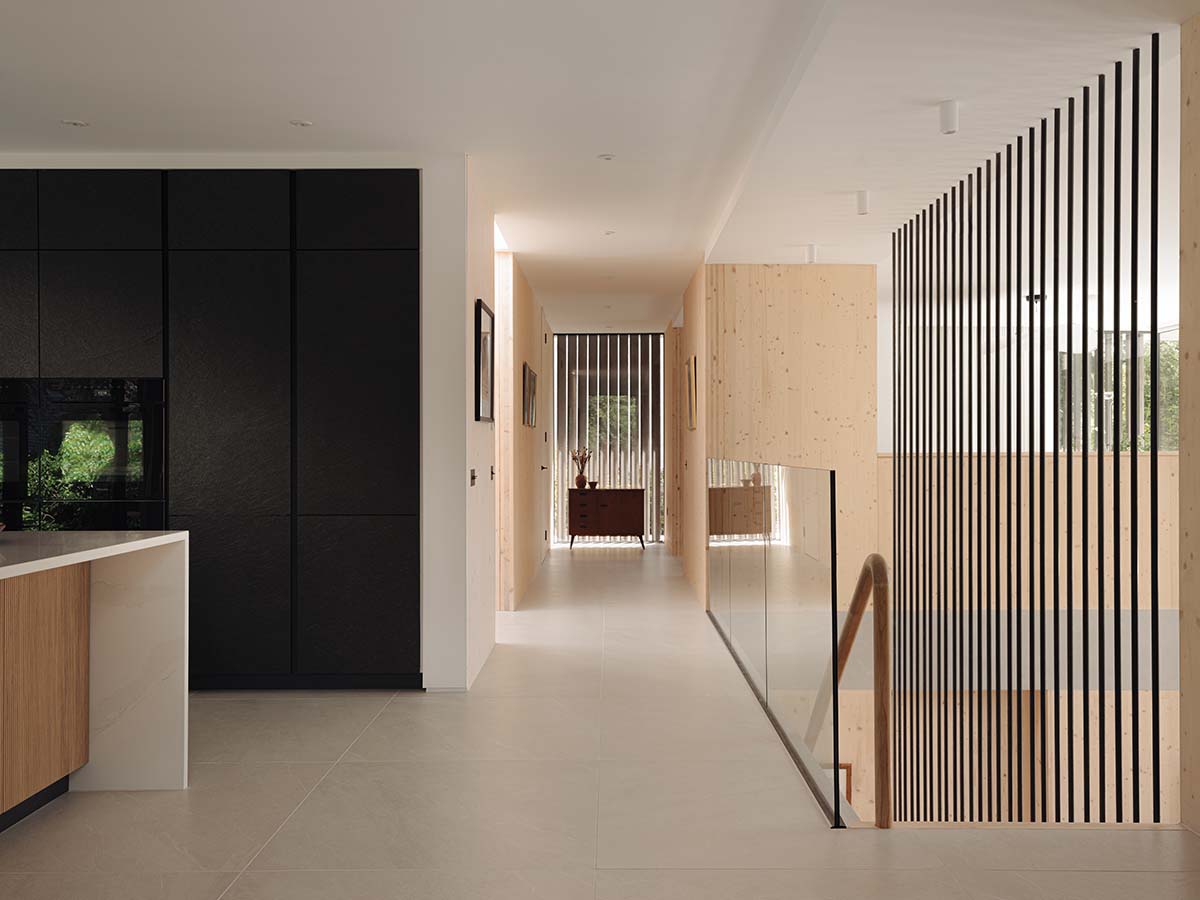
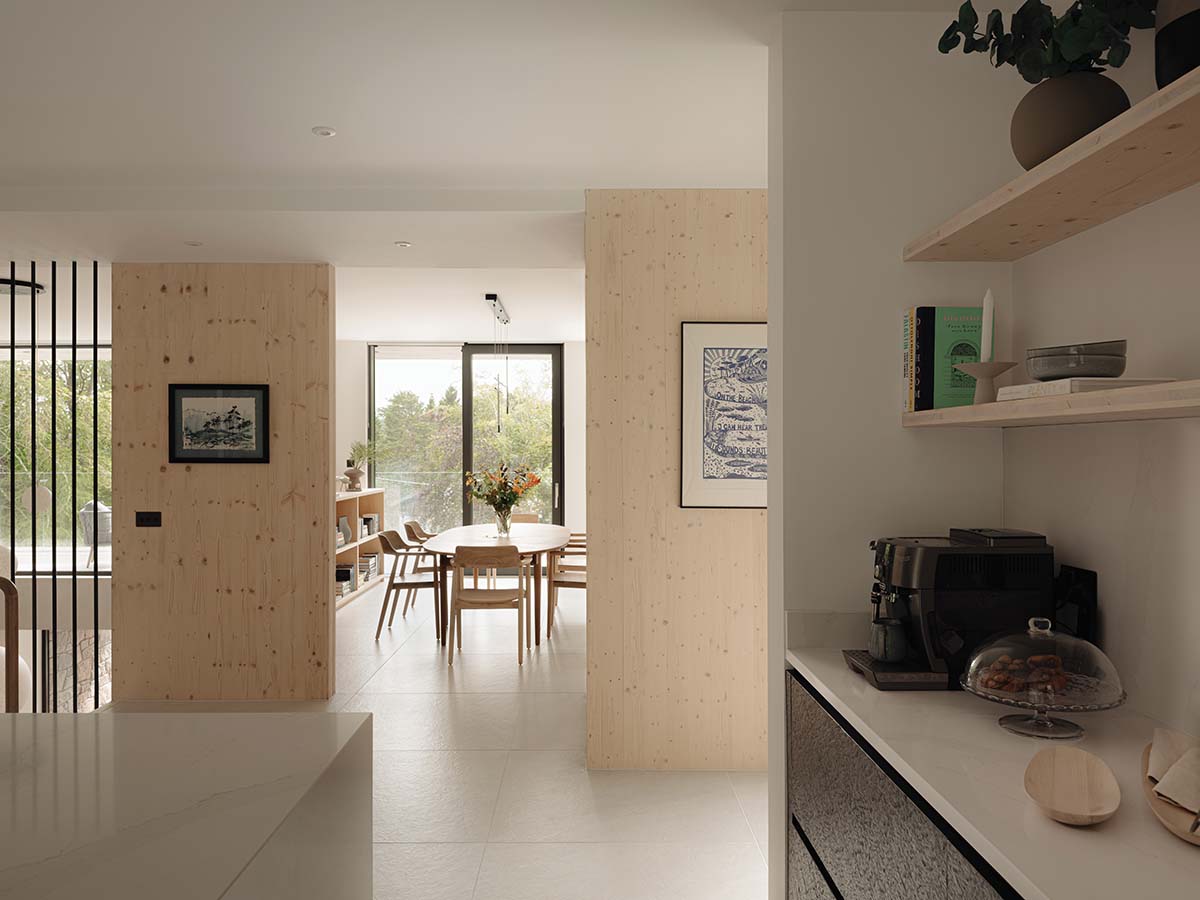
The core building material he had in mind for Harmony House, cross-laminated timber or CLT – exposed panels and blocks of which form the walls, doors and even the staircase in the concert hall-like atrium – made a “natural bedfellow” for the piano, he says. “It gives nice acoustics in that space.”
Acoustics are just one among many qualities that makes eco friendly CLT such a popular material in housebuilding at the moment. Comprising several layers of solid wood panels bonded with adhesive at alternating right angles, it’s strong enough to replace concrete and steel. Sections are prefabricated off-site with precision detail, then pieced together in giant blocks, making it quick and easy to install, while generating almost zero waste.
It’s also really nice to look at when left uncovered for a warm, natural aesthetic. “I love CLT because it lets you see the structure, which feels really honest,” says Andrew. “That adds character right away. And then it’s obviously sustainable and renewable too.”
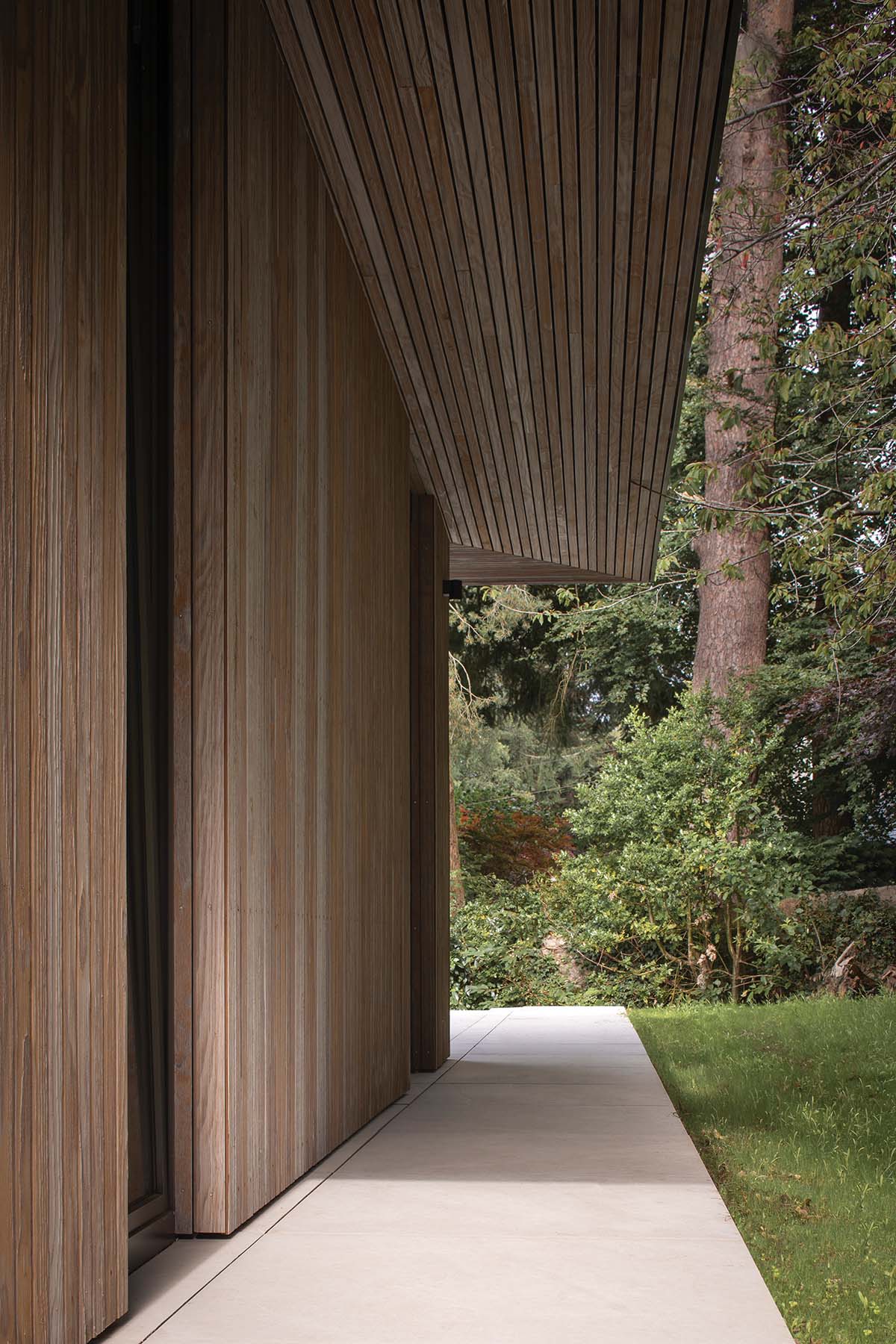
The walls, ceilings and even the floating planar roof of Harmony House are all formed from CLT. For the contractor, Coldwells Build – an award-winning, eco-focused Aberdeenshire family firm which has partnered with Brown & Brown on a number of impressive projects around Scotland to date – it was the f irst time working with the material, and the team were impressed.
“It was really easy,” says founder-director Ross Booth, “because rather than on a traditional timber-frame house where you have to insulate between the studs, Harmony House’s insulation was quite quickly installed on the outside of the CLT, which sped up the process. Also on the inside, where it was exposed, it was just covered and protected, which was faster too.”
To help the house bed into a thickly forested backdrop, and chime with the local vernacular, an outer skin of granite clads the whole lower-level exterior. Here too, the clients’ wishes played a key role. Where Liz enjoys a bit of jazz, Henry’s more of a rock guy – literally. “My professional background is as a geologist, so I was very keen that we had proper local building stone,” he says.
Think of Aberdeenshire granite, and most people will picture the speckled greys of the city of Aberdeen’s grandest buildings. But the stone in Harmony House in fact comes in a multitude of tints and grains, depending on where it is quarried.
At Henry’s demand, pretty much all of that used here, as provided by CMD Stone (which sources reclaimed granite from across Aberdeenshire) was native to the house’s area, where the local hue is reddish and silvery. Assembling the walls was a stonemasonry masterclass. Ross Booth explains that thin slabs with tight, recessed joints “almost like a dry-stone wall” were needed to create the aesthetic Brown & Brown desired.
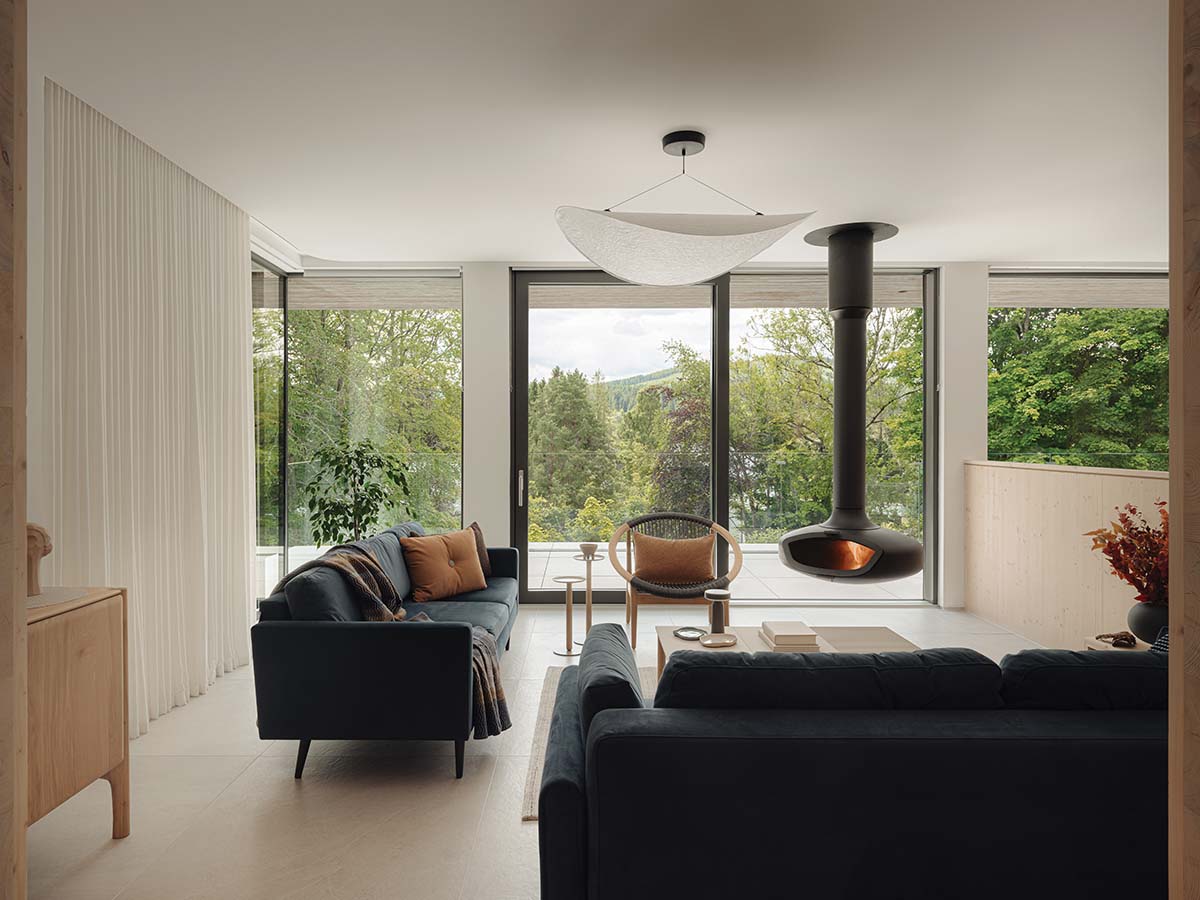
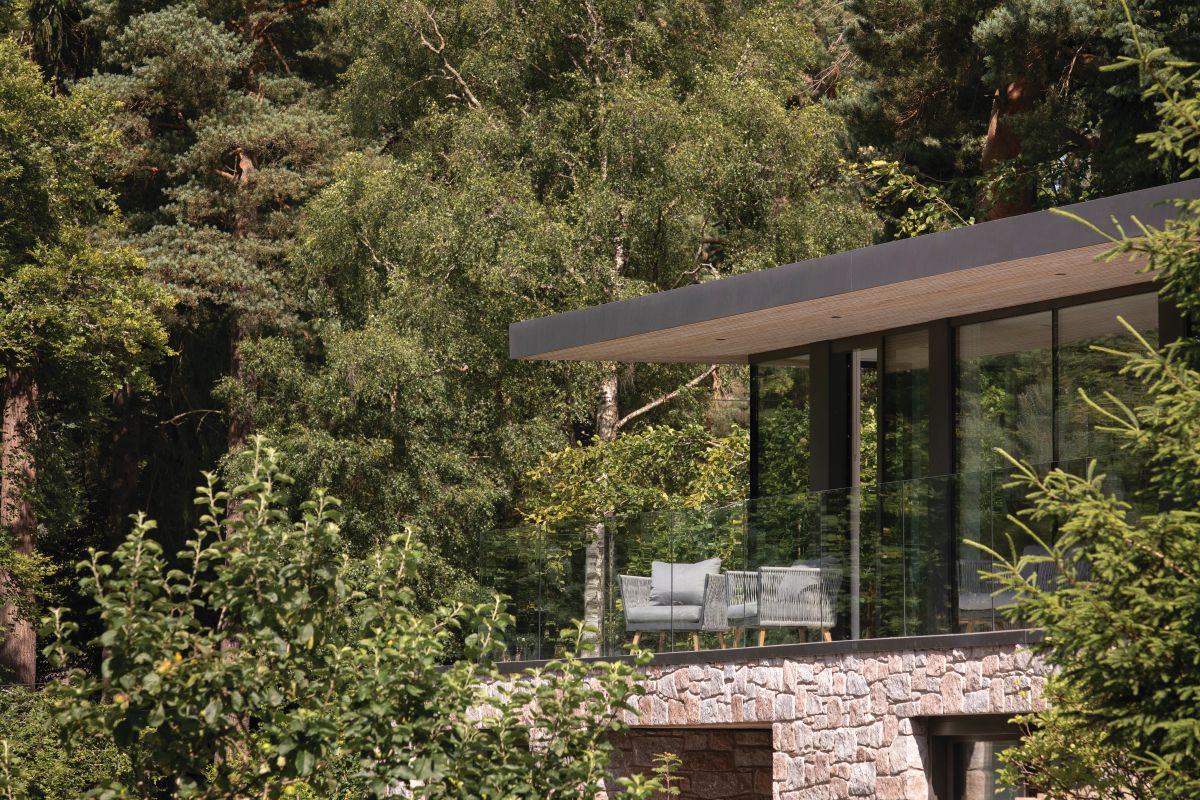
CMD guillotined large slabs into more manageable chunks, each of which then had to be painstakingly chipped and f itted, piece by piece. “It was a slow process,” Ross remarks. “It’s a work of art.” Henry approves: “The stonemasonry is absolutely brilliant – they really put a lot of work into it.” The upside-down, split-level layout of the house was a pragmatic response to the sloping site. But it has the added benefit of elevating the areas where Henry and Liz spend most of their days – the living room, dining kitchen and terraces front and back – up among the branches of the surrounding yews, birches and apple trees, to create a feeling of openness and connection to nature. It also prevents overlooking in what is quite a built-up area.
This is an excerpt from issue 161 of Homes & Interiors Scotland. Want to read more about Harmony House? Buy your issue here.
The owners of this Arts & Crafts home in East Lothian followed their hearts