

How do you extend a venerable home, designed by revered architects a century ago? First, you have to get into their heads…
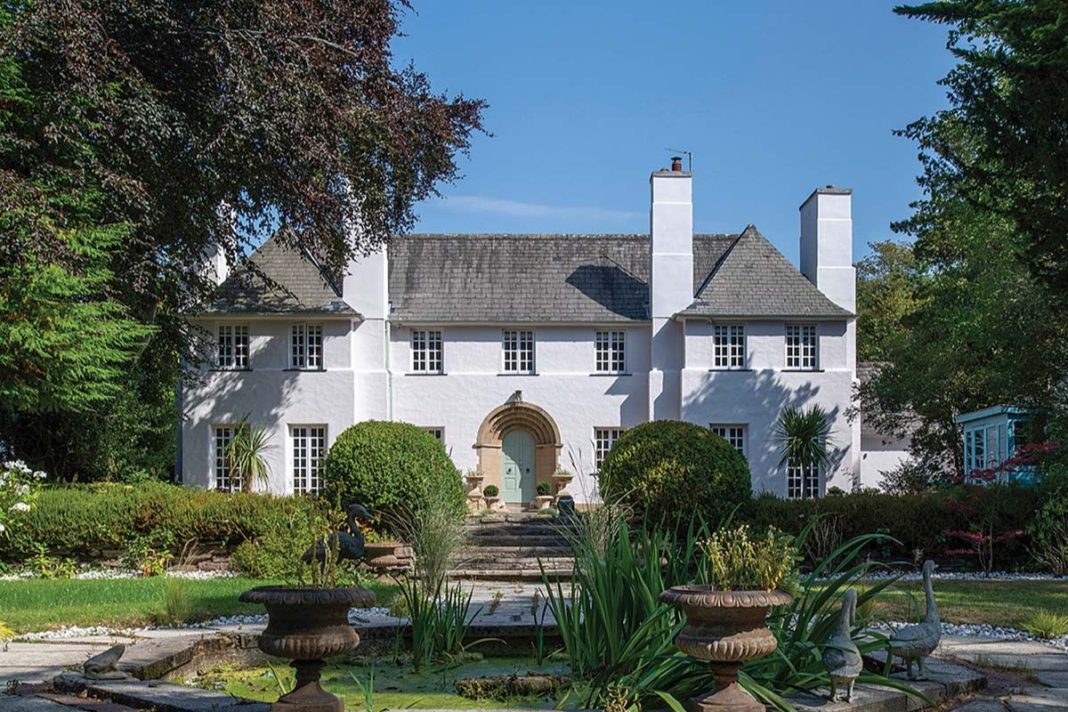
To say that Guy Harrower felt the gaze of history over his shoulder when he embarked on this project would be something of an understatement. His home, Glenwood, a sumptuous Arts and Crafts-inspired villa in south-west Edinburgh, was designed in 1932 by two of Scotland’s most important architects, Sir Basil Spence and Sir William Hardie Kininmonth. It’s not just one of the city’s most significant 20th-century homes; it’s where Guy grew up. Glenwood was bought by his family in 1969 (and they remain only its second owners), and Guy has decades of fond memories bound up in the grand B-listed building with its white harling, monumental chimney stacks, steeply pitched tiled roofs and multipane glazing. “My mum was very house-proud,” Guy says. “It was her house. She did a bit of interior design and it was very much in her style, very elaborate and ornate.”
When his mother died four years ago, Guy and his wife Lynne decided to take on Glenwood and make it their own. “But we realised, for modern-day living, we needed to do something quite drastic to it. And that evolved into a project of two halves.”
One half was stripping the house back to its bare bones inside and out, and replumbing, rewiring, redecorating and reorganising the entire thing to make it a better fit for their needs and tastes. It’s now lighter, brighter, simpler and less cluttered – yet in a way that carefully preserves and enhances many of its existing features. For example, stunning original hardwood floors have been sanded and stained into new life. “The carpets were taken up and I saw the floors below for the first time since we moved in in 1969. That was a ‘wow’ moment.”
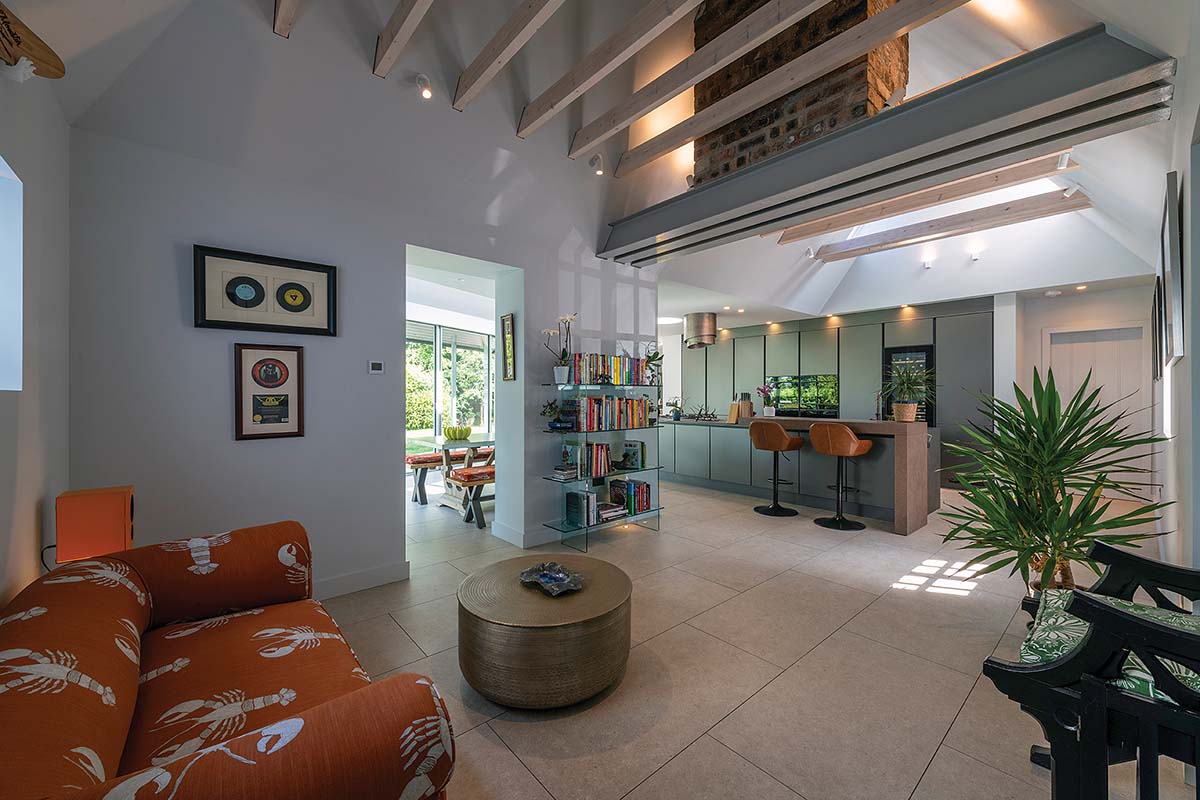
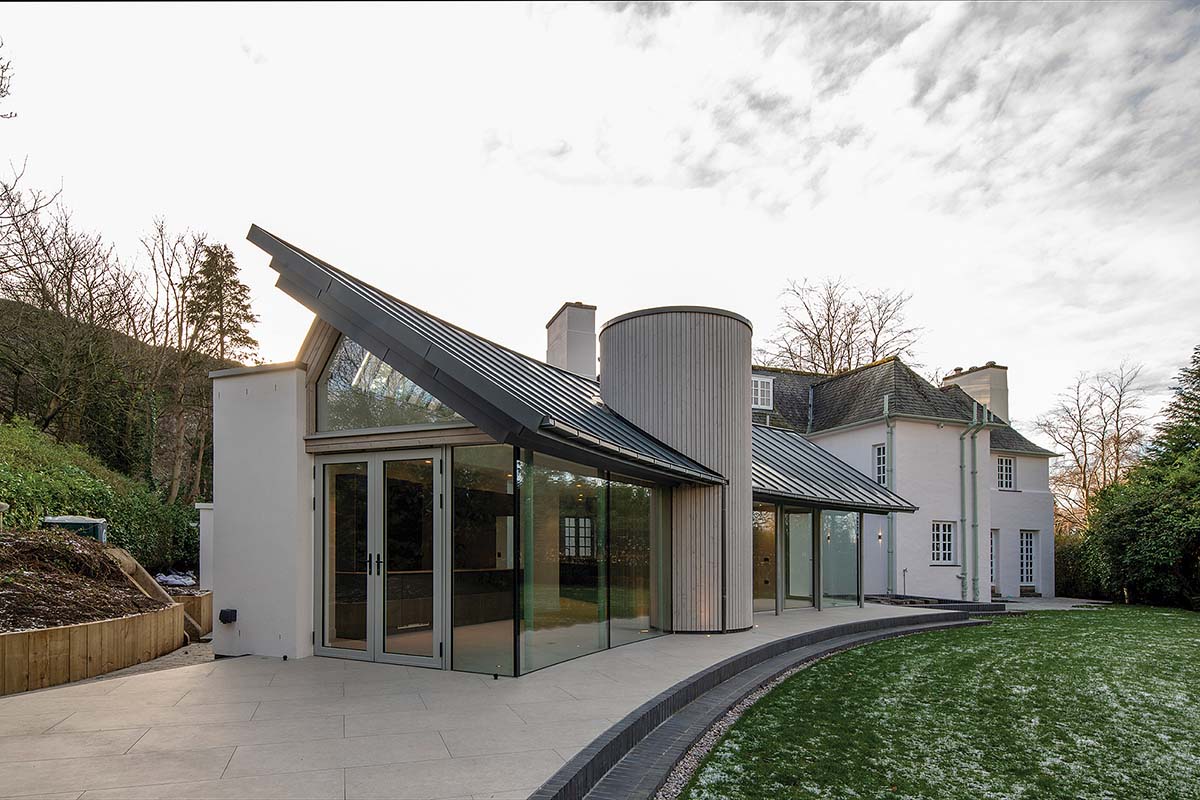
The other half of the project, and even more challenging, was the construction of a curved extension at the north-eastern corner of the house. The rationale for this large and dramatic addition was that, for all its scale and abundance of rooms, Glenwood lacked a decent-sized kitchen (Guy loves to cook) as well as a sense of connection both physically and aesthetically to its lovely gardens. “What we had before was a lot of small rooms that were all quite dark,” says Lynne. “You needed that one big bright open-plan room where you were going to spend most of your time.”
To make the changes, the Harrowers brought in David Blaikie and his award-winning Edinburgh architecture practice. They had his immediate attention as soon as he heard two of the most famous names in his profession mentioned. “We’ve ticked off quite a few of the Scottish architectural heroes,” says David, pointing to previous jobs by his practice revising historic buildings by the likes of Robert Adam, William Playfair and Robert Lorimer. “But Basil Spence wasn’t one of them.”
Getting to rub shoulders with such legends through a project like this, he adds, was “exciting” and “mind-expanding”. Part of the process, he goes on, “was about trying to figure out what Spence and Kininmonth might they do if they were asked to come back to a house they’d designed a hundred years before, in the current context of technology, materials and architectural thinking.”
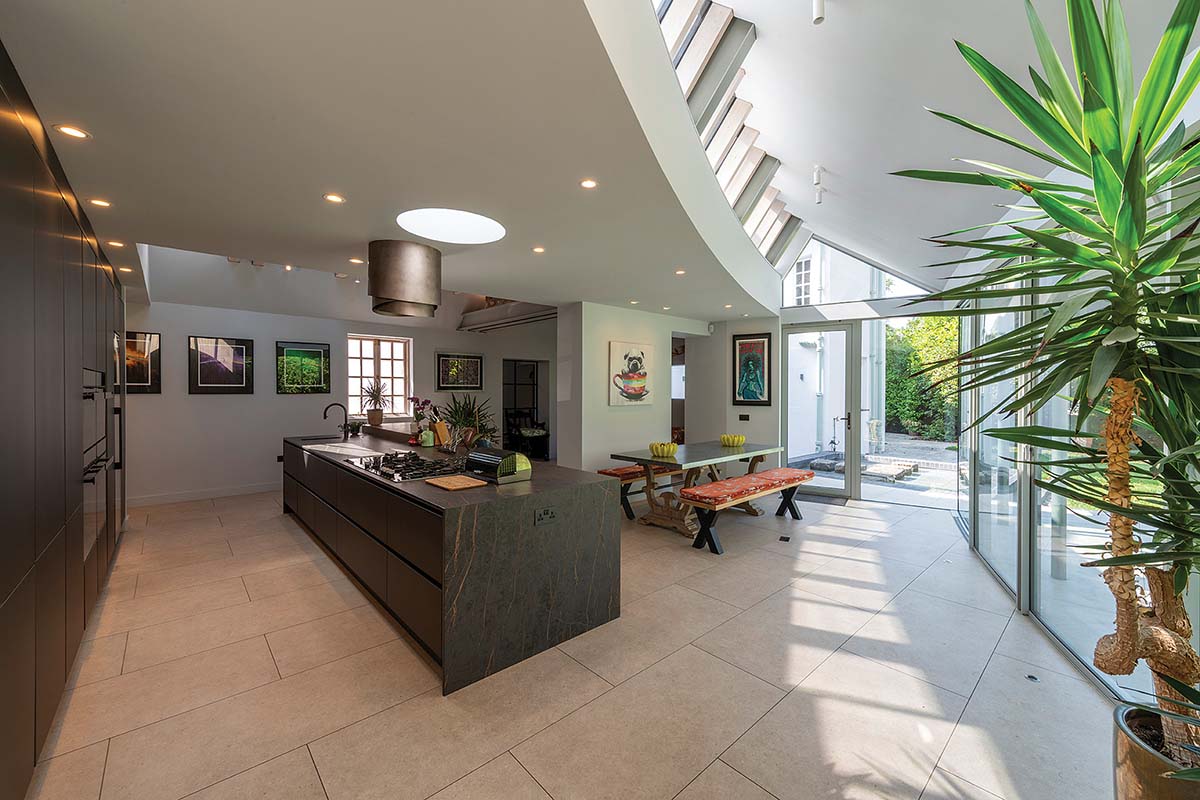
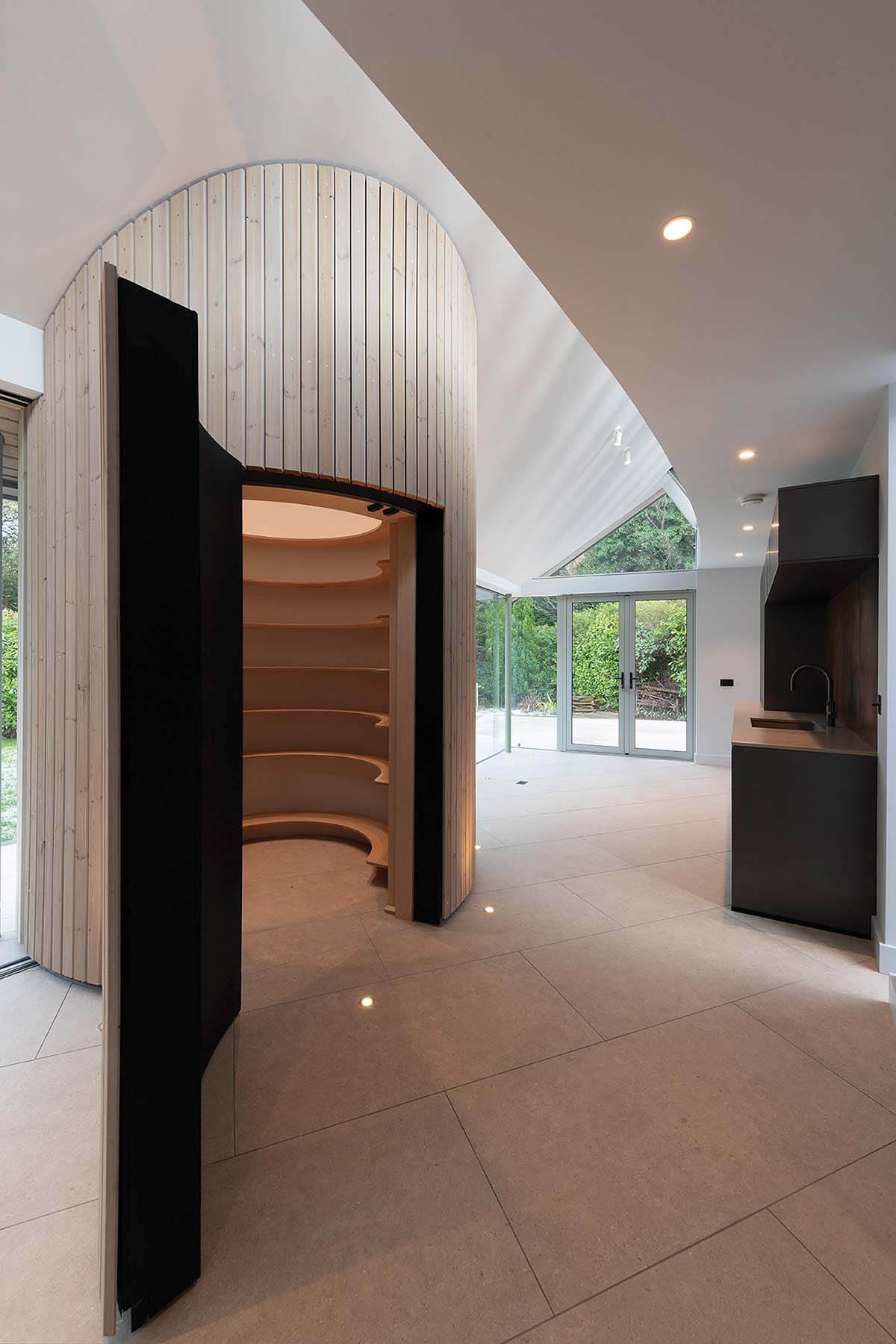
That, in part, explains the elegant curves of the extension, which were a recurring element of a lot of Spence’s best work – most notably Coventry Cathedral, his 1962 masterpiece; a symbol of post-war peace and reconciliation, adjacent to the ruins of the city’s 14th-century gothic church, which had been destroyed by German bombs during the Second World War. “Within that building,” notes David, “there are cylinders and curves that are used to counterpoint the rectilinearity of the main spaces and create specific places”.
This is an excerpt from issue 164 of Homes & Interiors Scotland. Want to read more? Buy your issue here.
This East Lothian house is no longer at the mercy of the elements, thanks to an ingenious architectural rethink.
An ingenious architectural rethink gave life to Kilberry House