
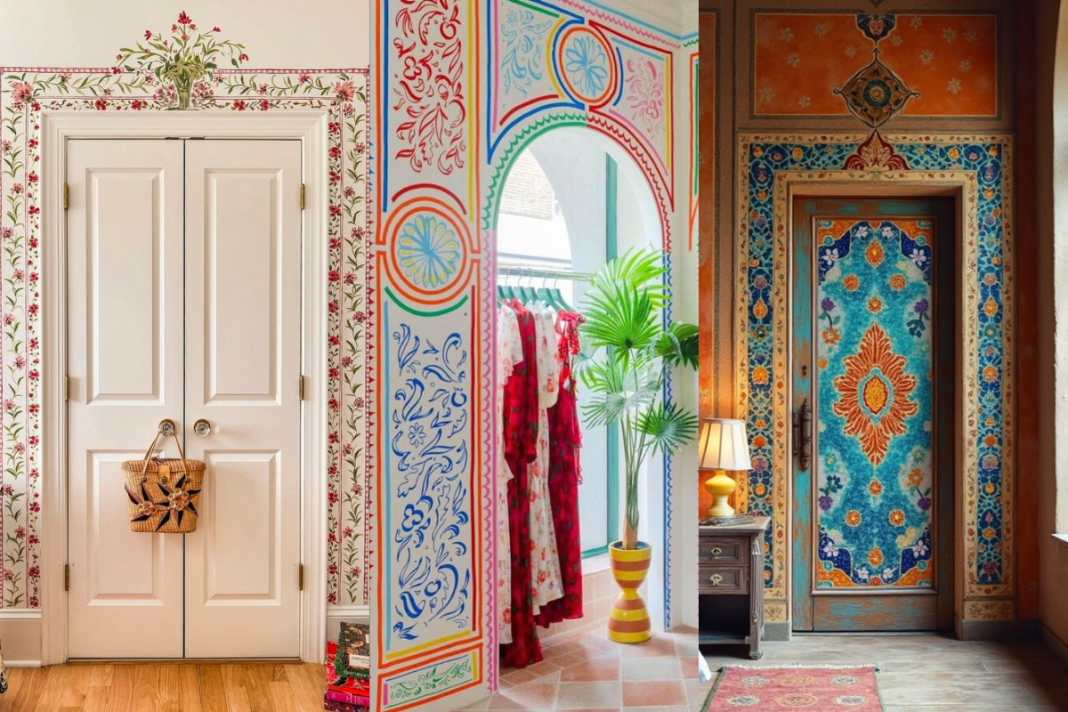
Pattern doesn’t just belong on couches and cushions. Bring splashes of colour and quirkiness into your home with these door design ideas
Refreshing your space doesn’t have to be time consuming or overly expensive, sometimes all it takes is a tin of paint and a strong vision. Good design is all about considering the finer details, which is why we have come up with a few door design ideas that may feel like smaller projects but make a huge impact.
Find a seven-point list of door design ideas below. If you like all things cutesy, take a look at the scallop, flora and fauna sections. If you have mid-century modern tastes, scroll to the checkerboard and striped options. If you like to dabble in the grandiose, go to Baroque, where we blend contemporary pastel colours with the powerful motifs of 17th-century Rome.
Before you begin
Before you launch into any DIY projects, take a cue from your home’s interior architecture, then brainstorm some ideas that echo its existing lines. This will help you create a door design that looks meant, and that amplifies the natural flow of your home.
Scallop
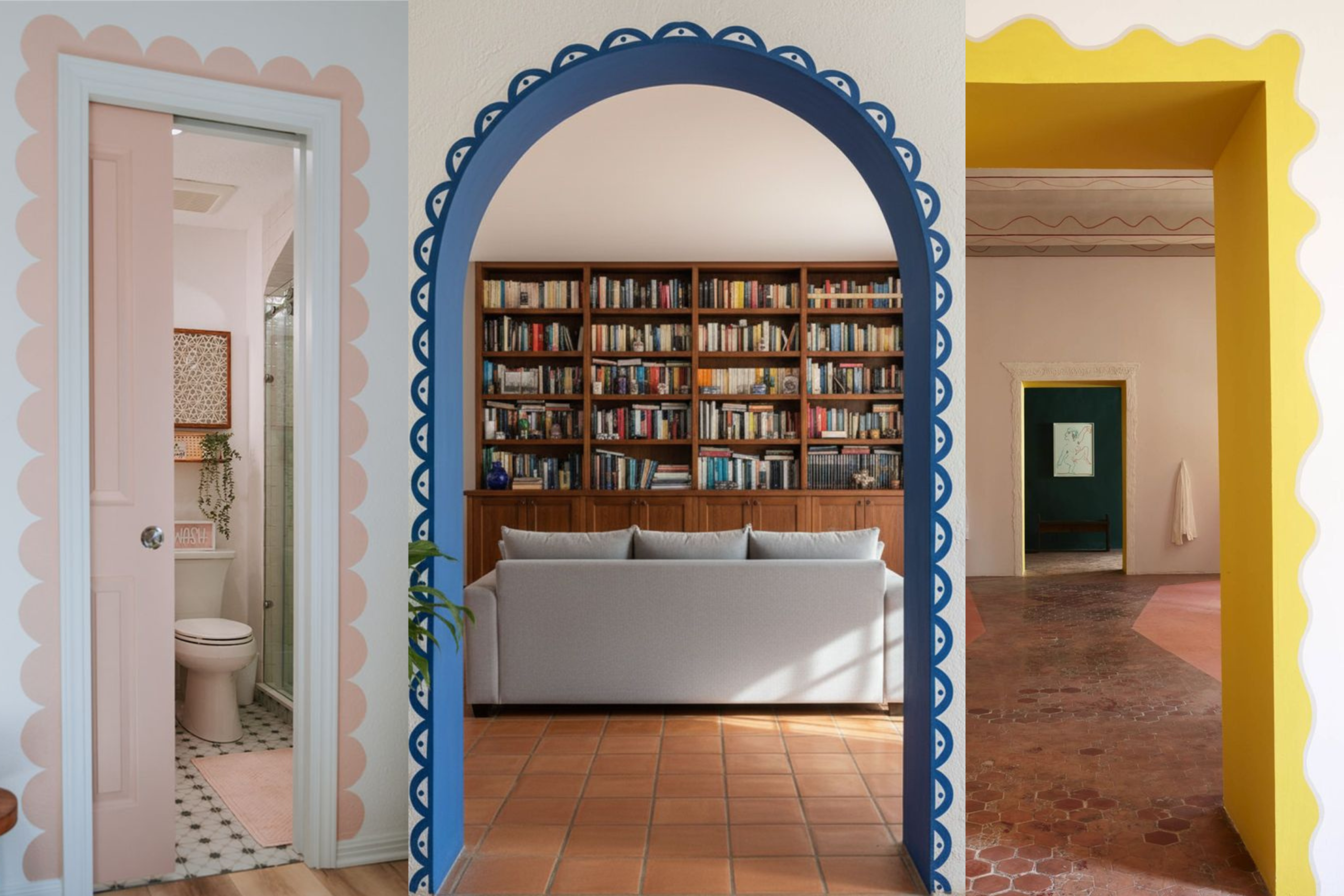
“Create a painted scalloped border around the soft curve of an archway, or experiment with texture and depth by adding skirting or beading. A carefully chosen pop of colour can highlight these elements, or juxtapose period details with a sleek, contemporary cornice for a modern twist,” say the team at Benjamin Moore.
To create a cohesive look, carry your colour palette throughout the space using furnishings such as an accent chair, cushions, throws or vases in complementary shades. “This repetition ties the room together, making even small details feel intentional and harmonious.”
Flora
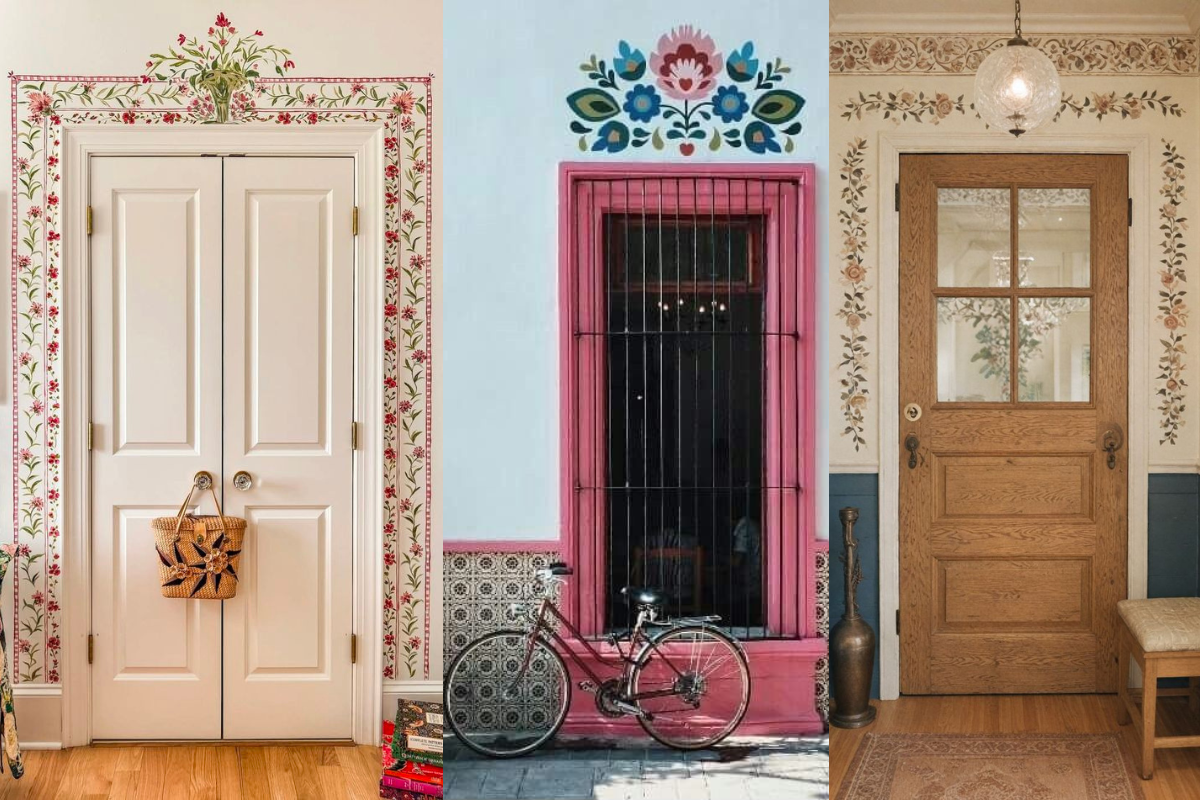
Floral interiors are enchanting, but too many blooms can make a space feel a little froufrou. Painting florals around a couple of door frames or archways is a smart way to bring the brightness of nature indoors whilst avoiding Granny chic.
Now, painting your own florals is a lot harder than it looks. If you don’t have a natural flair for art, you can use stencils from craft shops or homeware superstores like Dunelm and Home Sense. French artist Nathalie Lété, however, opts for freehand.
Known for her floral artwork, she has transformed her countryside home into a mural. “It’s my imaginary garden,” she tells domino. “I try to paint freely because I didn’t want it to look like wallpaper,” she says. It started with a single wall in her studio, and now every door has elegant designs sprouting from its frame. “If I paint one realistic flower, I’ll try to make the next a little more childlike.” Flowers are symbolic so opt for those with meaning that resonates. For example, “Symbolic details, like a big lily of the valley, infuse the space with hope,” says Nathalie.
Morroccan
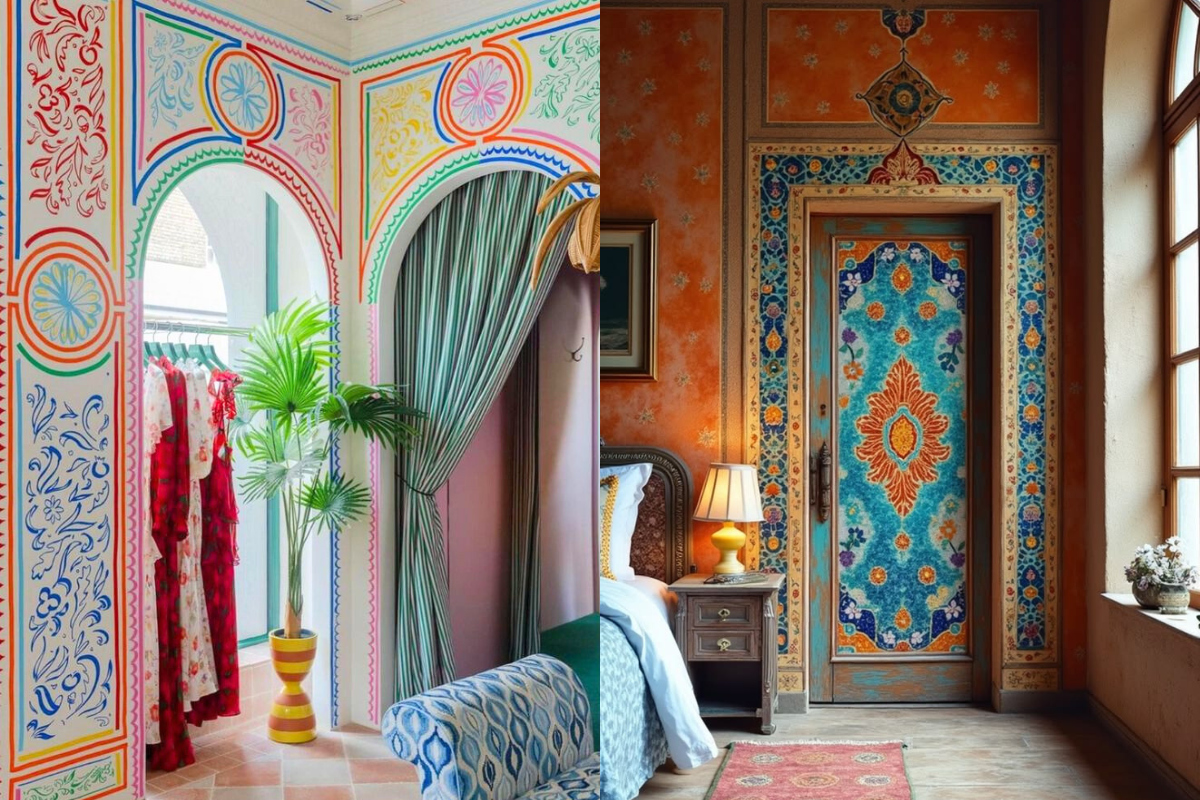
To do Moroccan design right, you must focus on bold, vibrant colours like emerald green, cobalt blue and terracotta. For shape, take inspiration from fretwork (geometric carvings), seen in the medinas of Fes, Marrakech and the seaside alleys of Essaouira. Not confident free-handing such intricate designs? You can find stencils of zellij tilework online. Etsy is a great place to purchase stencils and tiles directly from Moroccan craftspeople. What is good design if not authentic?
Feeling more adventurous? Elevate your painted borders by decorating with brass hardware and carved door pelmets.
Remember: it’s a joy to admire traditional designs from other cultures, but to use them respectfully, do some reading. Learn about the motifs and their significance so that you can handle centuries-old traditions with the care they deserve.
Fauna
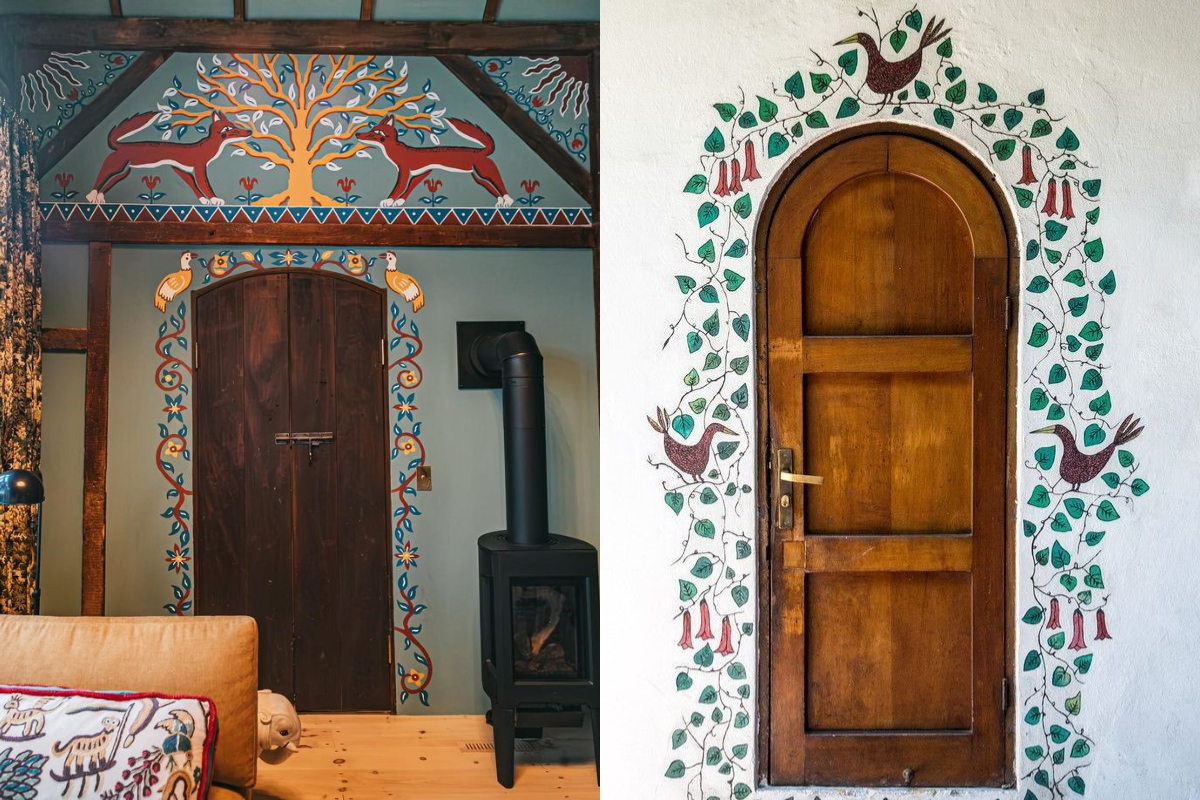
Designing interiors with animal motifs involves balancing bold patterns with neutral tones, using them as accent pieces rather than overwhelming a room. We love the playfulness that murals can bring to a space, but hand painted fauna can look a little cartoony if not considered.
To keep interiors feeling refined, pair bold animal prints with solid colours, plain walls or wood tones. Careful accessorising will help blend the motifs into the room: bring in smaller, animal-themed lamp bases, cushions, vases or artwork. By doing so, you’re creating a theme without infantilising the space.
Baroque
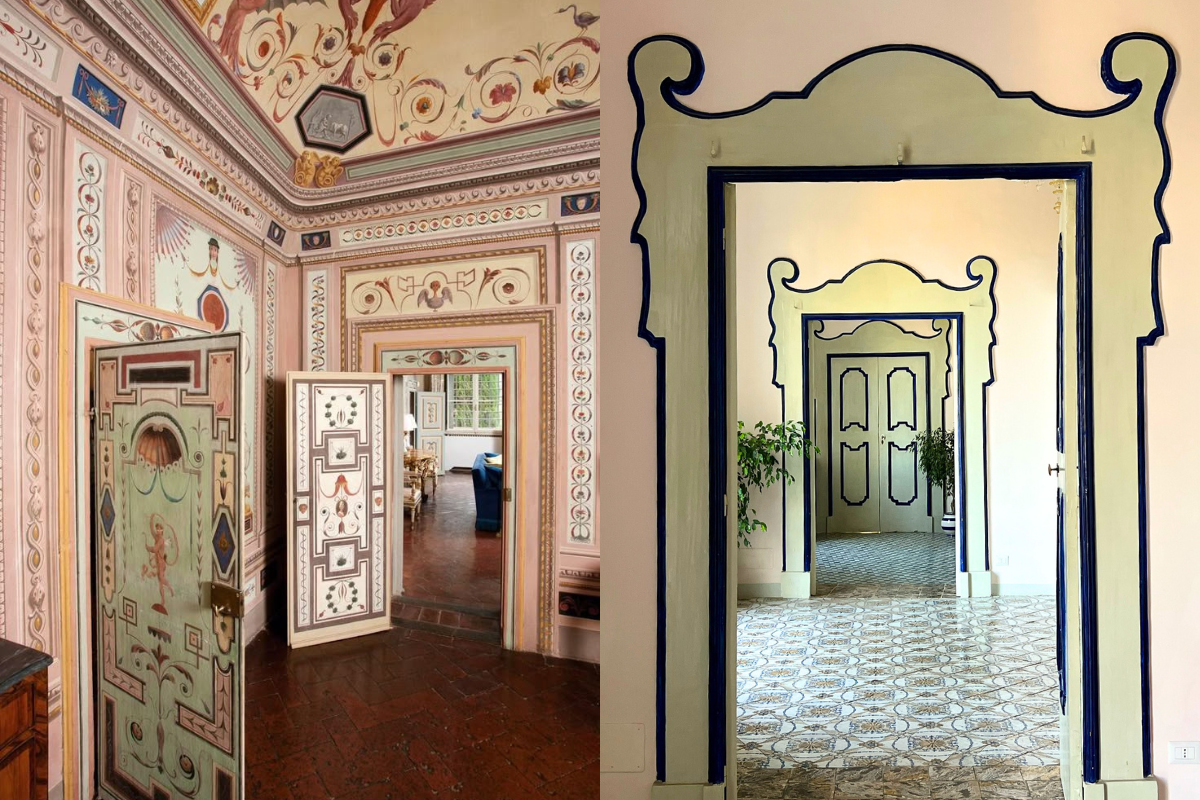
Fine Baroque art begins with a dark canvas. Brighter, but still deep, colours are then layered to make it look as though a subject appears out of the shadows. Generally, artists opt for thick, opaque paint for highlights and thin, transparent layers for the shadows. You can transfer this methodology to walls and door frames, too.
Painting in the Baroque style at home involves embracing dramatic, high-contrast lighting (known as chiaroscuro) and dynamic compositions. The décor itself normally relies on a binary palette of black and white. However, you can make it more contemporary by picking two lighter, but still contrasting, colours that do justice to the chic and glamorous nature of the art style. See above for some pastel door design ideas – pinks and blues offset one another in a whimsical yet powerful way.
Stripes
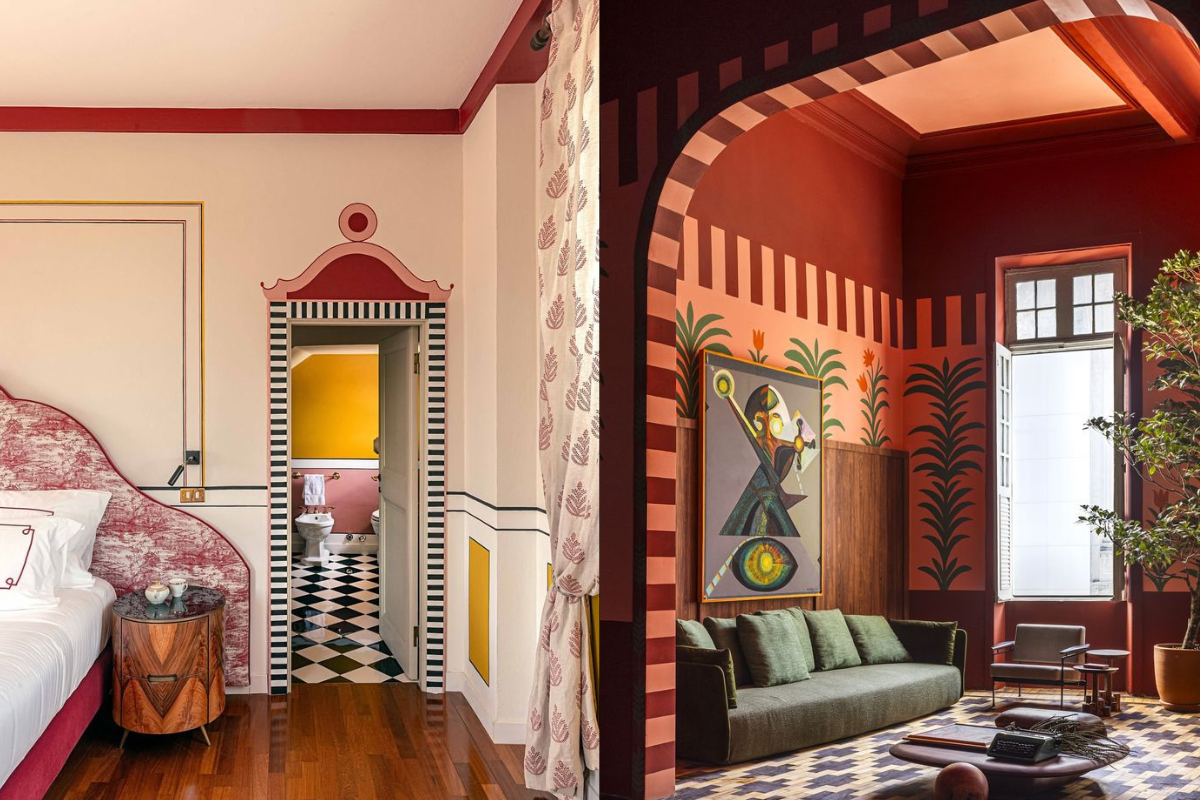
Looking for an easier door design idea? Stripes are a low-maintenance way to create visual interest without the commitment or cost of wallpaper. Stripes, in the context of doorframes and archways, are often referred to as graphic framing. The clean, impactful shapes transform a plain, standard door into a striking focal point.
You can also use stripes to create the illusion of height or width. Similar to vertical stripes on clothing, painting vertical stripes on a wall that incorporates the door frame can make a room with low ceilings appear taller. The door design ideas above show the true versatility of stripes – appearing in structured surrounds on a door frame as well as on the inner curve of an archway. Very cool.
Checkerboard
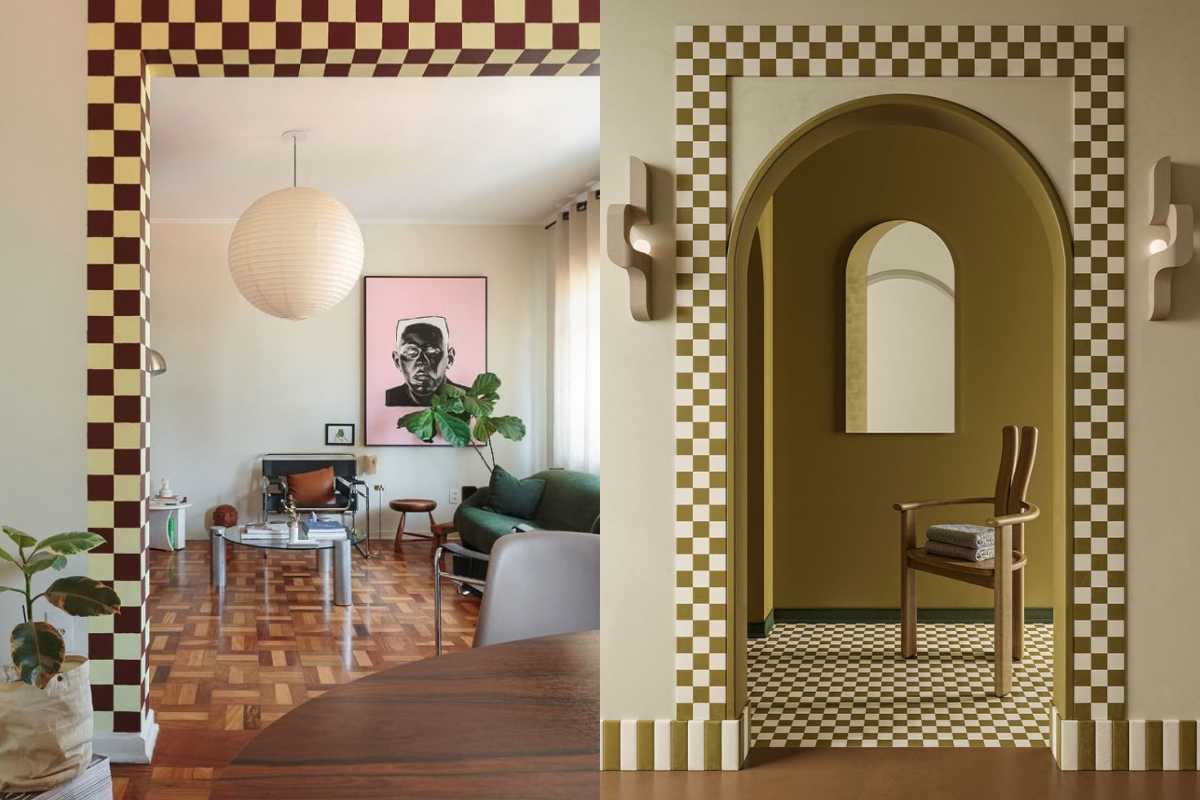
If you love retro, mid-century or graphic styles from the ’80s and ’90s, the last of our door design ideas is for you.
Checkerboard patterns add architectural interest and are best used to frame an entryway or zone an open-plan area. Fully customisable, the pattern draws the eye, highlights the wall’s natural shape and can make a simple doorway look more expensive. Casting an eye over this kind of repetitive, high-contrast pattern creates ‘visual movement’, which brings a kind of fluid energy into a room.