

These easy decluttering techniques will help you leave space for relaxation and calm in your bedroom
“The bedroom is a space where you’re not bringing anything in from the outside world, really,” muses Lucy Currell, founder of London interiors practice Studio Iro. “I like to keep bedrooms as minimalist as possible while retaining a sense of warmth.”
Research shows that being in a cluttered space impairs sleep quality, so even the most ardent maximalists benefit from making their bedrooms a visually quiet zone. “Wherever possible, try to have hidden storage for your clothes,” says Lucy. “Built-in, floor-to-ceiling wardrobes make the room look less busy. I also like bedside tables with drawers, especially in smaller rooms where you have to make the space work harder.”
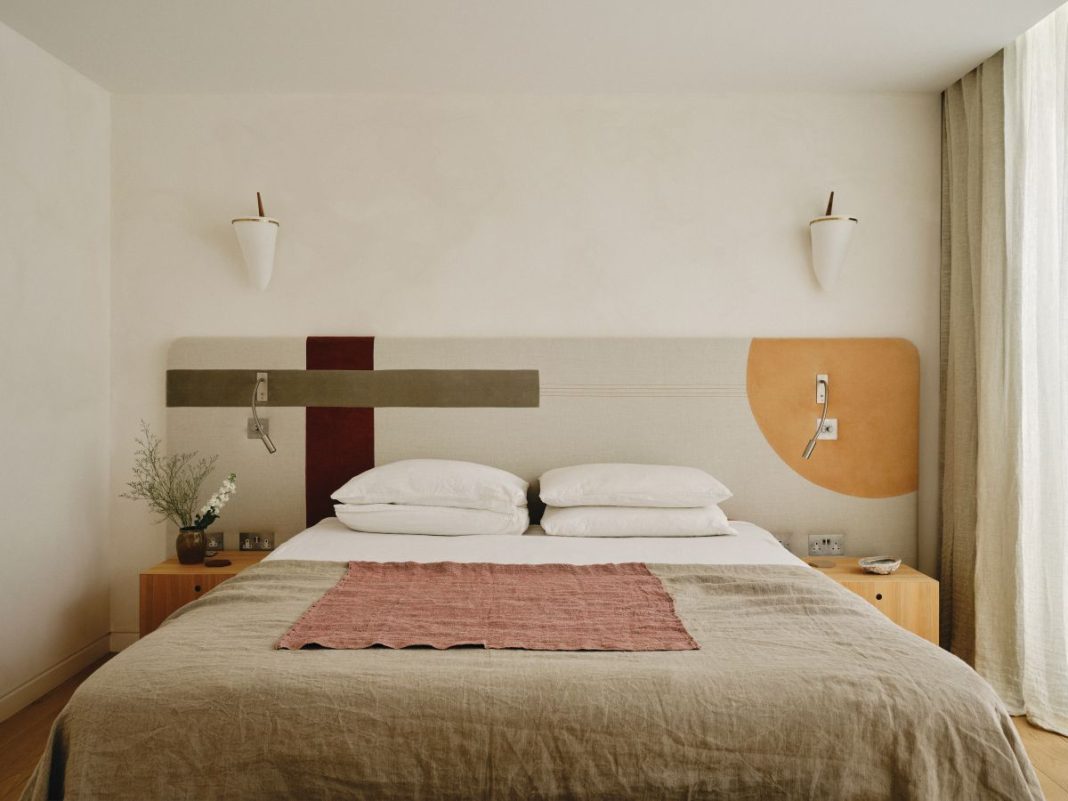
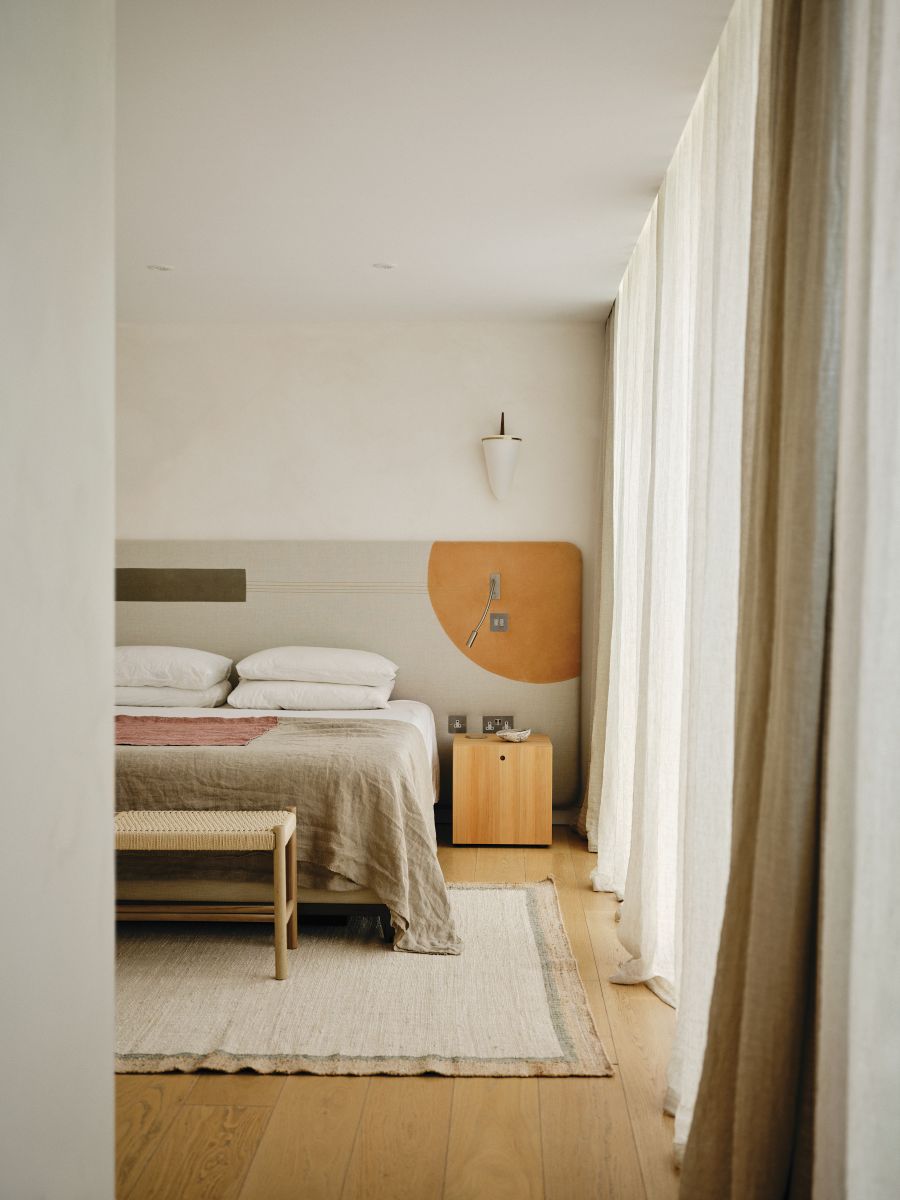
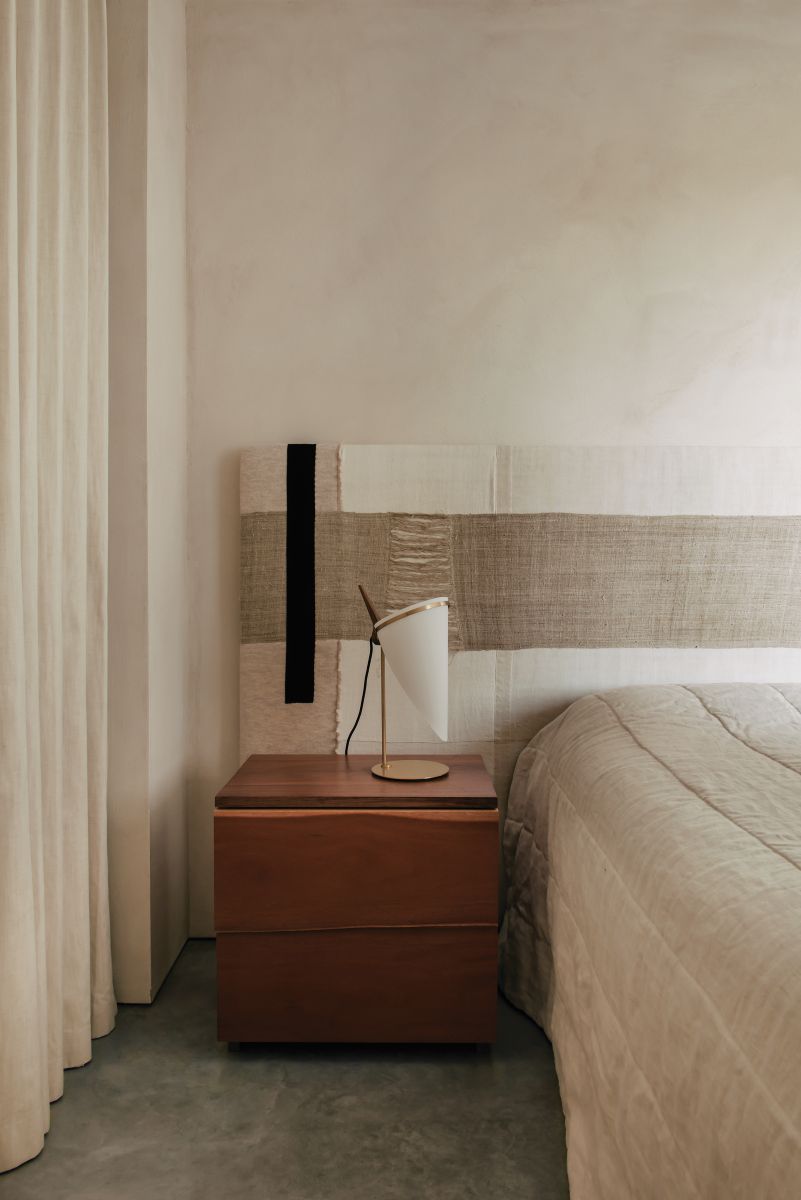
The designer favours natural materials such as linen and wool in all her projects – they’re breathable, and wool is selfcleaning – and likes fabric headboards both for their tactile and visual qualities. The headboards on the page opposite, both from Nest Design, were bespoke designs for Lucy. The main image shows the tranquil bedroom in the Collector’s Retreat, a home belonging to an art-loving couple in London, where the headboard spans the breadth of the back wall. “It makes the bed the main focus of the room, and invites the owners to lean up against it and read,” she says. “Its balance of shapes, colours and textures means it serves as a piece of art too.”
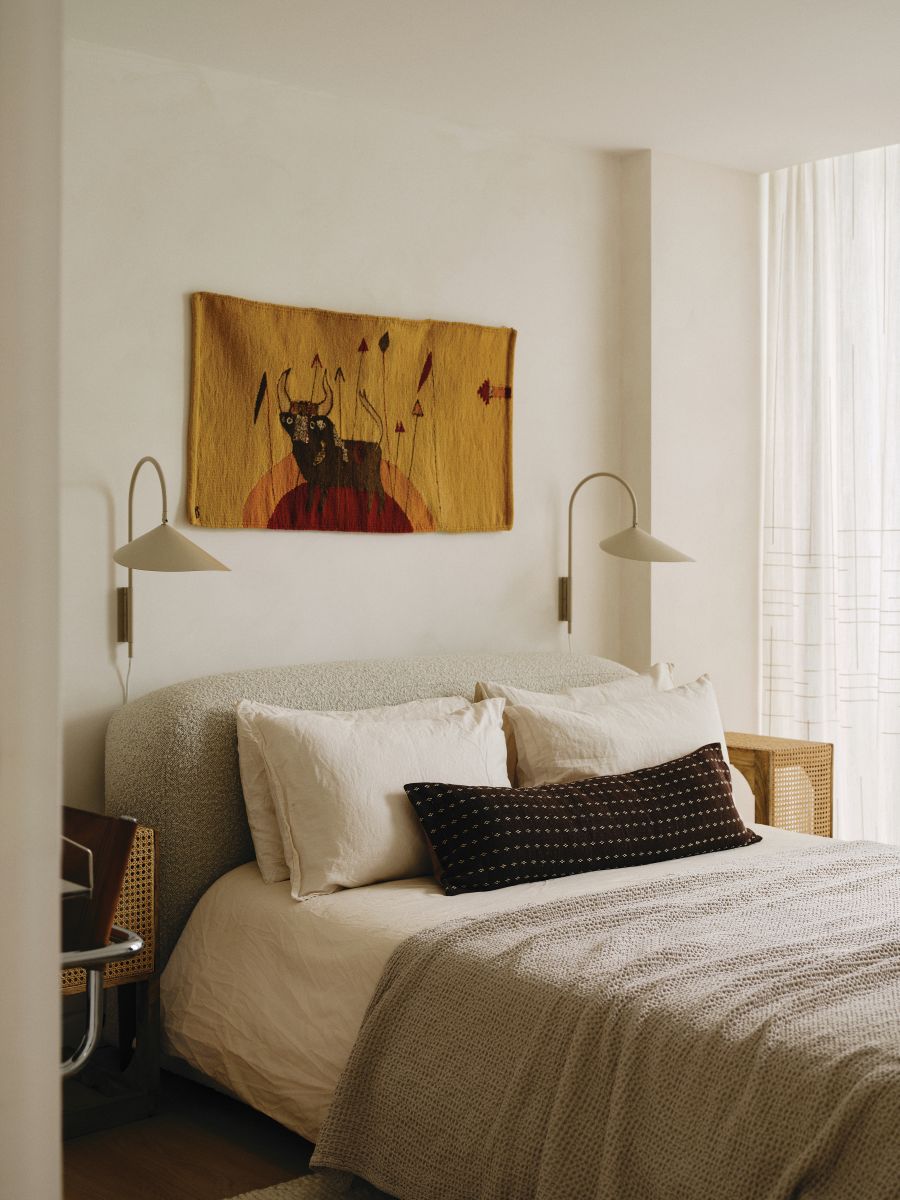
Cocooning a room in fabrics and limiting the number of hard surfaces on show also helps to muffle sound. In another bedroom at the Collector’s Retreat, seen above, a fabric wall-hanging introduces art to the room in a gentle way. “I prefer having something soft like a tapestry above the bed; a framed artwork can feel harsher,” says Lucy. “You can pick up vintage fabrics really easily, so it doesn’t have to cost much.”
Earthy tones prevail in Studio Iro’s projects, and with good reason; colours that occur in nature make us feel calm and grounded. If you need inspiration, take a look at Graham & Brown’s paint collaboration with The Sensory Home, which has a ‘rest’ category of soothing greens believed to aid sleep. But remember that even the most thoughtfully chosen palette can be sabotaged by bad lighting. A central ‘big light’ is a bedroom no-no for Lucy, who will usually design a blend of atmospheric lighting (such as wall lamps) and task lighting (reading lights).
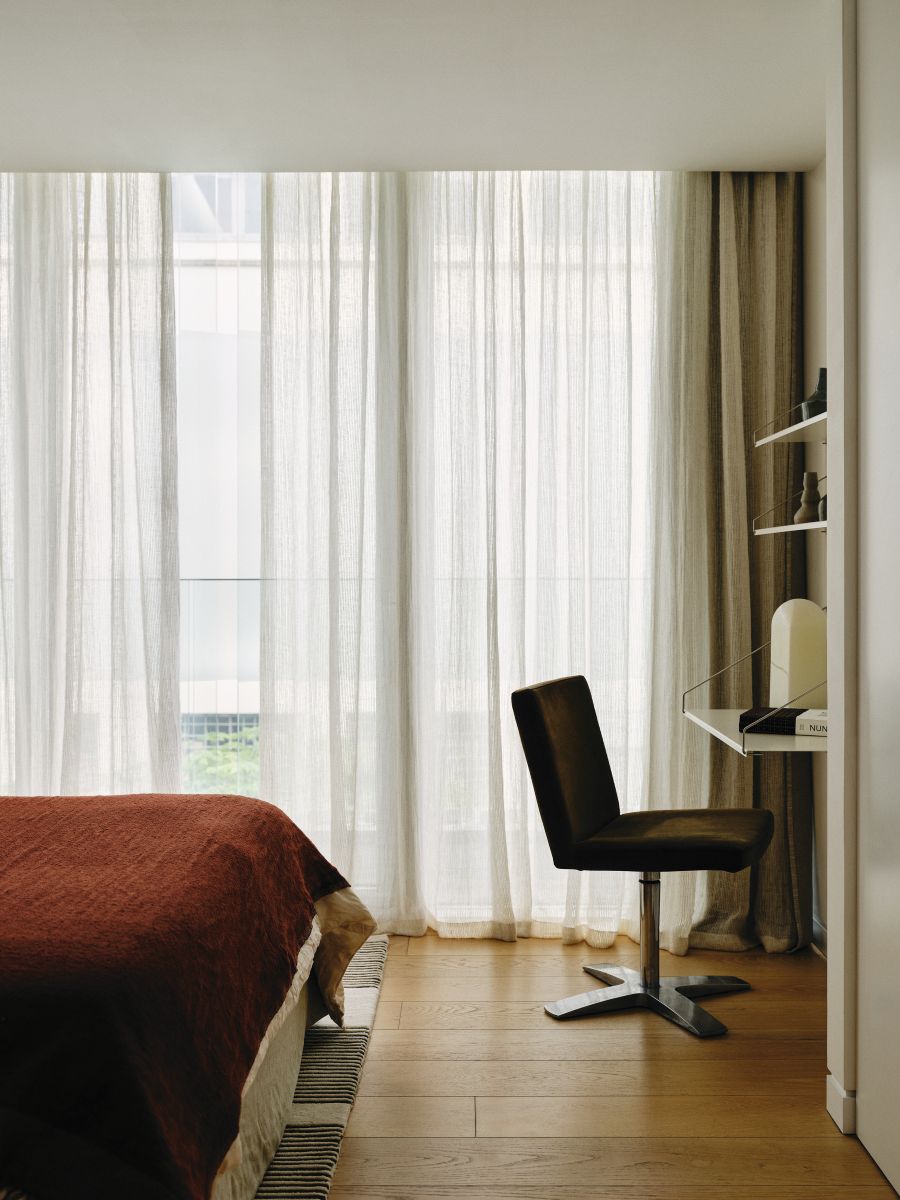
Layers are your friend where curtains are concerned, too. Think about how dark hotel rooms get at night; it’s because there are a few layers of window dressing. “I’ll install two curtain tracks, one for a sheer curtain, which offers privacy while still letting the light filter in, and then a second track with a much heavier fabric,” Lucy explains. Draw them both to retreat from the world outside and get a good night’s kip.
Visit the Studio Iro website | Follow Studio Iro on Instagram
In conversation with Marie Kondo: how to tidy up your home and your mind this autumn