
A historic home calls for a traditional bathroom, but there’s nothing stuffy about this witty blend of rich fabrics and antique finds
“In this house, the architecture is never a backdrop – it speaks first,” says Suzie McAdam. The Dublin-based interior designer is talking about this county retreat in Co. Wicklow, in the east of Ireland. A former cornmill, it dates from the 1800s and was originally part of a Victorian model farm. She was brought in to transform the interior, adding a sense of cohesion and cosiness to its vast proportions.
“The warm pinks and terracotta tones in the exposed stone inspired the palette for this bathroom,” she explains. “Rather than covering it up, we allowed it to inform the finishes and metals.” The masonry was cleaned and sealed in a breathable finish so the patina remained intact.
A soft, plastery neutral with a blush undertone was used on the walls: “Something warm enough to play with the pink tones of the bath and natural masonry, but gentle enough not to compete with the joinery and fabric.”
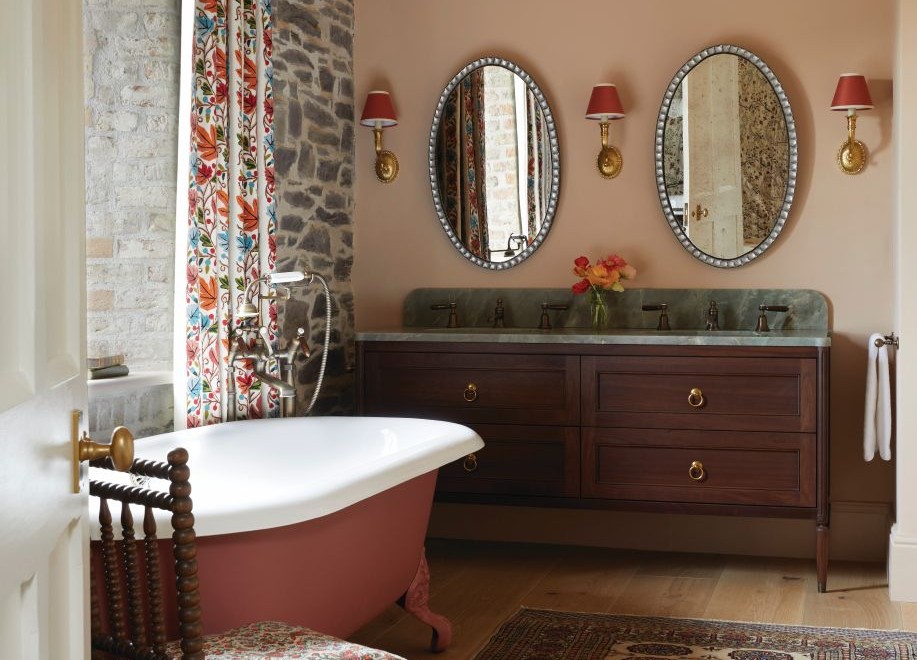
The freestanding Spey tub by Drummonds is framed by curtains made from a Pierre Frey fabric, Fronsac from the Braquenié collection, which has hand-embroidered leaves in pink, orange and blue. “The bath sits almost like a piece of furniture,” says Suzie. “A traditional silhouette made sense here. It adds softness and a little romance to the architectural weight of the room.”
The outside of the bath is painted in a custom pink (“Think of aged plaster or the inside of a seashell – we wanted it to feel timeworn, not sugary”) which contrasts beautifully with the double vanity. This was made bespoke by Abington Design House, which was responsible for all the custom joinery in the project. “The vanity is inspired by a Regency sideboard that would traditionally sit in a hallway. It has an inset basin, marble top and aged brass fixtures which will patinate naturally. The double vanity is something we use a lot; many of our projects are in listed buildings where adding rooms can be challenging, so the bathroom spaces have to work particularly hard.”
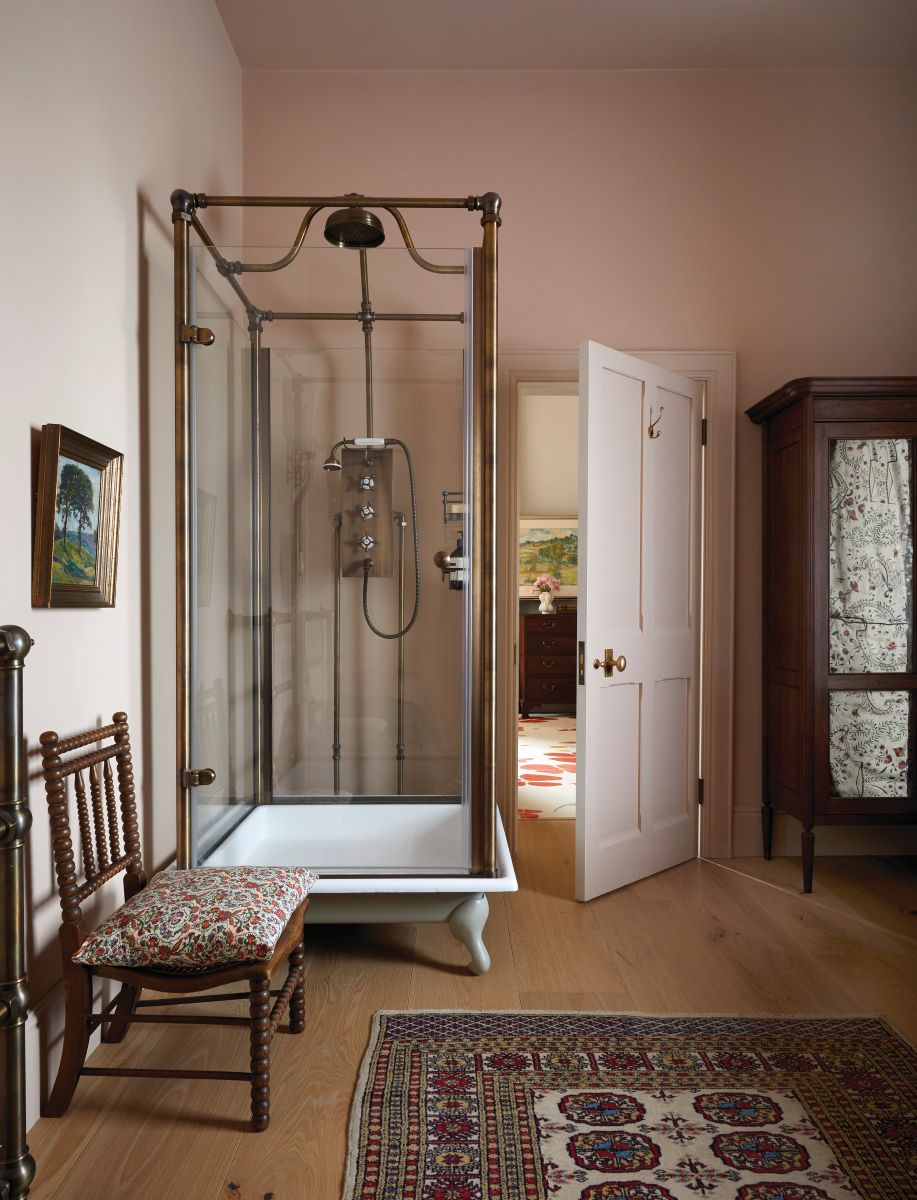
The bath and vanity were intended to be the main focal point, so it would’ve been easy to install any old shower and call it a day. Instead, Suzie chose an impressive, freestanding shower from Drummonds (the Spittal) which immediately signals luxury. The feet reference those of the bath, and the arched brass showerhead adds another magnificent curve to the scheme.
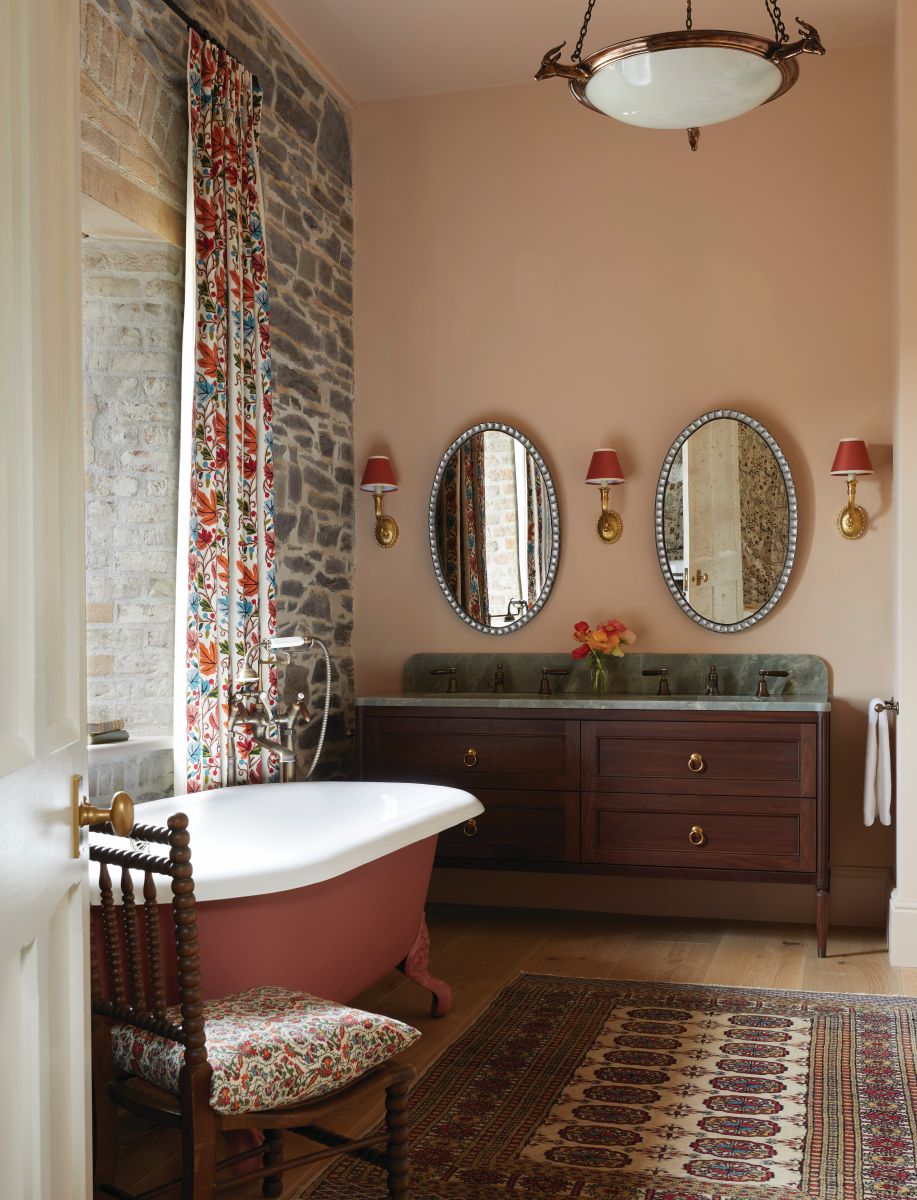
Brass is picked up again in the Jamb pendant overhead. “In a bathroom like this, light should glow rather than glare,” the designer advises. “We layered the pendant with subtle accent lighting to keep the room atmospheric. It’s always worth thinking in layers; there’s ambient lighting for warmth, softer lighting around the vanity, and nothing overly clinical.”
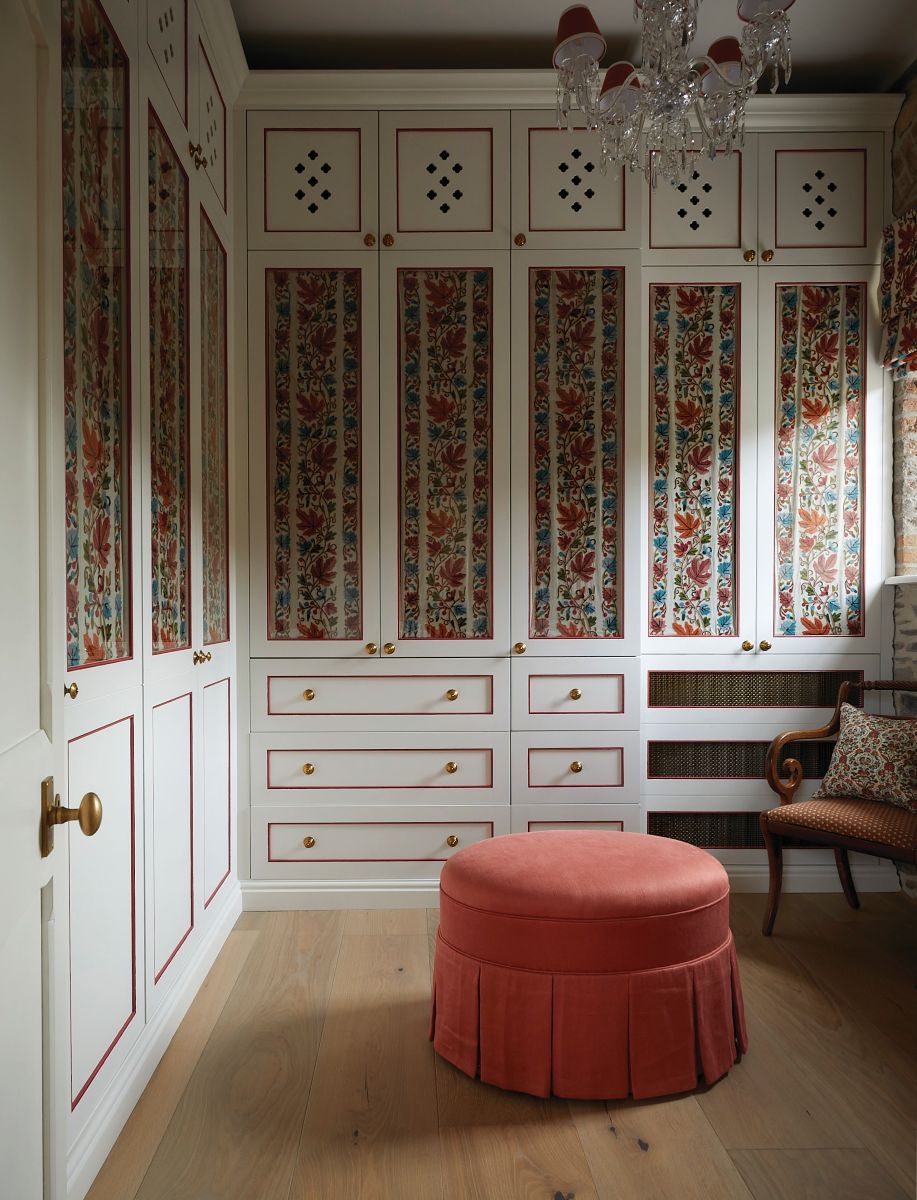
Abington Design House took charge of the joinery in the adjoining dressing area, with the cabinetry matching the proportions of the stone walls. “The clients wanted it to feel like part of the suite, not an afterthought – somewhere that felt private and cocooning,” Suzie explains. “We built in concealed compartments and fabric-lined storage so it feels more like a personal treasure cabinet than a dressing room.”
The same hand-embroidered fabric is repeated behind the wardrobe doors: “Pierre Frey’s archive-inspired prints have the right balance of colour, romance and history.” And it’s not just clothes that these pretty doors conceal; Suzie integrated a washer and drier into this space for additional functionality.
“Nothing in this house is purely decorative, and every piece feels found or inherited. We layered in vintage mirrors, small ceramics and textiles that soften the stone and add a sense of intimacy. Perfection wasn’t the goal; character was.”
Take a look at this completely different but equally as beautiful bathroom featured in issue 163 of Homes & Interiors Scotland magazine.
Brutalism and blush collide in this mid-century modern bathroom