

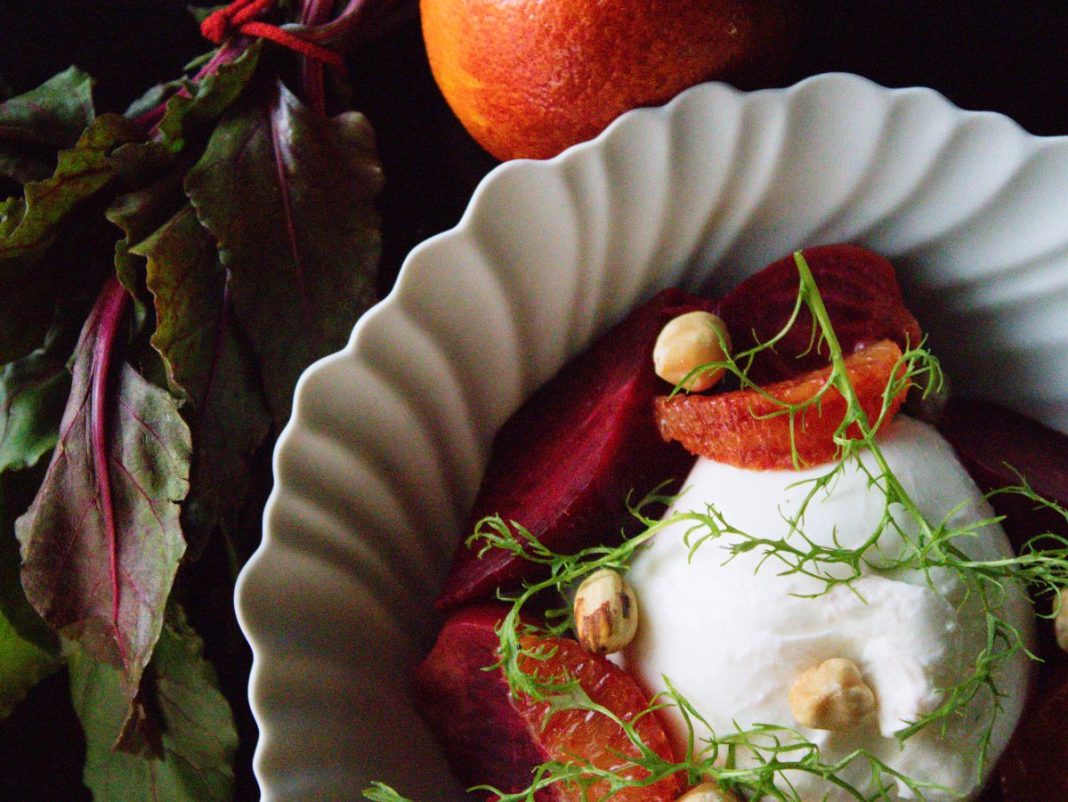
Tomás Gormley is head chef and founder of intimate fine dining restaurant Cardinal in Edinburgh. Here, the Michelin-star chef shares three of his most popular summer recipes inspired by the colours and flavours of the Mediterranean
As I write, summer sunshine begins flooding through the windows at H&IS HQ. Soon, my desk is doused in light and I can’t help but wonder what refreshing, colourful and nurturing dish I could make for my dinner tonight. To me, the arrival of nicer weather like this is synonymous with a change in diet. When that big yellow ball in the sky puts its hat on, my daydreams begin to steer away from visions of chunky winter soups or the sugary treats of spring, instead focusing on yoghurt and melon for breakfast, herbaceous bruschetta for lunch and a warm chickpea salad for dinner. Right on cue, an email containing three Mediterranean recipes from award-winning chef Tomás Gormley drops into my inbox.
Tomás is the founder and head chef at Cardinal, an intimate fine dining restaurant on Eyre Place in Edinburgh and is celebrated for his elevated, almost European, take on modern Scottish dining. These three Mediterranean recipes are built with healthy ingredients that not only look positively scrumptious, but can be sourced from local Scottish suppliers.
Continue reading for easy breakdowns of each dish, complete with Tomás’ advice on how to maximise those natural flavours. I’ve decided that I’m having the blood orange, beetroot and burrata salad for my tea tonight — and I might just eat it al fresco.
1. Blood orange, beetroot and burrata salad
Serves up to two
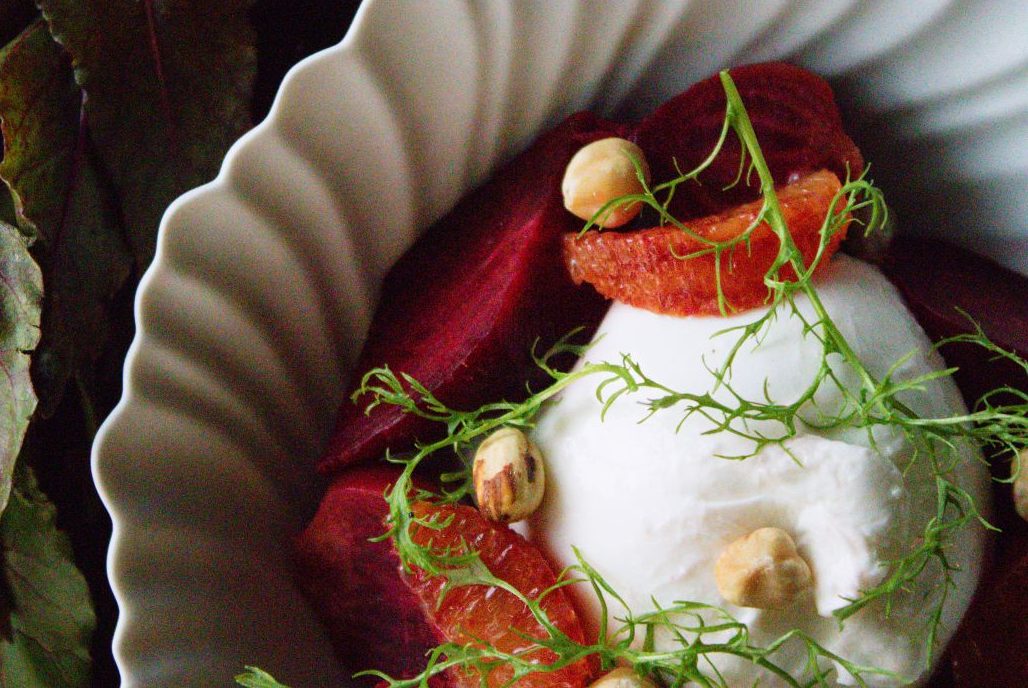
Let’s get started with the first of our Mediterranean recipes.
Blood oranges owe their deep red hue to a climate that can’t make up its mind — hot days, cold nights and just the right amount of stress bring out their signature colour and bold, sweet-tart flavor. They’ve been a staple of Italian and Sicilian cuisine for centuries (and included in many Mediterranean recipes) though historically, most of them were juiced straight into spritzes or stolen off trees by kids who knew better than to buy fruit.
“In this selection of Mediterranean recipes, they’re paired with earthy roasted beetroot and burrata so creamy it barely holds itself together,” says Tomás. “Because sometimes the best flavor combinations don’t need reworking (especially in these Mediterranean recipes) — just a good excuse to eat more of them.”
Ingredients
For the salad
2 medium beetroots, roasted, peeled and sliced
2 blood oranges, segmented (reserve any juice)
1 large burrata
50g toasted hazelnuts, roughly chopped
1 handful salad leaves
For the dressing
2 tbsp blood orange juice (from the segmented oranges)
1 tbsp white balsamic vinegar
3 tbsp olive oil
½ tsp honey
Salt and black pepper to taste
Method
- For the first of these Mediterranean recipes, whisk together blood orange juice, white balsamic vinegar, olive oil, honey, salt and black pepper.
- Add the burrata in the centre of the bowl. Arrange the sliced beetroot and blood orange segments around the burrata.
- Scatter over the toasted hazelnuts and salad leaves.
- Drizzle with the blood orange dressing, add a final crack of black pepper and eat before the burrata melts into the plate.
2. Lamb koftas with wild garlic flatbread and red cabbage slaw
Serves up to four
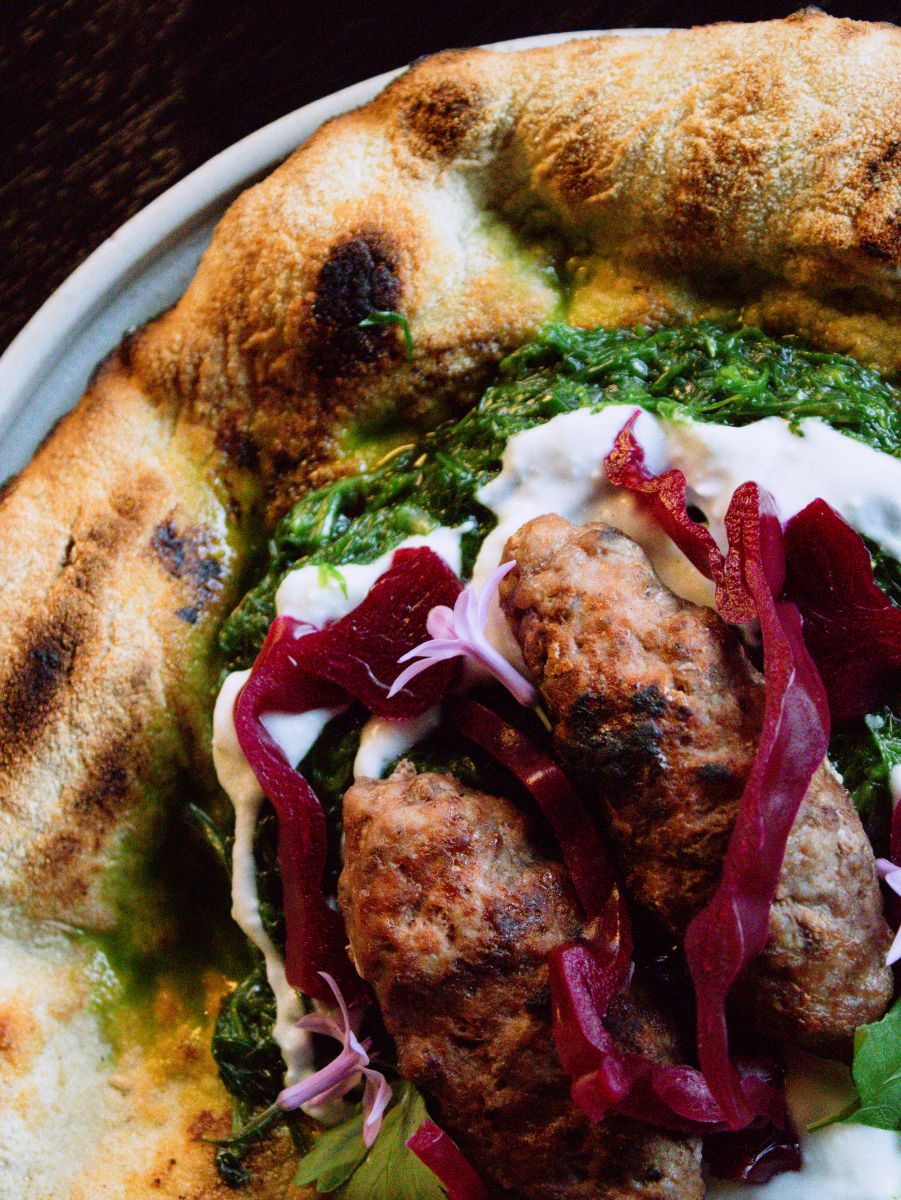
“Koftas, are some of my favourite Mediterranean recipes and are one of the oldest ways to turn less glamorous cuts of meat into something outrageously good, whether that’s using up leftover mince at home or making sure nothing goes to waste in a restaurant,” says Tomás. People have been shaping and grilling spiced minced meat for thousands of years, first recorded in ancient Persia and still an easy win for dinner today. “I recently had some of the best koftas I’ve ever had at my wedding meal, made by the super talented kitchen team at Patina in Edinburgh.”
This version keeps things simple but full-on flavourful: juicy, spice-packed lamb koftas, a spanking Amalfi lemon yoghurt and a peppery wild garlic gremolata to cut through the richness. “The homemade flatbreads are stupidly easy to make and way more fun than they should be — especially when you get everyone involved. Get stuck in, wrap, rip, dip — whatever you want.”
Ingredients
For the koftas
500g lamb mince
1 small onion, grated
2 garlic cloves, minced
1 tsp ground cumin
1 tsp ground coriander
½ tsp smoked paprika
½ tsp chili flakes
1 tbsp chopped fresh mint
1 tbsp chopped parsley
1 tsp salt
½ tsp black pepper
1 tbsp olive oil (for cooking)
For the yoghurt
200g Greek yoghurt
Juice of ½ Amalfi lemon
1 tbsp olive oil
Salt and black pepper
For the flatbread
250g plain flour
1 tsp salt
1 tsp instant yeast
150g Greek yoghurt
50ml warm water
1 tbsp olive oil
For the red cabbage slaw
¼ red cabbage, finely shredded
½ red onion, finely sliced
1 tbsp red wine vinegar
1 tbsp olive oil
½ tsp salt
½ tsp sugar
½ tsp cumin seeds (lightly toasted)
For the wild garlic gremolata
1 small handful wild garlic, finely chopped
Zest of 1 Amalfi lemon
1 tbsp olive oil
½ tsp flaky sea salt
Method
- Make the flatbread dough
- Mix flour, salt and yeast in a bowl.
- Stir in the Greek yoghurt, warm water and olive oil until a sticky dough forms.
- Knead for 5-7 minutes until smooth. Cover and let rise for 1 hour, or until doubled in size.
- Make the koftas
- For the second of our Mediterranean recipes, combine lamb mince, onion, garlic, spices, herbs, salt and pepper in a bowl.
- Shape into 8 small oval koftas onto metal skewers, or wooden ones that have been soaked in water, chill for 20 minutes to firm up.
- Heat a grill pan or BBQ over medium-high heat, brush with olive oil and cook the koftas for 3-4 minutes per side until well-charred and cooked through.
- Make the quick red cabbage slaw
- Toss red cabbage, red onion, red wine vinegar, olive oil, salt, sugar and cumin seeds in a bowl.
- Let sit for 15 minutes, tossing occasionally to soften.
- Make the wild garlic yoghurt and gremolata
- For the yoghurt: Mix Greek yoghurt, wild garlic, lemon juice, olive oil, salt and pepper.
- For the gremolata: Stir together wild garlic, lemon zest, olive oil and sea salt.
- Cook the flatbreads
- Divide the risen dough into 4 balls, roll out into thin rounds.
- Cook on a hot dry pan, or BBQ, for 1-2 minutes per side until puffed and lightly charred.
- Assemble and serve
- Spread wild garlic and yoghurt onto a flatbread.
- In the final step of the second of our Mediterranean recipes today, you add koftas, spoon over the red cabbage slaw and finish with the wild garlic gremolata.
3. Amalfi lemon posset with rhubarb granita
Serves from four to six
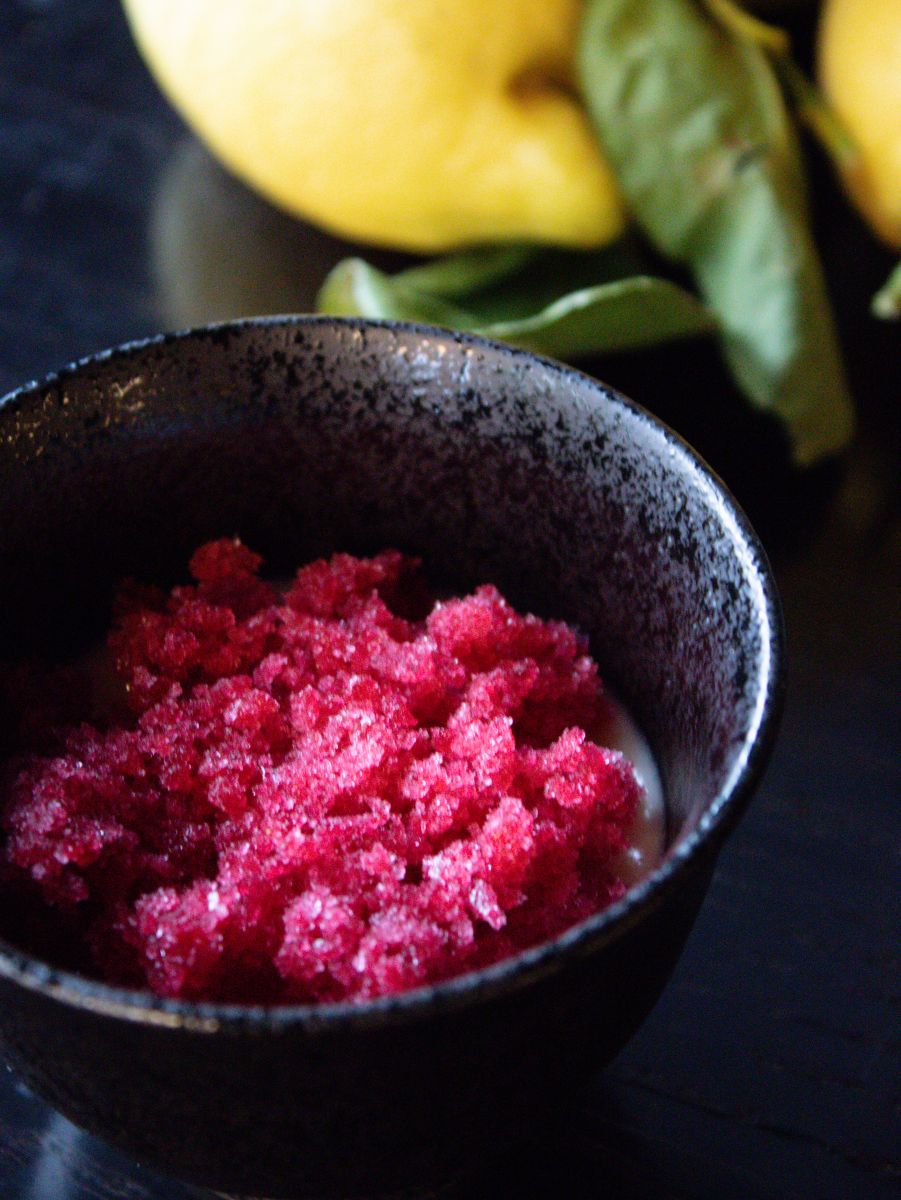
Posset has been around since medieval Britain, back when it was a warm, boozy, allegedly medicinal concoction. Somewhere along the way, it sobered up and became the foolproof dinner party classic we know today — still indulgent, just a bit less fun. “This was one of the first desserts I cooked the first time I was dumped on the pastry section in a real kitchen,” says Tomás, who created these unique Mediterranean recipes. “Probably not the best introduction, but posset is nearly impossible to mess up and ridiculously easy to make, which, as it turns out, is not something you can say for most other dishes on the pastry section.”
Amalfi lemons are at their peak right now, all intense fragrance and mild acidity. They were once cultivated by monks and exported across Europe — monastic ingenuity at its finest. “Not quite as infamous as Buckfast,” Tomás smiles, “but infinitely more useful in this dessert.”
Then there’s forced Yorkshire rhubarb, grown in pitch-black sheds and harvested by candlelight like some kind of Victorian séance. “It’s got a smoother, more delicate tartness than regular rhubarb, making it perfect for jams, which everyone’s already making — and perfect for this list of Mediterranean recipes. So, here’s a better way to use it: sharp, icy granita that cuts right through the rich, creamy posset like a palate-cleansing slap in the face. Simple, seasonal and guaranteed to impress with minimal effort. Easy peasy.”
Ingredients
For the Amalfi lemon posset Mediterranean recipes
300ml double cream
75g caster sugar
Zest and juice of 1 Amalfi lemon
For the rhubarb granita in these Mediterranean recipes
250g rhubarb, chopped
50g caster sugar
100ml water
Juice of ½ Amalfi lemon
Method
- For the last of these Mediterranean recipes, you start by making the rhubarb granita! In a saucepan, combine rhubarb, sugar and water.
- Simmer for 5-7 minutes until the rhubarb is soft.
- Blitz the mixture until smooth, then strain through a fine sieve to remove pulp. Stir in the lemon juice.
- Pour into a shallow tray and freeze for at least 3 hours, scraping with a fork every 30 minutes to create fluffy ice crystals.
- Make the Amalfi lemon posset! In a saucepan over medium heat, gently warm the cream, sugar and lemon zest, stirring until the sugar dissolves. Bring just to a simmer, then remove from heat.
- Stir in the Amalfi lemon juice, allowing the acidity to naturally thicken the cream. Let sit for 5 minutes before straining into serving glasses or ramekins.
- Refrigerate for at least 3 hours, or until set.
- For the final stage of these Mediterranean recipes, assemble and serve! Spoon the rhubarb granita over the chilled lemon posset just before serving.
Try some more Mediterranean recipes below, this time from chefs at The Palmerston in Edinburgh.
Elderflower, oregano and mint take centre stage in these fragrant summer recipes from The Palmerston