

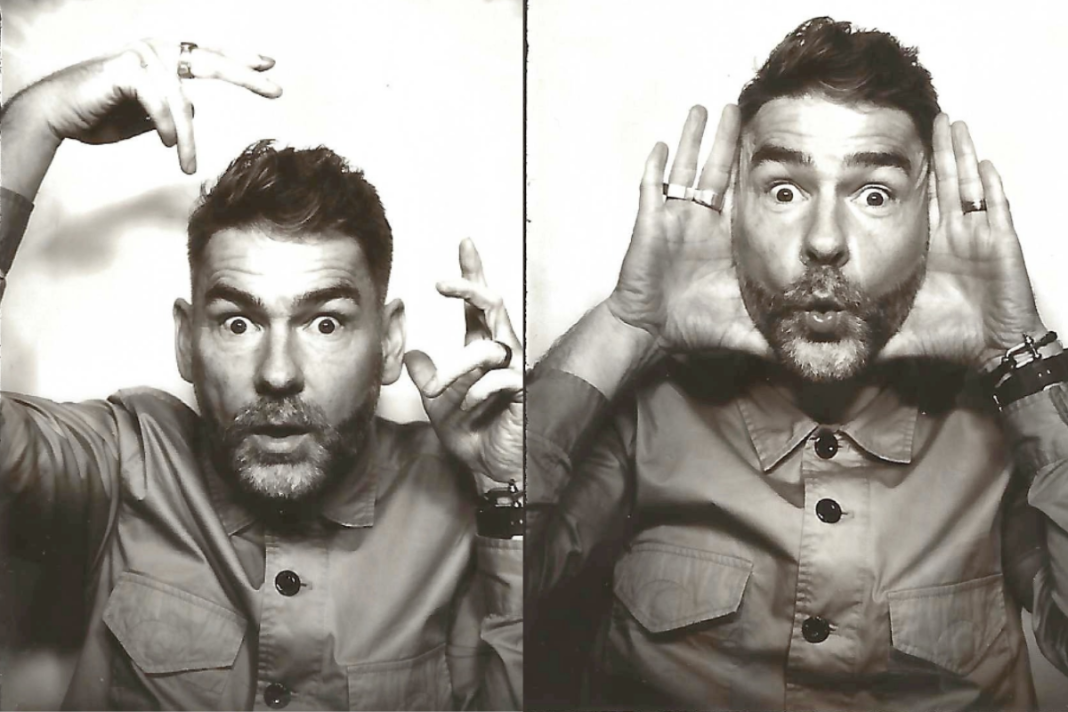
A postman turned photographer gives Glasgow the chance to connect old-school-style, in his vintage Photoautomat at Street Level Photoworks
Long queues are forming at Street Level Photoworks, where Glasgow’s first Photoautomat now sits. The old-school golden booth has travelled over 700 miles from Berlin and is offering the city a “digital detox”, according to its latest custodian – Simon Murphy.
The Glasgow photographer launched the project as a small public experiment in slowing down, connecting with strangers, and leaving with something that will last forever.
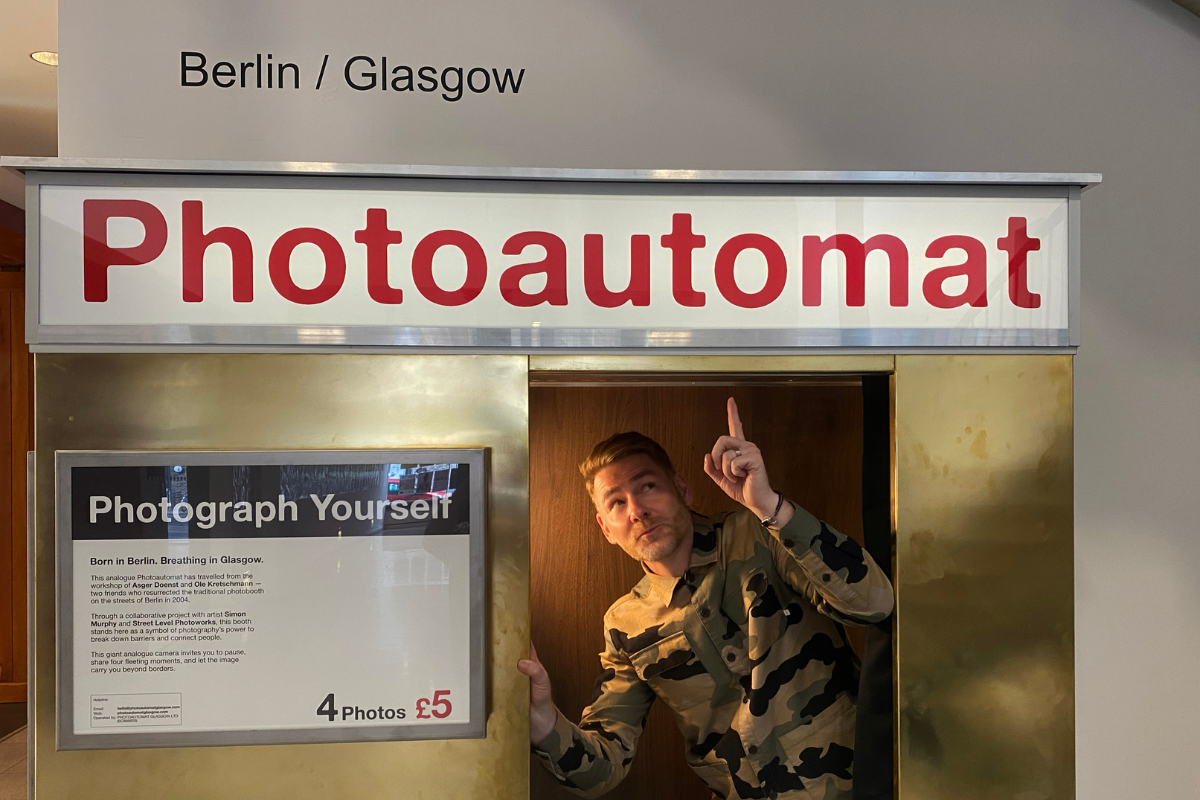
“There is something about being able to hold a strip,” he says. “All the inconveniences are the things that people love. It is almost like we are hungering for something that’s not fast; not perfect.”
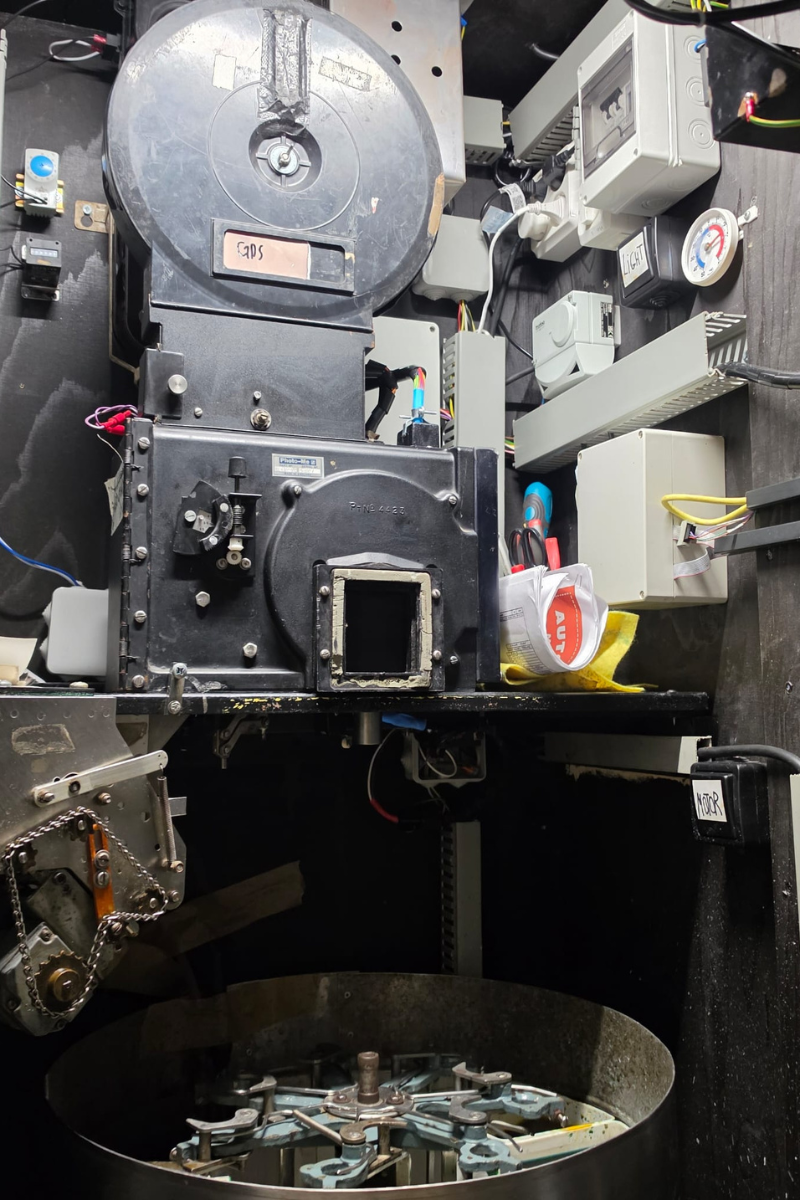
You can regularly find Simon here at the booth chatting to strangers, as couples argue over poses and teens rehearse silly sequences, offering suggestions and laughing at their experiments. He even takes the time to open the entire machine up to show its guts to customers who are fascinated by the old-school technology.
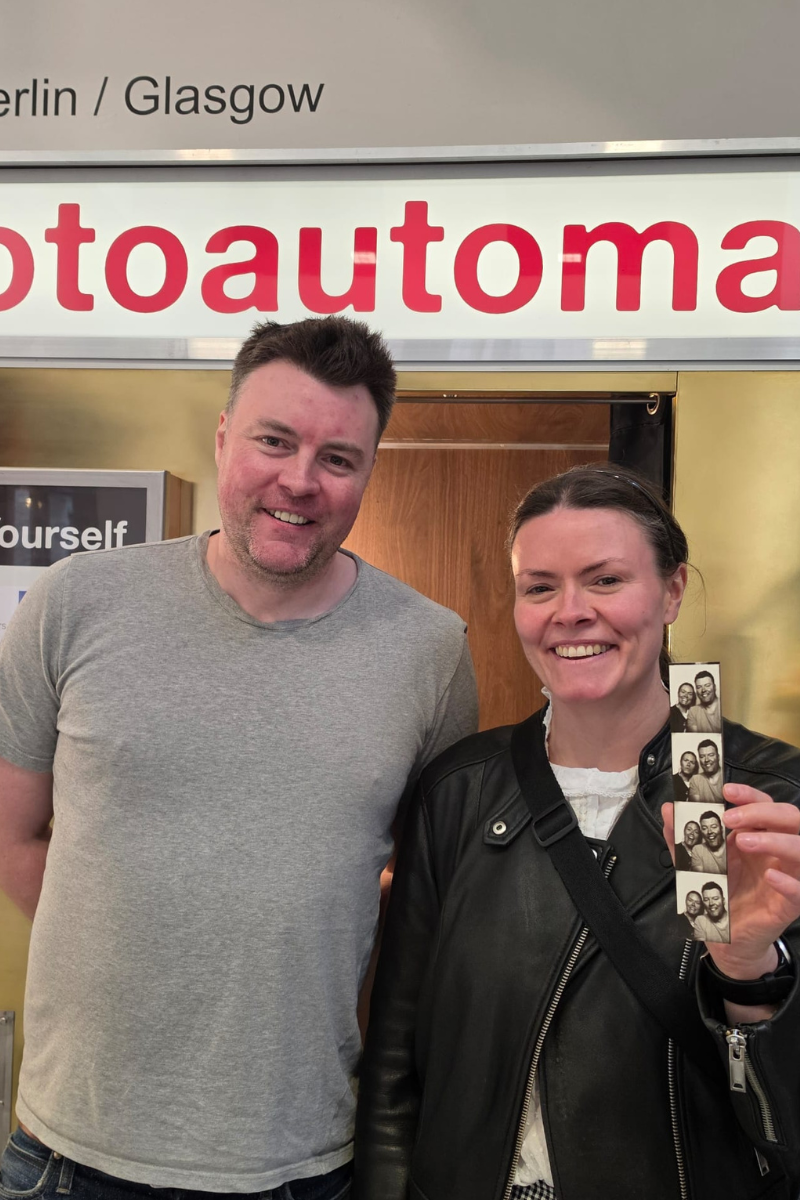
William McLaughlin was waiting with his sister after a birthday lunch and a pint when he struck up a conversation with Simon, who was only too pleased to explain the magic behind the booth.
How the Photoautomat works
Behind the whirring and clunking is a compact mechanical darkroom, built around a simple optical camera and procession of chemical trays.
When a customer, like William, pulls the curtain back the camera snaps four frames which are exposed to a light-sensitive analogue photographic paper, coated with an emulsion of microscopic silver halide crystals suspended in gelatin. The material is then guided from the camera onto a narrow conveyor of rubber rollers. It moves through a developer, a stop bath, and a fixer, then across a final wash before being gently squeezed to shed excess liquid, leaving a wet glossy four frame photostrip.
William is blown away by the process after Simon explains it, he told us, “It is just different than taking a picture on your phone — this is unique. I love the analogue process it uses. It is exactly the opposite of what we are losing when we take hundreds of photos. It would be great to install Photoautomats all over Glasgow.”
But Simon worries about the relentless upkeep and the fragile nature of the machines. The shiny gold exterior was built for Glasgow brand-new, but inside is a patchwork of decades-old cameras from the 1950s, salvaged rollers and a piece traced to 1920s aviation technology. Parts fail, chemistry needs careful tending, and the labour quickly adds up. For him, the value lies in rarity and intimacy rather than scale.
“It’s been one of the biggest things I’ve ever done, but I never really planned to do it.” Simon explains, “It was a big leap but not an intentional one. It was a mad idea.”
Why the Photoautomat came to Glasgow
Simon’s journey to the photo booth can be traced back to the late 1990s, after he became inspired by sunsets and postcards while working as a postman. Simon recalls, “I’d see the sun come up and think, ‘Wow, that would be a good picture’, just because it looked beautiful. But I hadn’t really used a camera before.”
One stop on his route regularly received postcards of 1960s bands like the Beatles and Jimi Hendrix, which made him realise that while the band are the focus, it is the photographer who experiences the moment. “It just planted a seed in my mind,” Simon recalls. “I decided to quit my job to study photography. I had to make it work.”
He went on to get a job as a snapper for The Herald before becoming a teacher at Glasgow Kelvin College, where he remains teaching today. On his first trip to Berlin with students he had planned to stick to landscapes, but quickly found himself drawn into the city’s famous Photoautomats.
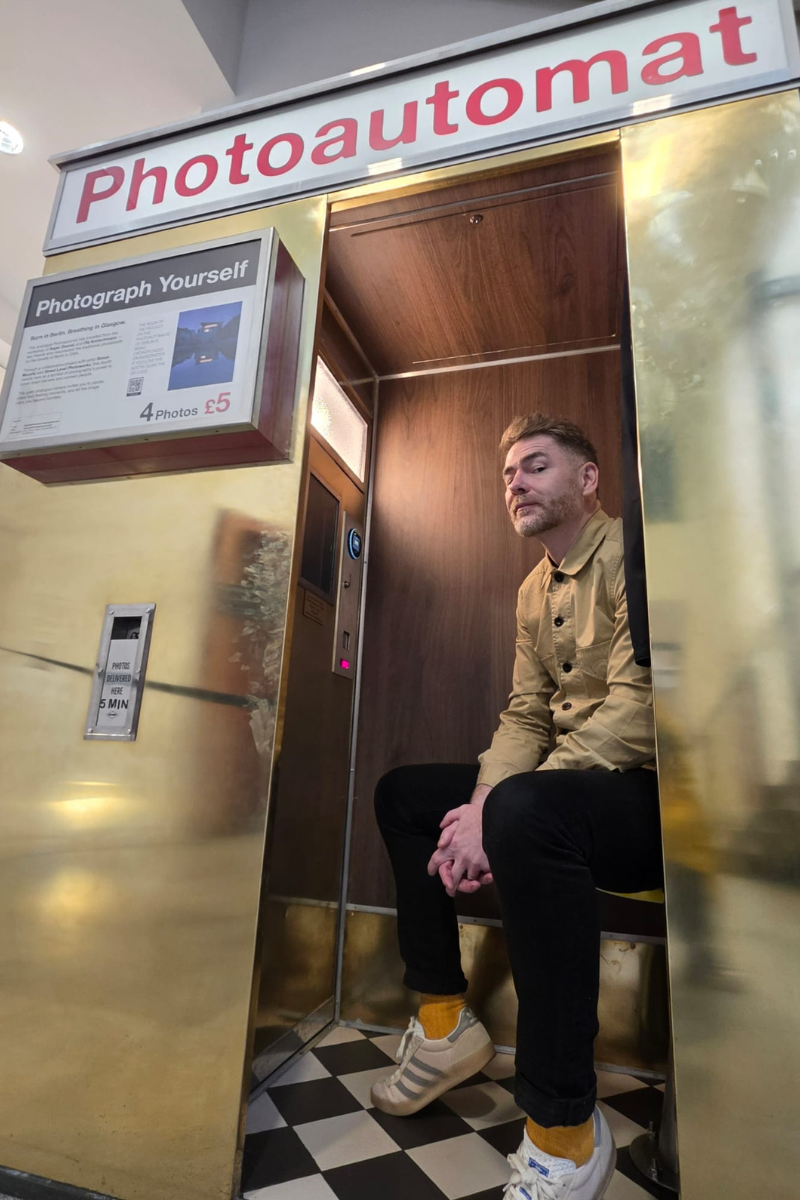
The machines had arrived in Germany’s capital in the early 2000s, when two friends, Ole Kretschmann and Asger Doenst, discovered their passion for the Photoautomats in Switzerland.
Two brothers, Martin and Christoph Balke, were getting ride of them as digital photography gained popularity, but instead of destroying the machines they “called up the Berlin boys and told them to bring trucks,” after they had planned to take only one, Simon laughs. They restored them and over time the booths became a familiar part of Berlin street life, with more than 30 in operation today.
Simon was immediately charmed by their concept and moved from landscapes to inviting strangers inside the booth with him for a portrait project. “The booths are small, so our cheeks are almost touching, and these are strangers,” he explains. “I wanted to represent how photography changed my life. It made me cross borders and actually open up to people. That person in the booth, for all I know, may be a president. Who knows — I don’t ask! We may never see each other again, but we have this moment together.”
It was this feeling of connection and authenticity that Simon wanted to capture in Glasgow when he had the idea of bringing one into Trongate’s Street Level Photoworks.
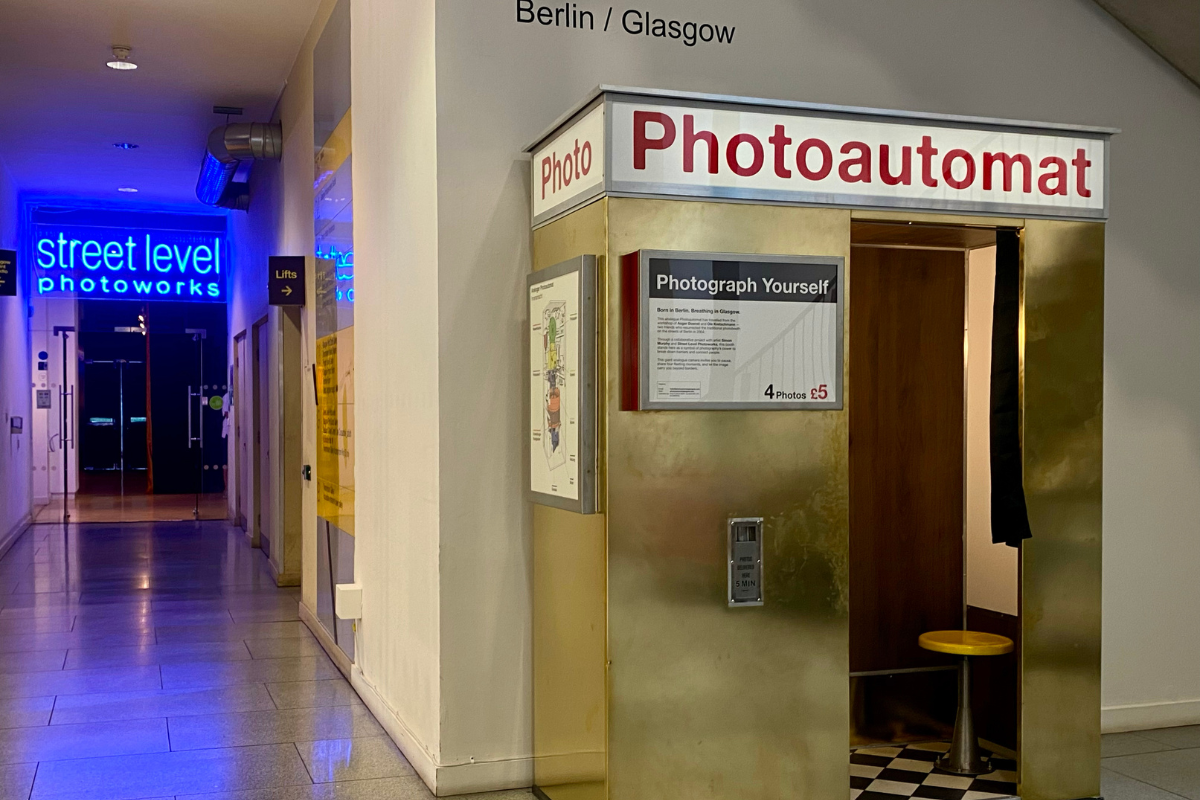
The Photoautomat is already a staple in Glasgow’s art scene
What began as an idea for an exhibition, a way for anyone to contribute a strip to a wall of portraits and make a gallery less intimidating, has become a public fixture. Since arriving earlier this summer, Simon predicts around four thousand strips have already been used.
However at £5 per shot, with queues often out the door, and being one of only two of these machines in Scotland — it isn’t the goldmine some imagine. The Berlin Collective are the main owners with Simon acting as custodian. He is even considering hiring someone to help run its daily maintenance.
“I feel responsible to people,” he says. “So many people have travelled to use it, coming for big occasions like baby scan announcements or weddings. I do love how the city has embraced it.”
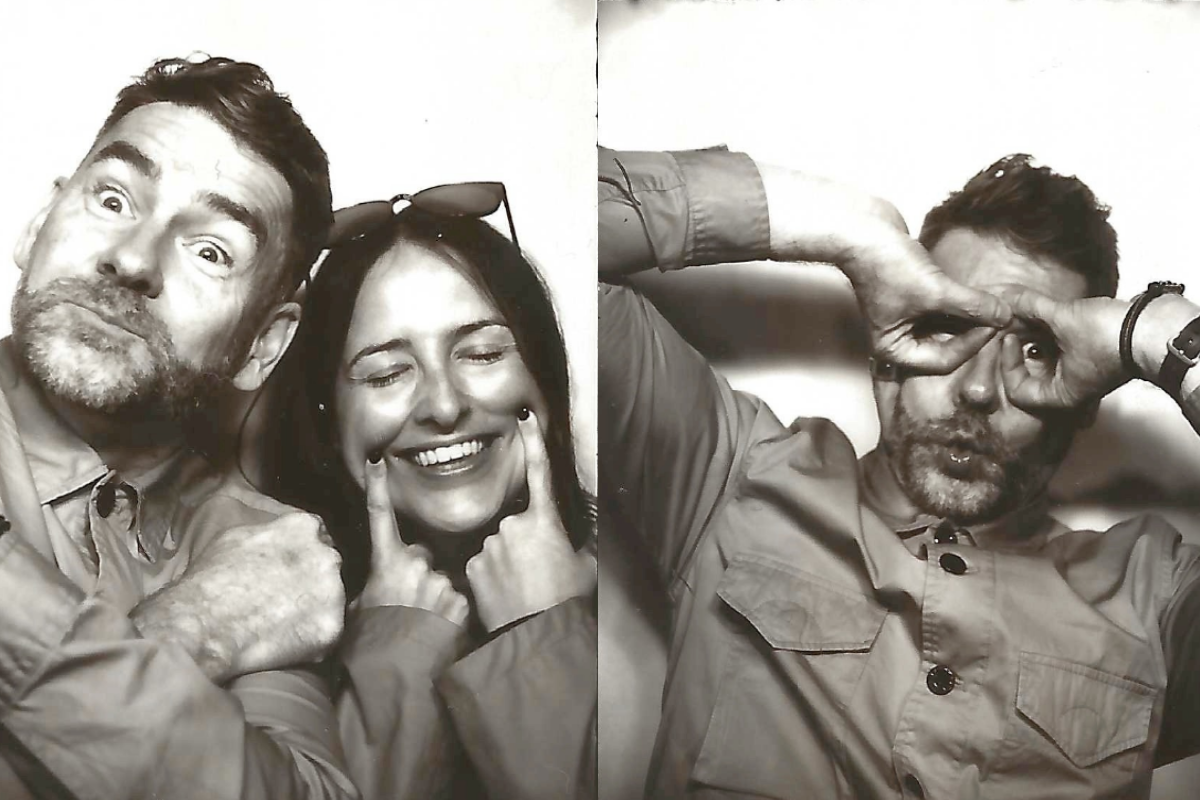
What’s next?
Now Simon is aiming to get his book, Photoautomat, out by Christmas after exceeding his £25k crowdfunding target. The project was already complete and focused on his Berlin landscapes, lost photostrips and interviews with the Berlin booth operators. But operating the Glasgow machine has prompted him to revisit the material. He is reworking the book to weave in the Glasgow portraits and to deepen the book’s exploration of his work.
“People will use the Glasgow booth how ever they like,” laughs Simon. “It isn’t for passport pictures; anything goes. We have created a bridge, or a portal, between Glasgow and Berlin that connects the two cities in the same way it fosters connections between people.”
Follow Simon’s Photoautomat journey on Instagram
Photoautomat Glasgow
Street Level Photoworks
103 Trongate
Glasgow
G1 5HD
Open Monday to Friday, from 10am to 5pm (subject to avaliability).